
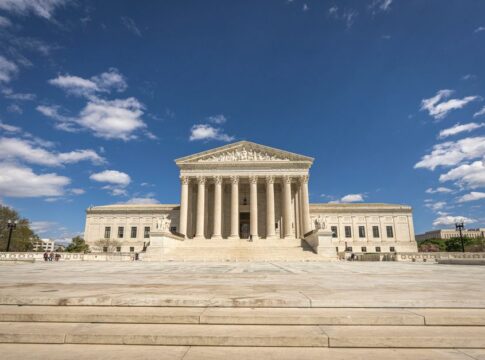
Photo: Mark Stebnicki / Pexels
By US Daily Tribune Newsroom, National Desk — Published October 13, 2026
Table of Contents
- Key Takeaways
- The Background & Context
- Why This Matters
- Reactions & Analysis
- What Happens Next
- Frequently Asked Questions
The nation’s highest court has handed the Trump administration a significant legal victory in its efforts to verify voter eligibility. The Supreme Court allows the federal government to resume using a contentious database system to cross-check citizenship status against voter registration rolls, a decision that arrives as midterm election preparations intensify across the country. The ruling reverses a lower court’s suspension and reignites a fierce debate over election integrity, voting rights, and the balance between preventing fraud and protecting access to the ballot box.
At the center of this legal battle sits the SAVE database—Systematic Alien Verification for Entitlements—a Department of Homeland Security system originally designed to verify immigration status for federal benefit programs. The administration now seeks to repurpose this tool to identify non-citizens who may be registered to vote. Critics warn the database contains outdated information and could lead to eligible citizens being wrongly flagged or removed from voter rolls. Supporters argue it represents a common-sense safeguard against illegal voting.
The Supreme Court’s intervention came through an emergency order, allowing the administration to proceed with citizenship checks while broader legal challenges work their way through the federal court system. This procedural victory does not resolve the underlying constitutional questions, but it grants the government immediate authority to implement the program during a critical election period.
Key Takeaways
- The Supreme Court allows the Trump administration to use the SAVE database for voter citizenship verification following an emergency appeal to the high court.
- The SAVE system was originally created to verify immigration status for federal benefit eligibility, not for election administration purposes.
- Lower courts had previously blocked the program over concerns about accuracy and potential disenfranchisement of eligible voters.
- The ruling arrives as states finalize voter rolls ahead of upcoming midterm elections, creating immediate operational implications for election officials nationwide.
- Civil rights organizations have challenged the practice, arguing the database contains errors that could mistakenly flag naturalized citizens and other eligible voters.
- The decision represents a temporary measure while the full legal case proceeds through the judicial system.
The Background & Context
The SAVE database has existed for decades as an administrative tool within the immigration enforcement apparatus. Federal agencies have long used it to verify whether benefit applicants possess lawful immigration status. The system contains records from various government sources, tracking visa applications, border crossings, naturalization proceedings, and immigration enforcement actions.
What makes this Supreme Court decision particularly contentious is the expansion of SAVE beyond its original mandate. Election administration has traditionally remained a state and local function, with the federal government playing a limited oversight role. The Trump administration’s push to deploy a federal immigration database for voter verification represents a significant shift in how citizenship checks are conducted.
The legal challenge began when several states and voting rights organizations filed suit, arguing that the database contains systemic inaccuracies. Immigration records may not reflect current citizenship status—someone who entered the country on a visa years ago might have since naturalized, but the database may not capture that change in real time. Administrative delays, data entry errors, and the sheer complexity of immigration law create multiple opportunities for mistakes.
A federal district court initially sided with the challengers, issuing a preliminary injunction that halted the program. The judge expressed concern that the database’s known accuracy problems could lead to eligible voters being improperly challenged or removed from registration lists. The administration appealed, arguing that preventing illegal voting justified the use of available federal resources, even if the system was imperfect.
When appellate courts declined to lift the injunction quickly enough for the administration’s timeline, government lawyers took the unusual step of filing an emergency application directly with the Supreme Court. Such requests are reserved for situations where immediate action is necessary to prevent irreparable harm. The administration argued that without the ability to conduct citizenship checks before the midterms, states would be unable to ensure only eligible voters participate.
Why This Matters
For American voters, this decision touches fundamental questions about who gets to participate in democracy and what safeguards are necessary to protect that right. Election integrity and voting access exist in constant tension—too little verification risks allowing ineligible votes, while too much scrutiny risks blocking legitimate voters.
The practical impact will vary significantly by state. Some jurisdictions already conduct robust citizenship verification through their own processes, while others may now face pressure to adopt the federal system. Election officials must balance compliance with the Supreme Court’s order against their responsibility to ensure eligible citizens are not wrongly disenfranchised.
Naturalized citizens face particular vulnerability under this system. These Americans followed every legal requirement to become citizens, yet may find themselves flagged because immigration databases reflect their pre-citizenship status. The administrative burden of proving citizenship—gathering naturalization certificates, navigating bureaucratic appeals—can be substantial, especially for voters who naturalized decades ago.
The timing amplifies the stakes. Voter registration deadlines have already passed in many states for the midterms. If the database generates a wave of citizenship challenges in the coming weeks, election officials will have limited time to investigate each case, contact affected voters, and resolve disputes before ballots are cast. The risk of chaos—or worse, eligible voters being turned away—grows with each passing day.
Beyond the immediate election cycle, this case sets important precedent about federal power in election administration. If the Supreme Court ultimately upholds the program after full briefing and argument, it could open the door to expanded federal involvement in voter verification. If the Court eventually rules against it, the decision would reinforce traditional boundaries between federal immigration enforcement and state-run elections.
Reactions & Analysis
The administration celebrated the Supreme Court’s order as a vindication of its election security priorities. Officials have consistently argued that ensuring only citizens vote represents a fundamental government obligation, one that justifies using every available tool. They point to the fact that non-citizen voting, while rare, does occasionally occur, and argue that even isolated incidents undermine public confidence in election outcomes.
Civil rights organizations responded with alarm. Voting rights advocates have documented numerous cases where citizenship verification programs disproportionately affect minority communities, particularly Latino and Asian-American voters. They argue that the specter of widespread non-citizen voting is vastly exaggerated, while the risk of wrongful disenfranchisement is very real and immediate.
State election officials find themselves caught in the middle. Some welcome federal assistance in verifying voter eligibility, viewing the database as a useful additional resource. Others worry about the operational burden of processing potentially thousands of citizenship challenges with limited staff and tight deadlines. Several state officials have publicly questioned whether their offices have adequate time to implement the system properly before the midterms.
Legal scholars note that the Supreme Court’s emergency order does not signal how the justices will ultimately rule on the merits. Emergency relief requires only that the applicant show a likelihood of success and irreparable harm, a lower bar than winning the full case. The Court’s brief order contained no reasoning, making it impossible to discern which arguments the justices found persuasive.
Immigration attorneys have begun preparing for an influx of clients needing help proving their citizenship status. Many naturalized citizens do not keep their naturalization certificates readily accessible, and obtaining replacement documents from federal agencies can take weeks or months—time that may not exist before election day.
What Happens Next
The immediate future involves implementation. Federal officials must coordinate with state election administrators to provide access to the SAVE database and establish protocols for how citizenship challenges will be processed. States will need to decide how aggressively to use the system and what procedural protections to offer voters who are flagged.
The underlying lawsuit continues in federal court. Briefing schedules, discovery, and potentially a trial will proceed over the coming months. The case could return to the Supreme Court for a final decision, though that might not occur until after the midterm elections have concluded. The justices could ultimately rule that the program violates federal voting rights laws, the Constitution’s guarantee of due process, or administrative procedure requirements.
Congress may also weigh in. Legislators have the power to explicitly authorize or prohibit the use of immigration databases for voter verification. Both parties have introduced election-related legislation, though partisan divisions make passage of any comprehensive bill unlikely in the near term.
Perhaps most significantly, this decision will generate data. As states begin using the database, researchers and journalists will document how many voters are challenged, how many challenges prove accurate, and how many eligible citizens face obstacles. That real-world evidence will inform both future litigation and the broader public debate about election security measures.
Voting rights organizations have already announced plans to monitor implementation closely and provide legal assistance to any eligible voters who are wrongly challenged. They are establishing hotlines and deploying poll monitors to document problems as they arise.
Frequently Asked Questions
What is the SAVE database and what was it originally designed for?
The SAVE database—Systematic Alien Verification for Entitlements—is a Department of Homeland Security system created to verify immigration status when individuals apply for federal benefits. It contains records about visa applications, border crossings, naturalization proceedings, and immigration enforcement actions. The system was designed for benefit eligibility verification, not for election administration or voter verification purposes. The Trump administration is now seeking to repurpose this existing database to identify potentially ineligible voters.
Why are critics concerned about using this database for voter verification?
Critics worry that the SAVE database contains outdated and inaccurate information that could lead to eligible citizens being wrongly flagged as non-citizens. For example, someone who entered the country years ago on a visa and later naturalized may still appear in the database with their pre-citizenship status. Immigration records often lag behind actual status changes, creating a risk that naturalized citizens—who have every legal right to vote—will face challenges to their registration or be removed from voter rolls entirely.
Does this Supreme Court decision settle the legal question permanently?
No. The Supreme Court issued an emergency order allowing the program to proceed temporarily while the full legal case continues in lower courts. This type of order addresses only whether to block or allow a practice during ongoing litigation, not whether the practice is ultimately legal or constitutional. The underlying lawsuit will continue, and the case could eventually return to the Supreme Court for a final decision on the merits after full briefing and argument.
How might this affect voters in the upcoming midterm elections?
The immediate impact depends on how aggressively states use the database and how many voters are flagged for citizenship challenges. Naturalized citizens face the greatest risk of being wrongly identified as ineligible. Voters who are challenged may need to provide documentation proving their citizenship, which can be time-consuming and difficult, especially close to election day. Election officials will have limited time to investigate challenges and resolve disputes before voters cast ballots, creating potential for confusion and eligible voters being turned away from polls.
As midterm campaigns enter their final stretch, election administrators across the country face the complex task of implementing this database system while protecting the voting rights of eligible citizens. The coming weeks will test whether the promise of enhanced election security can be delivered without the unintended consequence of blocking legitimate voters from exercising their fundamental democratic right. Whatever unfolds, the Supreme Court’s decision ensures that questions about citizenship verification, federal power, and voting rights will remain at the center of American political debate well beyond this election cycle.