
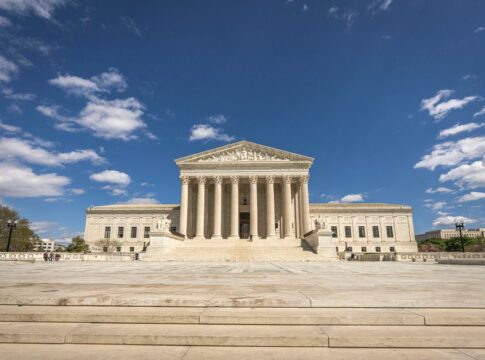
Photo: Mark Stebnicki / Pexels
By US Daily Tribune Newsroom, National Desk — Published October 22, 2026
Table of Contents
- Key Takeaways
- The Background & Context
- Why This Matters
- Reactions & Analysis
- What Happens Next
- Frequently Asked Questions
The nation’s highest court has handed down a decision that will reshape how states verify voter eligibility. The Supreme Court revives a contentious federal database known as the SAVE system, allowing states to cross-reference citizenship data when auditing their voter rolls. The ruling represents a significant victory for the Trump administration and allies who have long pushed for stricter voter verification measures, but it has also ignited fierce debate about voting rights and access to the ballot box.
The decision arrives at a moment of heightened tension over election integrity and voter access. While supporters argue the restored system will help prevent noncitizen voting, critics warn it could lead to eligible citizens being wrongly purged from voter rolls. The stakes are considerable for millions of Americans whose ability to participate in democracy may hinge on the accuracy and fairness of these citizenship verification tools.
At the center of the controversy is the Systematic Alien Verification for Entitlements program, better known as SAVE. Originally designed to verify immigration status for public benefits, the database has become a flashpoint in national debates over election security and voting rights. The Supreme Court’s decision to restore access to this tool for voter audits marks a pivotal moment in the ongoing legal battles over how states should maintain their voter registration lists.
Key Takeaways
- The Supreme Court has restored state access to the SAVE citizenship verification database for conducting voter roll audits
- The decision represents a win for the Trump administration and states seeking stricter voter verification procedures
- Voting rights advocates have raised concerns that the system could lead to wrongful removal of eligible voters from registration lists
- The SAVE database was originally created to verify immigration status for public benefits, not election purposes
- The ruling reignites national debates over balancing election security with voting access and civil rights protections
- States will now have expanded authority to cross-check voter registration data against federal citizenship records
The Background & Context
The SAVE system has existed for years as a federal tool managed by immigration authorities. Its primary function was straightforward: help government agencies verify whether individuals applying for public benefits have legal immigration status. But as political battles over election integrity intensified, some states began eyeing the database for a different purpose entirely.
State officials in several jurisdictions argued they needed access to federal citizenship data to ensure only eligible voters remained on their rolls. They contended that without such verification tools, noncitizens could slip through the cracks and potentially cast ballots illegally. These concerns gained traction among lawmakers and administrators who made election security a central priority.
The push to use SAVE for voter audits did not go unchallenged. Civil rights organizations and voting rights groups filed legal challenges, arguing that the database was never designed for election purposes and lacked the accuracy needed for such high-stakes determinations. They pointed to documented cases where citizens had been incorrectly flagged in government databases due to clerical errors, outdated information, or data mismatches.
Lower courts had blocked or limited the use of SAVE for voter verification in several instances, citing these accuracy concerns and the potential for eligible voters to be disenfranchised. The legal wrangling eventually reached the Supreme Court, which faced the task of weighing competing claims about election security versus voting access. The justices’ decision to restore the system represents a clear signal about where the current court stands on these questions.
Why This Matters
For ordinary Americans, this ruling could have direct consequences. Voter registration is the gateway to democratic participation. When states gain new tools to audit their rolls, the process becomes more complex and potentially more fraught for individual citizens.
Consider a naturalized citizen who completed the immigration process years ago. If outdated records in the SAVE database still show an old status, that person could be flagged for removal from voter rolls. The burden then falls on the individual to prove their citizenship and fight to restore their registration—often a time-consuming and confusing process that may discourage participation altogether.
The broader implications extend to public trust in elections. Supporters of the SAVE system argue that robust verification measures are essential for maintaining confidence in electoral outcomes. They contend that even rare instances of noncitizen voting undermine faith in democracy and must be prevented through systematic checks.
Critics counter that the real threat to election integrity comes not from virtually nonexistent noncitizen voting but from policies that make it harder for eligible citizens to cast ballots. They argue that the focus on citizenship verification creates solutions in search of problems while imposing real costs on vulnerable populations, including naturalized citizens, minorities, and low-income voters who may face greater obstacles in navigating bureaucratic challenges to their registration.
The decision also affects the balance of power between federal and state governments. By allowing states to tap into federal databases for election administration, the ruling expands state authority in ways that could set precedents for future data-sharing arrangements. It raises questions about privacy, data security, and the appropriate boundaries between different levels of government.
Reactions & Analysis
The Supreme Court’s decision has generated predictably divided responses across the political spectrum. Trump administration officials and allied state leaders have celebrated the ruling as a common-sense measure that will help safeguard elections. They frame it as empowering states to fulfill their constitutional responsibility to administer elections while preventing fraud.
Voting rights organizations have responded with alarm. They warn that the decision opens the door to aggressive voter purges that could disenfranchise thousands of eligible citizens. These groups point to past instances where states conducted flawed citizenship checks, leading to eligible voters being wrongly targeted for removal from the rolls.
Election administrators find themselves caught in the middle. Some welcome additional verification tools, viewing them as helpful resources for maintaining accurate voter lists. Others express concern about the practical challenges of implementing citizenship checks without inadvertently harming legitimate voters. The administrative burden of processing challenges, investigating flagged records, and handling appeals could strain already-stretched election offices.
Legal experts note that the decision may not be the final word. While the Supreme Court has restored access to SAVE, ongoing litigation could still impose limits on how states use the system. Courts may yet require safeguards to protect against wrongful purges, such as robust notice requirements, appeal processes, and verification standards.
What Happens Next
States now face decisions about whether and how to incorporate SAVE into their voter maintenance procedures. Not all states will rush to use the system. Some have election officials or political leadership skeptical of aggressive purge efforts. Others will likely move quickly to begin cross-checking their voter files against the federal database.
The first wave of audits using SAVE will be closely watched. If significant numbers of voters are flagged and removed, expect renewed legal challenges and public outcry. If the system proves more accurate than critics fear, it could gain broader acceptance. The real-world results will shape the ongoing debate far more than abstract arguments.
Congress could potentially step in with legislation to regulate how federal databases are used for election purposes. Lawmakers might impose standards for accuracy, due process, and voter notification. But given the current political divisions, comprehensive federal legislation seems unlikely in the near term.
Advocacy groups are already mobilizing to monitor implementation and assist voters who may be wrongly challenged. They are preparing educational campaigns to help citizens understand their rights and navigate any registration issues that arise. These efforts will be crucial in mitigating potential harm from overly aggressive citizenship checks.
The decision also sets the stage for future battles over election administration. As technology advances and data systems become more sophisticated, questions about verification, privacy, and access will only intensify. The SAVE controversy may prove to be just one chapter in a much longer story about how America balances security and democracy.
Frequently Asked Questions
What is the SAVE system?
SAVE stands for Systematic Alien Verification for Entitlements, a federal database originally created to help government agencies verify immigration status when individuals apply for public benefits. The system contains citizenship and immigration records maintained by federal authorities. States are now allowed to use this database to audit their voter registration rolls and check whether registered voters are citizens.
Why are voting rights groups concerned about this decision?
Voting rights advocates worry that the SAVE database was not designed for election purposes and may contain outdated or inaccurate information. They fear eligible citizens, particularly naturalized Americans, could be wrongly flagged as noncitizens and removed from voter rolls. The concern is that bureaucratic errors could disenfranchise legitimate voters, especially if states conduct aggressive purges without adequate safeguards or verification processes.
How common is noncitizen voting in U.S. elections?
Research and audits have consistently found that noncitizen voting is extremely rare. Multiple studies have shown that instances of noncitizens casting ballots occur at negligible rates that would not affect election outcomes. The rarity of the problem is one reason critics question whether citizenship verification systems like SAVE are necessary, especially given the risk of wrongly removing eligible voters.
What should voters do if their registration is challenged?
Voters who receive notice that their citizenship status is being questioned should respond promptly with documentation proving their eligibility. This typically includes a birth certificate, passport, naturalization papers, or other official records. Most states have appeal processes for voters to contest wrongful challenges. Voters facing such issues should contact their local election office, seek assistance from voting rights organizations, or consult with legal aid services if necessary.
The Supreme Court’s revival of the SAVE system for citizenship checks represents a significant shift in how states may approach voter roll maintenance. As implementation unfolds across the country, millions of Americans will be watching to see whether the system protects election integrity as supporters promise or threatens voting rights as critics fear. The answer will emerge not from legal arguments but from the lived experiences of voters navigating an increasingly complex registration landscape.