
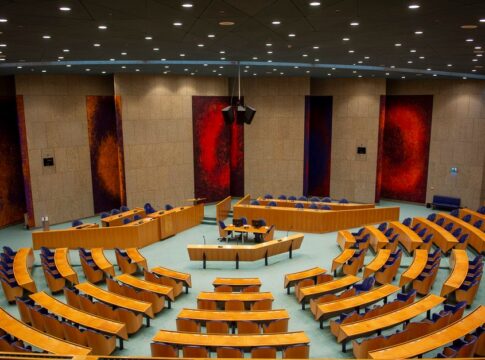
Photo: Jan van der Wolf / Pexels
By US Daily Tribune Newsroom, National Desk — Published October 17, 2026
Table of Contents
- Key Takeaways
- The Background & Context
- Why This Matters
- Reactions & Analysis
- What Happens Next
- Frequently Asked Questions
The federal government has taken a decisive step in enforcing election integrity laws. The Department of Justice’s Office of Public Affairs announced charges against 16 individuals—identified as non-citizens—for alleged violations related to illegal voting and election crimes. The announcement signals renewed federal attention to prosecuting non-citizens who allegedly participate in U.S. elections, a practice strictly prohibited under federal law.
While the Justice Department has not released extensive details about the specific cases, the charges underscore ongoing tensions around immigration policy, voting rights, and election security. These prosecutions arrive amid heightened national debate over the integrity of American elections and the role of federal enforcement in safeguarding the ballot box.
For American voters and taxpayers, the cases raise fundamental questions about how the government balances enforcement against non-citizen voting with broader concerns about voter access and civil liberties. The charges represent a clear message from federal prosecutors: participation in U.S. elections by those not legally entitled to vote will be met with criminal consequences.
Key Takeaways
- The Department of Justice announced criminal charges against 16 individuals described as aliens for alleged illegal voting and election crimes.
- The Office of Public Affairs released multiple statements highlighting the enforcement action, emphasizing federal commitment to prosecuting election-related violations.
- Federal law strictly prohibits non-citizens from voting in federal elections, with violations carrying potential criminal penalties including fines and imprisonment.
- The announcement comes during a period of intense national debate over election security, voting rights, and immigration enforcement.
- Details about the specific jurisdictions, timing of alleged offenses, and individual circumstances remain limited in public announcements.
- The cases may set precedents for future federal prosecution strategies regarding non-citizen voting violations.
The Background & Context
Federal law has long prohibited non-citizens from voting in federal elections. The statute is clear and unambiguous. Only U.S. citizens possess the constitutional right to participate in selecting representatives for Congress, the presidency, and federal offices. Violating this prohibition can result in serious criminal penalties, including fines, imprisonment, and—for non-citizens—potential deportation and permanent bars to future immigration benefits.
Despite these prohibitions, instances of non-citizen voting do occur, though experts across the political spectrum agree such cases are exceedingly rare in the context of millions of ballots cast nationwide. When discovered, these violations typically result from confusion about eligibility, language barriers, or administrative errors rather than coordinated fraud. Nevertheless, each case represents a violation of federal law that prosecutors may choose to pursue.
The Justice Department’s announcement of charges against 16 individuals represents a significant enforcement action. Federal prosecutors typically exercise discretion in deciding which cases to pursue, weighing factors including intent, the scale of the violation, and broader public interest considerations. The decision to announce these charges publicly through the Office of Public Affairs suggests the department views these prosecutions as carrying particular significance.
Election crimes have received heightened attention in recent years. Following contested elections and ongoing debates about voter fraud, election security has become a flashpoint in American politics. Federal agencies, including the Department of Justice, face pressure from multiple directions: some constituencies demand aggressive prosecution of any voting irregularities, while others worry about chilling effects on legitimate voters and disproportionate impacts on immigrant communities.
The Supreme Court has consistently upheld the principle that voting in federal elections is a right reserved exclusively for citizens. States retain some autonomy in setting rules for local elections—a handful permit non-citizen voting in certain municipal contests—but federal law leaves no ambiguity regarding national elections. These prosecutions reinforce that legal framework.
Why This Matters
For ordinary Americans, the integrity of elections forms the bedrock of democratic governance. Voters need confidence that their ballots count equally and that only eligible citizens participate in choosing their representatives. When non-citizens vote illegally—regardless of intent or scale—it undermines that confidence and violates the social contract that binds the political community.
Yet the manner in which violations are prosecuted also matters deeply. Critics of aggressive enforcement worry that high-profile prosecutions may intimidate naturalized citizens and eligible voters from immigrant communities, potentially suppressing legitimate participation. The specter of criminal charges, even when not personally applicable, can create fear that discourages civic engagement.
These 16 cases will likely reverberate through immigrant communities nationwide. Defense attorneys and immigrant advocates pay close attention to how federal prosecutors handle such matters, watching for patterns that might indicate selective enforcement or disproportionate targeting. The circumstances of each case—whether defendants knowingly violated the law or acted under misunderstanding—will prove crucial in assessing the fairness and appropriateness of criminal prosecution.
For taxpayers, federal prosecution of election crimes represents a significant investment of government resources. Each criminal case requires investigation by federal agents, prosecution by Department of Justice attorneys, and potential trial proceedings. The public has a legitimate interest in knowing that these resources are deployed wisely, targeting genuine threats to election integrity rather than technical violations by confused individuals.
The timing of the announcement also carries weight. Election-related prosecutions announced during politically charged periods can fuel partisan narratives about voter fraud or voter suppression. Responsible journalism requires examining not just the fact of charges, but their context, the evidence supporting them, and their proportionality to the alleged harm.
Reactions & Analysis
The Justice Department’s public announcement through its Office of Public Affairs indicates the government views these prosecutions as newsworthy and significant. By issuing formal statements, federal officials signal their commitment to enforcing election laws and deterring future violations. The decision to publicize the charges—rather than handling them quietly through routine criminal proceedings—suggests strategic communication aims.
Election security advocates likely welcome the enforcement action as evidence that federal authorities take voting violations seriously. Those who have raised concerns about non-citizen voting will point to these cases as validation of their worries, even though 16 cases across a nation of more than 330 million people represent a tiny fraction of votes cast.
Conversely, immigrant rights organizations and civil liberties groups may scrutinize the prosecutions for potential overreach. Questions about whether defendants received adequate notice of their ineligibility, whether language barriers contributed to violations, and whether criminal prosecution represents a proportionate response will likely emerge as cases proceed through the courts.
Legal experts note that proving criminal intent in voting cases can be challenging. Prosecutors must typically demonstrate that defendants knowingly violated the law, not merely that they cast ineligible ballots. Confusion about eligibility—particularly among permanent residents who may participate in some civic activities—can complicate these cases. Defense attorneys will likely raise such issues as they represent the accused individuals.
The political environment surrounding these announcements cannot be ignored. Election integrity remains a deeply polarizing issue, with competing narratives about the prevalence and significance of voting irregularities. Federal prosecutions inevitably become entangled in these broader debates, regardless of the specific facts underlying individual cases.
What Happens Next
The 16 individuals charged will now navigate the federal criminal justice system. Each defendant has the right to legal representation, to contest the charges, and to present a defense. Some cases may result in plea agreements, while others could proceed to trial. Outcomes will vary based on individual circumstances, evidence, and the strength of both prosecution and defense arguments.
Sentences, if convictions result, could range from probation to imprisonment, depending on factors including criminal history, intent, and the number of illegal votes cast. For non-citizens, immigration consequences may prove even more severe than criminal penalties, potentially including removal from the United States and permanent inadmissibility.
Beyond the immediate cases, these prosecutions may influence future enforcement priorities. If the Justice Department continues emphasizing election crimes prosecution, we may see additional similar announcements. Alternatively, if cases prove difficult to prosecute or generate significant backlash, enforcement strategies might shift.
State and local election officials will watch closely. Federal prosecution of voting violations can affect how jurisdictions approach voter registration, verification procedures, and education efforts. Striking the right balance—preventing ineligible voting while ensuring eligible citizens can easily participate—remains an ongoing challenge for election administrators nationwide.
Congressional oversight of the Justice Department may also intensify. Lawmakers from both parties maintain interest in how federal prosecutors handle election-related cases. Hearings, inquiries, and budget discussions may reference these prosecutions as examples of either appropriate enforcement or misplaced priorities, depending on political perspective.
Frequently Asked Questions
What penalties do non-citizens face for illegal voting?
Federal law prohibits non-citizens from voting in federal elections, with violations potentially resulting in criminal fines, imprisonment for up to one year, and for non-citizens specifically, deportation and permanent bars to future immigration benefits. The severity of punishment depends on factors including intent, the number of violations, and individual circumstances. Beyond criminal penalties, convicted non-citizens face nearly certain immigration consequences that can include removal from the United States and inability to return.
How common is non-citizen voting in U.S. elections?
Research consistently shows that non-citizen voting is extremely rare. Studies examining millions of votes have found only isolated instances, representing a tiny fraction of total ballots cast. While any illegal vote represents a violation of law, the overall incidence remains statistically insignificant in terms of affecting election outcomes. Most documented cases involve confusion about eligibility rather than intentional fraud, though each situation differs based on specific facts and circumstances.
Can non-citizens vote in any U.S. elections?
Federal law strictly prohibits non-citizens from voting in federal elections for President, Congress, and other national offices. However, a small number of local jurisdictions permit non-citizen residents to vote in certain municipal elections, such as school board or city council races. These local provisions vary by jurisdiction and apply only to specific local contests, never to federal or state elections. The vast majority of U.S. elections at all levels remain restricted to citizens only.
How does the government verify voter citizenship?
Citizenship verification procedures vary by state and have been subject to ongoing legal and political debate. Most states require voters to attest to citizenship when registering, though verification methods differ. Some states cross-reference registration data with other government databases, while others rely primarily on signed attestations. Federal law requires proof of citizenship for federal registration forms only in limited circumstances, while state requirements vary. Balancing verification with accessibility remains a contentious policy challenge nationwide.
As these 16 cases move through the federal court system, they will test both the government’s commitment to enforcing election laws and the justice system’s ability to handle such prosecutions fairly. For a nation still grappling with questions about election security and immigrant integration, the outcomes may carry significance far beyond the courtroom. Americans deserve both secure elections and a justice system that treats all individuals equitably under law—a balance these cases will help define.