
Photo: Ramaz Bluashvili / Pexels
By US Daily Tribune Newsroom, Politics Desk — Published October 23, 2026
Table of Contents
- Key Takeaways
- The Background & Context
- Why This Matters
- Reactions & Analysis
- What Happens Next
- Frequently Asked Questions
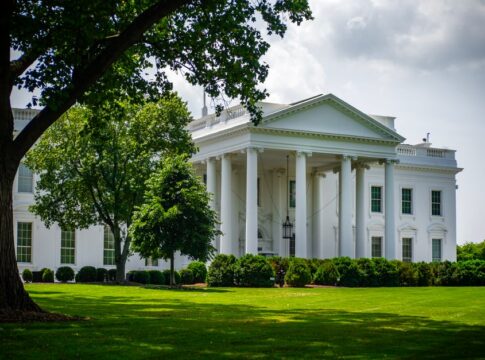
A fresh analysis president trump recently released highlights what supporters characterize as a significant turnaround in American manufacturing, crediting the administration’s economic policies with spurring industrial growth across the heartland. The White House assessment arrives at a pivotal moment in the political calendar, as debates over economic stewardship, campaign promises, and legislative achievements dominate headlines from Capitol Hill to factory floors in swing states.
The timing matters. With manufacturing employment a perennial flashpoint in elections and a cornerstone of congressional debates over trade, tax policy, and regulatory reform, any uptick in factory jobs carries weight far beyond spreadsheets. For communities hollowed out by decades of offshoring, the promise of a manufacturing comeback isn’t abstract economics—it’s personal.
Yet the picture is complicated. Economic data rarely tells a single story, and the factors driving industrial activity—global supply chains, automation, consumer demand, Federal Reserve policy—defy simple attribution. Still, the administration’s framing of the issue underscores how deeply manufacturing symbolism is woven into American politics, from campaign rallies to legislative battles over infrastructure spending and trade agreements.
Key Takeaways
- The White House has released a new analysis crediting President Trump’s economic policies with sparking a resurgence in U.S. manufacturing activity.
- Manufacturing remains a critical political issue, particularly in Midwest battleground states where factory closures have reshaped communities and voting patterns.
- The administration’s pro-growth agenda includes tax reform, deregulation, and trade renegotiation as central pillars intended to boost domestic production.
- Economic analysts and political observers note that manufacturing trends reflect multiple variables, including global markets, technological change, and monetary policy.
- The debate over manufacturing policy will likely intensify as Congress weighs legislation on infrastructure, supply chain resilience, and trade agreements.
- Both major political parties have staked electoral fortunes on promises to revive American manufacturing, making objective assessment challenging amid partisan claims.
The Background & Context
American manufacturing has occupied a fraught place in the national consciousness for decades. The sector’s long decline—from employing nearly a third of U.S. workers in the 1950s to less than ten percent today—has left scars across the Rust Belt and beyond. Towns that once thrived on automotive plants, steel mills, and textile factories have struggled with unemployment, opioid addiction, and population loss.
This backdrop made manufacturing a central theme in the 2016 presidential campaign. Candidate Trump barnstormed through Pennsylvania, Michigan, Wisconsin, and Ohio promising to bring factories back. His message resonated in counties that had voted Democratic for generations but felt abandoned by globalization and trade deals like NAFTA.
Once in office, the Trump administration pursued what it termed a pro-growth economic strategy. Tax cuts passed by a Republican Congress in 2017 slashed corporate rates from 35 to 21 percent, with proponents arguing lower taxes would incentivize domestic investment. The administration also embarked on an ambitious deregulation campaign, rolling back environmental rules, labor protections, and financial oversight it characterized as burdensome to business.
Trade policy became another front. The president renegotiated NAFTA into the United States-Mexico-Canada Agreement, imposed tariffs on steel and aluminum imports, and launched a trade war with China. Each move sparked fierce debate. Supporters said these actions protected American workers from unfair competition. Critics warned tariffs raised costs for consumers and manufacturers alike, while risking retaliation that hurt farmers and exporters.
Manufacturing data through 2018 and 2019 showed modest gains in employment and output, though economists debated causes. Was it Trump’s policies? The broader economic expansion that began in 2009? Low interest rates from the Federal Reserve? The question became academic when the COVID-19 pandemic cratered global manufacturing in 2020, only to see a uneven recovery complicated by supply chain chaos, semiconductor shortages, and inflation.
Why This Matters
Manufacturing’s political salience extends beyond the sector’s direct economic footprint. Factory jobs have long represented middle-class stability—decent wages, benefits, pensions—for workers without college degrees. Their disappearance has contributed to widening inequality and declining social mobility, issues that fuel populist movements across the political spectrum.
Geographically, manufacturing matters most in states that decide presidential elections. Pennsylvania, Michigan, Wisconsin, Ohio, Iowa, and North Carolina all host significant industrial bases. Shifts of even a few thousand votes in these states can swing the Electoral College. Both parties know this, which explains why factory tours and hard-hat photo ops remain campaign staples.
The policy stakes are equally high. Decisions about manufacturing touch nearly every aspect of governance. Tax policy determines whether companies invest domestically or abroad. Trade agreements shape which goods get made where. Environmental regulations balance pollution concerns against production costs. Labor law affects union organizing in plants. Infrastructure spending determines whether roads and ports can handle freight. Education policy influences whether workers have skills factories need.
For ordinary Americans, these debates translate into concrete realities. A new auto plant means jobs, tax revenue for schools, customers for local businesses. A factory closure means unemployment, falling home values, families moving away. Communities understand the stakes viscerally, even when economists quibble over methodology.
There’s also a national security dimension. The pandemic exposed America’s dependence on foreign manufacturing for essential goods—masks, pharmaceuticals, medical equipment. Suddenly, the abstract economics of comparative advantage collided with the reality that offshoring critical production created vulnerabilities. Bipartisan consensus emerged that some manufacturing capability must return home, regardless of cost. Congress has since debated legislation to subsidize domestic semiconductor production and pharmaceutical manufacturing, though partisan disagreements persist over details.
Reactions & Analysis
The White House analysis predictably generated partisan responses. Republican lawmakers and conservative think tanks praised the findings as vindication of supply-side economics and deregulation. They argue that reducing government interference allows markets to function efficiently, spurring investment and job creation. For them, any manufacturing gains validate the administration’s approach and justify extending or expanding its policies.
Democratic critics counter that manufacturing employment remains well below historical peaks and that any recent gains reflect cyclical recovery rather than structural transformation. They point to continuing plant closures, stagnant wages for factory workers, and persistent trade deficits as evidence that pro-business policies haven’t delivered promised results. Progressive economists argue that without stronger labor protections, environmental standards, and industrial policy, manufacturing growth will prove neither sustainable nor broadly beneficial.
Independent analysts occupy a more nuanced middle ground. Most acknowledge that multiple factors influence manufacturing trends simultaneously. Tax policy matters, but so do currency exchange rates, energy prices, technological innovation, and consumer demand. Attributing outcomes to any single policy or politician oversimplifies complex dynamics.
Some economists note that manufacturing output—the value of goods produced—has actually grown substantially over recent decades, even as employment declined. Automation and productivity gains mean fewer workers produce more stuff. This complicates the political narrative. Should policymakers prioritize employment numbers or production value? Can factories come back without the jobs?
Business leaders offer mixed assessments. Some manufacturers credit tax cuts and deregulation with improving their bottom lines and enabling expansion. Others complain that tariffs raised input costs, trade uncertainty disrupted planning, and workforce shortages limited growth regardless of policy. The reality is that different industries and companies experience different conditions.
What Happens Next
Manufacturing will remain politically contentious through upcoming election cycles. Both parties have staked positions, and neither can afford to appear indifferent to industrial decline. Expect competing proposals on tax policy, trade deals, infrastructure investment, and workforce development. The challenge will be separating genuine policy differences from campaign rhetoric.
Congress faces decisions on several manufacturing-related issues. Infrastructure legislation could fund transportation networks, broadband, and water systems that support industrial activity. Supply chain resilience bills might subsidize domestic production of critical goods. Trade agreements require congressional approval, giving lawmakers leverage over tariff policy and international economic relations.
Technological change will continue reshaping manufacturing regardless of policy. Automation, artificial intelligence, and advanced materials are transforming how goods get made. Some factories now operate with minimal human workers, raising questions about whether traditional manufacturing employment can ever return to mid-century levels. Policymakers must grapple with whether to resist these trends, accommodate them, or try steering them toward socially beneficial outcomes.
Global competition isn’t disappearing. China continues investing heavily in manufacturing capacity and technology. European nations subsidize strategic industries. Developing countries offer low labor costs. American manufacturers will face these realities whatever policies Washington adopts. The question is whether U.S. policy creates conditions for domestic producers to compete effectively or leaves them at a disadvantage.
Climate change adds another dimension. Manufacturing generates significant greenhouse gas emissions, and pressure is building for cleaner production methods. This creates both challenges and opportunities. Transitioning to low-carbon manufacturing requires investment but could position American industry as a leader in green technology. How policymakers balance environmental and economic concerns will shape the sector’s trajectory.
Frequently Asked Questions
What specific policies does the Trump administration credit for manufacturing gains?
The administration points primarily to corporate tax cuts, regulatory rollbacks, and trade renegotiations as key drivers. The 2017 Tax Cuts and Jobs Act reduced the corporate tax rate substantially, which proponents argue encouraged domestic investment. Deregulation efforts targeted environmental, labor, and financial rules characterized as burdensome. Trade policy changes included replacing NAFTA with USMCA and imposing tariffs on imports to protect domestic producers from foreign competition.
How do economists assess claims about manufacturing resurgence?
Professional economists generally emphasize that manufacturing trends result from multiple interacting factors rather than single policies. While some acknowledge that tax cuts and deregulation can influence business decisions, they note that global market conditions, currency values, technological change, and Federal Reserve monetary policy also play crucial roles. Most caution against attributing complex economic outcomes to any one administration’s actions, noting that manufacturing data shows both positive and negative indicators depending on metrics examined.
Why does manufacturing matter so much politically?
Manufacturing carries outsized political importance for several reasons. Factory jobs historically provided middle-class incomes for workers without college degrees, making their loss economically and socially disruptive. Geographically, manufacturing concentrates in Midwest swing states critical to presidential elections. Symbolically, manufacturing represents tangible production and American industrial strength, giving it emotional resonance beyond its current economic share. Both parties compete to appear responsive to manufacturing workers’ concerns, making the sector a perennial campaign issue.
What challenges does U.S. manufacturing still face?
American manufacturers confront several ongoing challenges. Global competition from countries with lower labor costs and different regulatory standards remains intense. Automation continues reducing employment even as output grows, limiting job creation. Workforce issues include skills gaps and difficulty attracting younger workers to factory careers. Supply chain vulnerabilities exposed by the pandemic persist. Infrastructure deficiencies in transportation and broadband hamper some operations. Balancing environmental concerns with production costs creates additional complexity, particularly as climate policy evolves.
The debate over American manufacturing’s future will persist long after any single analysis fades from headlines. What remains constant is the sector’s deep connection to American identity and economic security. Whether policies truly revive industrial employment or merely slow its decline, the political imperative to be seen trying ensures manufacturing will stay at the center of our national conversation. For workers, communities, and policymakers alike, the stakes couldn’t be higher.