
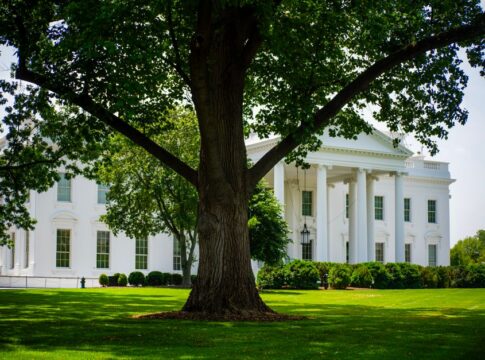
Photo: Ramaz Bluashvili / Pexels
By US Daily Tribune Newsroom, National Desk — Published October 21, 2026
Table of Contents
- Key Takeaways
- The Background & Context
- Why This Matters
- Reactions & Analysis
- What Happens Next
- Frequently Asked Questions
The Department of Justice has stepped into the legal spotlight to defend the Trump administration’s controversial decision to restrict certain journalists’ access to the White House. In court filings, federal attorneys argue that the government has broad authority to control who enters the executive mansion, framing press credentials as a privilege rather than a constitutional right. The DOJ defends Trump White House policies by invoking national security concerns and the need to maintain “professionalism and decorum” in the nation’s most visible seat of power.
The legal battle has reignited fierce debate about press freedom, government transparency, and the balance of power between the executive branch and the Fourth Estate. At stake is not merely access for individual reporters, but broader questions about how the federal government can regulate the flow of information to the American public.
This case arrives at a moment when tensions between political leadership and the media remain high. The Justice Department’s arguments seek to establish clear precedent that White House access is discretionary, not mandatory—a position that civil liberties advocates warn could fundamentally reshape the relationship between government and press.
Key Takeaways
- The Department of Justice has filed legal arguments defending the Trump White House’s authority to ban or restrict media access to the executive mansion.
- Federal attorneys cite national security concerns and the need for “professionalism and decorum” as justification for limiting press credentials.
- The DOJ characterizes White House access as a privilege granted at the discretion of the executive branch, not an absolute constitutional right.
- Legal experts and press freedom advocates view the case as a critical test of First Amendment protections and government accountability.
- The lawsuit challenging the media restrictions has prompted the Justice Department to urge courts to reject the claims and uphold executive authority.
- The outcome could establish lasting precedent affecting how future administrations interact with journalists and manage information flow.
The Background & Context
The relationship between the White House and the press corps has always been complex, marked by mutual dependence and inherent tension. Presidents need journalists to communicate with the public. Reporters need access to hold power accountable. For decades, this arrangement operated under informal norms and traditions that generally preserved robust press access to the executive branch.
Those norms faced unprecedented strain during the Trump administration. Various incidents involving credential suspensions and access restrictions sparked legal challenges from news organizations and individual journalists. The current case represents the federal government’s formal defense of its authority to determine who may enter the White House grounds and attend briefings.
The Justice Department’s legal position rests on several pillars. First, attorneys argue that the president and his staff must maintain security and order within the White House complex. They contend that unfettered access could compromise both physical safety and the ability of executive branch officials to conduct government business effectively.
Second, the government asserts that maintaining standards of professional conduct justifies screening and, when necessary, excluding journalists who fail to meet behavioral expectations. The reference to “professionalism and decorum” suggests that the administration believes it can enforce civility standards as a condition of access.
Third, and perhaps most significantly, the DOJ frames White House credentials as a discretionary privilege. This characterization stands in sharp contrast to the view held by many press freedom organizations, which argue that excluding journalists from covering the president amounts to viewpoint discrimination that violates First Amendment protections.
Why This Matters
For ordinary Americans far removed from the White House briefing room, this legal battle might seem like an inside-the-Beltway squabble. Nothing could be further from the truth. The outcome will directly affect how much information citizens receive about their government’s actions and decisions.
When administrations can selectively exclude reporters, they gain power to shape narratives and limit uncomfortable questions. A president facing a hostile press corps might be tempted to credential only friendly outlets, creating an echo chamber that serves political interests rather than public accountability. The Supreme Court and lower federal courts have historically recognized that a free press serves as a check on government power—but the precise contours of that protection remain contested.
National security concerns add complexity. No serious observer disputes that the Secret Service and other agencies must maintain safety protocols. The question is whether “national security” can become a catch-all justification for excluding journalists whose coverage proves inconvenient or critical. History offers cautionary tales of governments invoking security to suppress legitimate reporting.
The case also matters because it tests the durability of democratic norms. Previous administrations, regardless of party, generally respected certain boundaries in their dealings with the press. When those informal guardrails erode, formal legal mechanisms become the last line of defense. Courts must now decide whether to codify new rules or rely on tradition and executive discretion.
Taxpayers fund the White House and the federal government. Citizens have a stake in ensuring that journalists can effectively monitor how their money is spent and how their leaders govern. Restricting press access diminishes transparency and makes it harder for voters to make informed decisions at the ballot box.
Reactions & Analysis
The Justice Department’s court filings have drawn sharp responses from across the political and media spectrum. Press freedom organizations view the arguments as a dangerous expansion of executive power. They contend that allowing administrations to define “professionalism” as they see fit creates a subjective standard ripe for abuse.
Legal scholars note that the case touches on unresolved constitutional questions. While the First Amendment protects freedom of the press, courts have never definitively ruled that journalists possess an absolute right to access any particular government facility. The Supreme Court has recognized that reasonable time, place, and manner restrictions can apply even to protected speech.
However, content-based or viewpoint-based restrictions face much stricter scrutiny. If evidence suggests that reporters were excluded because of their critical coverage rather than legitimate security or decorum concerns, courts may view such actions as unconstitutional retaliation.
The federal government’s emphasis on White House access as a privilege rather than a right represents a strategic legal position. By framing credentials as discretionary, the DOJ seeks to maximize executive flexibility and minimize judicial oversight. This approach aligns with broader arguments about presidential authority and the separation of powers.
Civil liberties advocates counter that this framing ignores the special role of the press in American democracy. Unlike ordinary citizens seeking to tour the White House, journalists serve a constitutional function. Their exclusion affects not just their individual interests but the public’s right to receive information about government activities.
What Happens Next
The immediate future depends on how courts respond to the Justice Department’s arguments. Judges must weigh competing interests: executive authority versus press freedom, security concerns versus transparency, and discretionary privilege versus constitutional rights.
If courts side with the government, future administrations will possess broad latitude to manage White House access with minimal judicial interference. This outcome could encourage more aggressive credential restrictions, particularly during politically charged moments or when presidents face critical coverage.
Conversely, a ruling favoring the media plaintiffs would establish important precedent protecting journalistic access. Courts might require the government to demonstrate compelling justifications for exclusions and to apply standards consistently rather than selectively. Such a decision could reinforce transparency norms and limit executive discretion.
The case may ultimately reach the Supreme Court, particularly if lower courts issue conflicting rulings or if the legal questions prove sufficiently novel and important. The high court’s current composition and its approach to executive power and First Amendment issues would heavily influence any eventual decision.
Beyond the courtroom, the controversy will likely fuel ongoing debates about media bias, government accountability, and the proper relationship between political leaders and journalists. These tensions transcend any single administration and reflect deeper divisions about institutional trust and democratic governance.
Congress could potentially intervene by passing legislation that codifies press access standards, though such efforts would face political hurdles and might trigger separation-of-powers challenges. The more likely scenario involves continued reliance on judicial interpretation and executive discretion, moderated by public pressure and political consequences.
Frequently Asked Questions
What specific legal arguments is the DOJ making in defense of the media restrictions?
The Department of Justice argues that White House access is a privilege, not a constitutional right, and that the executive branch has authority to maintain security, order, and standards of professionalism and decorum. The government cites national security concerns and contends that it can exercise discretion in determining which journalists receive credentials to cover the president and White House activities.
How does this case affect ordinary Americans who don’t work in journalism?
The case directly impacts how much information citizens receive about their government. When administrations can restrict press access, they gain greater control over public narratives and face fewer uncomfortable questions. This affects voters’ ability to make informed decisions and reduces government accountability. The outcome will shape transparency standards that determine how much Americans know about federal policies and presidential actions.
Has the Supreme Court previously ruled on White House press access?
The Supreme Court has not definitively resolved whether journalists have a constitutional right to White House access. While the Court recognizes press freedom as fundamental to democracy, it has also allowed reasonable restrictions on when and where journalists can gather news. This case could prompt courts to clarify the boundaries of executive authority versus First Amendment protections in the specific context of White House credentials.
What precedent could this case establish for future administrations?
If courts uphold the government’s position, future presidents will have broad authority to determine press access with minimal judicial oversight. This could encourage more aggressive credential restrictions based on subjective standards. If courts rule against the government, they would establish protections requiring administrations to justify exclusions and apply standards consistently, potentially limiting executive discretion and strengthening transparency norms.
As this legal battle unfolds, Americans should recognize that the stakes extend far beyond Washington politics. The outcome will help define the boundaries between government power and press freedom for years to come. In a democracy that depends on informed citizens, access to information about our leaders isn’t merely a journalist’s concern—it belongs to all of us.