
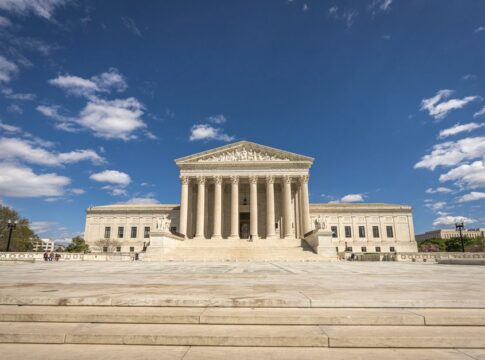
Photo: Mark Stebnicki / Pexels
By US Daily Tribune Newsroom, National Desk — Published August 31, 2026
Table of Contents
- Key Takeaways
- The Background & Context
- Why This Matters
- Reactions & Analysis
- What Happens Next
- Frequently Asked Questions
The Trump administration has turned to the nation’s highest court in a bid to keep construction moving on a controversial $400 million White House ballroom project. Trump asks Supreme Court intervention comes as legal challenges threaten to halt work on the massive expansion, which would transform the executive mansion’s event-hosting capabilities. Chief Justice John Roberts has now granted temporary relief, allowing construction crews to continue their work while the full legal battle plays out.
The request marks the latest flashpoint in an ongoing dispute over the scope and scale of renovations at the White House. According to multiple reports, the administration filed an emergency application seeking to bypass lower court rulings that had cast doubt on the project’s legality. The Chief Justice’s decision to allow work to proceed offers the Trump team a significant, if temporary, victory.
At stake is not just a lavish ballroom, but questions about presidential authority, taxpayer spending, and the balance of power between the executive branch and the judiciary. The case has drawn national attention as Americans watch to see whether the courts will permit such an expensive addition to the nation’s most famous residence during a time of fiscal scrutiny.
Key Takeaways
- President Trump filed an emergency request with the Supreme Court to allow construction on a $400 million White House ballroom to continue during ongoing legal appeals.
- Chief Justice John Roberts granted temporary permission for the work to proceed, preventing an immediate halt to construction activities.
- The ballroom project has sparked controversy over its substantial cost and the appropriateness of such an expansion to the historic White House complex.
- The Supreme Court’s involvement highlights the legal uncertainty surrounding the project and suggests further judicial review may be forthcoming.
- The administration’s appeal seeks to override lower court concerns while the broader legal challenge works through the federal court system.
- The temporary stay allows construction to continue for now, but does not resolve the underlying legal questions about the project’s authorization.
The Background & Context
The White House has undergone numerous renovations and expansions throughout American history, from the Truman-era reconstruction to more recent security upgrades. Each generation of occupants has left its mark on the executive mansion, balancing historic preservation with modern needs. Yet few proposed changes have carried a price tag quite like the current ballroom project.
The $400 million figure represents a substantial public investment in what critics describe as an opulent addition to government infrastructure. Supporters of the project argue that the White House’s current event spaces are inadequate for modern state functions, limiting the president’s ability to host large diplomatic receptions and official ceremonies. The existing facilities, they contend, were designed for a different era of governance and international relations.
Legal challenges emerged as opponents questioned whether proper authorization and environmental review had been completed. Lower courts apparently raised concerns sufficient to threaten construction timelines, prompting the administration to seek emergency relief from the Supreme Court. The Chief Justice’s willingness to grant a temporary stay suggests the legal issues are complex enough to warrant careful consideration.
The project has become entangled in broader debates about government spending priorities. Critics point to pressing infrastructure needs across the country, arguing that $400 million could be better spent on roads, bridges, or public services. Defenders counter that the White House serves unique symbolic and functional purposes that justify special investment.
Why This Matters
For American taxpayers, the ballroom controversy raises fundamental questions about how public funds should be allocated. A $400 million expenditure on a single building project invites scrutiny, particularly when many communities struggle with aging infrastructure and underfunded public services. The case tests the limits of executive discretion over federal property and spending.
The Supreme Court’s involvement signals that constitutional or statutory questions may be at play. When the nation’s highest court agrees to intervene, even temporarily, it often indicates that lower courts have identified serious legal concerns. Citizens have a stake in understanding whether proper procedures were followed before breaking ground on such an expensive addition.
Beyond the immediate financial considerations, the case touches on the separation of powers. Can courts halt executive branch construction projects? What authority does a president have to modify the White House complex? These questions have implications that extend far beyond a single ballroom, potentially affecting how future administrations approach federal building projects.
The timing also matters. With the nation watching federal spending more closely than ever, high-profile luxury projects face heightened scrutiny. Public opinion on government expenditures can shift quickly, and a $400 million ballroom may become a lightning rod for broader frustrations about priorities in Washington.
Reactions & Analysis
The Chief Justice’s decision to allow construction to continue represents a measured approach that preserves the status quo while the legal system works. By granting temporary relief, Roberts has avoided the disruption and potential waste that would come from halting an already-underway construction project, while keeping the door open for substantive legal review.
Legal experts note that emergency applications to the Supreme Court are granted sparingly, typically only when the applicant can demonstrate irreparable harm from delay. The Trump administration apparently convinced the Chief Justice that stopping construction would cause damage that could not be easily remedied later, whether through increased costs, contractual complications, or other factors.
The case illustrates the complex interplay between executive action and judicial oversight. Presidents have historically enjoyed considerable latitude in managing federal property, but that authority is not unlimited. Courts can and do intervene when they identify potential violations of law or procedure, creating a system of checks and balances that sometimes plays out in high-profile disputes.
Public reaction has been predictably divided along familiar lines. Those who support the administration view the ballroom as a necessary upgrade to America’s premier government building, worthy of investment. Critics see it as emblematic of misplaced priorities and excessive spending on projects that benefit the few rather than the many.
What Happens Next
The temporary stay granted by Chief Justice Roberts is just that—temporary. The underlying legal challenge will continue to work through the court system, with the Supreme Court potentially taking up the case for full review if the issues prove sufficiently weighty. Construction crews can continue their work for now, but the project’s ultimate fate remains uncertain.
If lower courts ultimately rule against the administration, the Supreme Court may need to decide whether to hear the case on its merits. Such a decision would depend on whether the justices believe the case presents important questions of federal law that require the Court’s intervention. Not every dispute reaches that level, even when it involves high-profile parties.
Meanwhile, the $400 million project continues to consume resources and take shape. Each day of construction makes it harder to reverse course, creating facts on the ground that may influence judicial thinking. Courts are often reluctant to order the demolition of partially completed structures, particularly when public funds have already been spent.
Congressional oversight may also play a role going forward. Lawmakers from both parties could demand hearings, request documentation, or even attempt to cut funding for the project. The power of the purse remains one of Congress’s most potent tools for checking executive action, though exercising it can prove politically challenging.
The case may also affect how future administrations approach major building projects. If courts impose strict procedural requirements or heightened scrutiny on White House renovations, it could slow or complicate similar efforts down the road. Precedents set in this dispute could echo for years in the relationship between the executive branch and the judiciary.
Frequently Asked Questions
Why does the White House need a $400 million ballroom?
Supporters of the project argue that the White House’s existing event spaces are inadequate for modern state functions and large diplomatic receptions. They contend that a new ballroom would enhance the president’s ability to conduct official ceremonies and host foreign dignitaries in a manner befitting America’s global leadership role. Critics, however, question whether such an expensive addition is necessary or appropriate given other national priorities.
What legal issues are at stake in this case?
While the specific legal challenges have not been fully detailed in available reports, disputes over federal construction projects typically involve questions about proper authorization, environmental review, historic preservation requirements, and spending authority. The fact that courts raised concerns sufficient to threaten the project suggests potential procedural or statutory violations that require judicial resolution.
Can the Supreme Court stop the construction entirely?
Yes, the Supreme Court has the authority to issue injunctions halting construction if it determines that the project violates federal law or constitutional requirements. However, Chief Justice Roberts’s decision to allow work to continue temporarily suggests the Court is taking a cautious approach, preserving options while the legal process unfolds. A final determination would require full briefing and potentially oral arguments before the Court.
How long will the temporary stay last?
Temporary stays issued by the Supreme Court typically remain in effect until the Court issues a final ruling on the underlying case or until the lower court proceedings are resolved. The duration can vary from weeks to months depending on the complexity of the legal issues and the Court’s schedule. Construction may continue during this entire period unless the Court modifies its order.
As bulldozers and construction crews continue their work under the watchful eyes of both supporters and critics, the $400 million ballroom stands as a tangible reminder of the tensions between executive ambition and judicial restraint. The Supreme Court’s ultimate decision will help define the boundaries of presidential authority over federal property, with consequences that reach far beyond the walls of the White House itself. For now, the hammers keep swinging while America waits to see what the courts will say.