
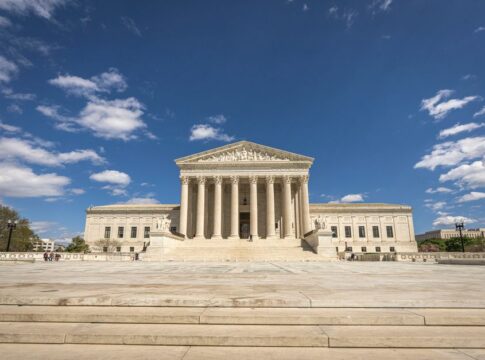
Photo: Mark Stebnicki / Pexels
By US Daily Tribune Newsroom, National Desk — Published November 20, 2026
Table of Contents
- Key Takeaways
- The Background & Context
- Why This Matters
- Reactions & Analysis
- What Happens Next
- Frequently Asked Questions
The nation’s highest court is poised to wade into a contentious legal battle over who can serve as Nevada’s top federal prosecutor. The US Supreme Court will consider an appeal from the Department of Justice after a lower court ruled that Sigal Chattah is illegally serving in that role. The case has drawn national attention because Chattah is viewed as an ally of former President Donald Trump, and the dispute highlights ongoing tensions between federal law enforcement and political appointments in the post-administration transition period.
At the heart of the matter is whether the DOJ can keep Chattah in her position as Nevada’s acting U.S. Attorney despite a federal appeals court determination that her appointment violates statutory guidelines. The Supreme Court’s decision to hear the case signals that the justices recognize the broader implications for executive power, prosecutorial independence, and the proper procedures for filling critical law enforcement positions across the country.
This legal showdown comes at a time when questions about the politicization of the Justice Department remain front and center in American political discourse. For Nevada residents and the broader public, the outcome could determine who leads federal criminal prosecutions in the state and set precedent for similar disputes nationwide.
Key Takeaways
- The US Supreme Court will review a Department of Justice appeal concerning Sigal Chattah’s service as Nevada’s top federal prosecutor.
- A federal appeals court previously found that Chattah is serving illegally in the position, creating a legal conflict the high court must now resolve.
- Chattah is identified as an ally of former President Trump, adding political dimensions to what is ostensibly a procedural legal question.
- The DOJ is asking the Supreme Court to allow Chattah to remain in her role while the legal challenge proceeds.
- The case raises fundamental questions about executive appointments, prosecutorial authority, and the limits of federal law enforcement leadership transitions.
- Nevada’s federal prosecution operations hang in the balance as the nation’s highest court prepares to weigh in on the dispute.
The Background & Context
The position of U.S. Attorney carries enormous weight in the American justice system. These presidential appointees serve as the chief federal law enforcement officers in their respective districts, overseeing everything from white-collar crime prosecutions to drug trafficking cases and civil rights enforcement. In Nevada, a state with complex federal jurisdiction issues spanning public lands, organized crime history, and interstate commerce through Las Vegas, the role is particularly significant.
Sigal Chattah’s path to becoming Nevada’s acting U.S. Attorney occurred during a period of transition in federal leadership. The legal challenge to her appointment centers on technical requirements governing how and when acting officials can serve in these critical positions. Federal law includes specific provisions designed to ensure that U.S. Attorneys meet certain qualifications and follow proper appointment procedures, safeguards intended to maintain prosecutorial independence and prevent improper political influence.
The appeals court ruling that found Chattah’s service illegal likely turned on interpretations of the Federal Vacancies Reform Act or related statutes that govern temporary appointments to Senate-confirmed positions. These laws were enacted to prevent administrations from circumventing the Senate confirmation process by indefinitely installing “acting” officials who never face congressional scrutiny. The tension between executive flexibility and legislative oversight has created a gray area that courts are now being asked to clarify.
Chattah’s connection to Trump adds another layer to the controversy. In an era when the Justice Department’s independence has been repeatedly questioned, appointments perceived as politically motivated face heightened scrutiny from courts, Congress, and the public. Whether those perceptions are fair or not, they shape the context in which this legal battle unfolds.
Why This Matters
For ordinary Americans, the question of who serves as U.S. Attorney might seem like inside-baseball Washington politics. But the implications reach into communities across Nevada and set precedents that affect federal law enforcement nationwide. U.S. Attorneys make daily decisions about which cases to prosecute, which defendants to charge, and how to allocate limited investigative resources. These choices directly impact public safety, civil rights protection, and the fair administration of justice.
When the legitimacy of a U.S. Attorney’s appointment is in question, it casts a shadow over every case that office handles. Defense attorneys may challenge prosecutions on the grounds that the person directing the case lacks legal authority to do so. Convictions could potentially be overturned. Ongoing investigations might be compromised. The uncertainty creates chaos in an institution that depends on clear lines of authority and public confidence.
The Supreme Court’s involvement elevates this from a Nevada-specific dispute to a matter of national constitutional importance. The justices will likely grapple with fundamental questions about separation of powers: How much authority does the executive branch have to staff its own agencies? What role does the Senate play in checking that power? And what happens when statutory time limits or qualification requirements conflict with the practical need to keep critical positions filled?
Taxpayers have a stake in this outcome as well. Legal battles over appointments consume government resources, distract from core law enforcement missions, and can lead to costly delays in the administration of justice. Every hour federal lawyers spend litigating whether their boss is legally authorized to serve is an hour not spent prosecuting criminals or defending the public interest in court.
Reactions & Analysis
The Department of Justice’s decision to appeal to the Supreme Court demonstrates how seriously the federal government views this case. By asking the high court to intervene, the DOJ is signaling that it believes the appeals court decision threatens its ability to maintain continuity in U.S. Attorney offices across the country. The request to allow Chattah to remain in position pending the Supreme Court’s decision suggests concerns about operational disruption if she were immediately removed.
Legal experts following the case note that it arrives at the Supreme Court during a period when the justices have shown interest in questions of administrative law and executive authority. Recent terms have seen the Court scrutinize agency power and the limits of federal regulatory authority. How the justices approach this case could offer clues about their broader philosophy regarding executive branch appointments and the scope of presidential prerogatives.
In Nevada, the uncertainty has created an unusual situation where the state’s top federal prosecutor operates under a legal cloud. Career prosecutors in the office must continue their work while the question of their leadership’s legitimacy plays out in the nation’s highest court. This creates practical challenges and potential morale issues within an office that handles hundreds of cases annually.
Political observers see the case as another chapter in the ongoing debate about Trump-era appointments and their aftermath. Supporters argue that qualified professionals should be allowed to serve regardless of political affiliation, and that technical legal challenges are being weaponized to undermine effective governance. Critics counter that following proper appointment procedures isn’t optional, and that no one—regardless of competence or connections—should hold power they aren’t legally entitled to exercise.
What Happens Next
The Supreme Court will now decide whether to grant full review of the case or dispose of it through summary action. If the justices agree to hear oral arguments, the case would likely be scheduled for the current or next term, with a decision potentially coming months from now. In the meantime, the Court could issue interim orders regarding Chattah’s status, either allowing her to continue serving or requiring her removal pending final resolution.
The outcome could have ripple effects beyond Nevada. Other U.S. Attorney appointments made under similar circumstances might face renewed legal challenges if the Supreme Court sides with the appeals court. Conversely, a ruling in favor of the DOJ could provide clearer guidance on the permissible scope of acting appointments and reduce future litigation over these positions.
For Sigal Chattah personally, the Supreme Court’s decision will determine whether her tenure as Nevada’s top federal prosecutor continues or comes to an abrupt end. For the Justice Department, the stakes involve institutional authority and the ability to manage its own personnel. And for the American public, the case represents another test of whether the post-Watergate reforms designed to insulate law enforcement from political pressure can withstand modern challenges.
Legal scholars will be watching closely to see how the Court balances competing values: the need for executive flexibility in staffing critical positions against statutory requirements designed to ensure accountability and proper vetting. The decision may not provide definitive answers to all questions about federal appointments, but it will certainly shape the landscape for future disputes.
Frequently Asked Questions
What does a U.S. Attorney do?
A U.S. Attorney serves as the chief federal prosecutor for a specific judicial district, overseeing all federal criminal prosecutions and representing the United States in civil litigation within that district. They lead teams of Assistant U.S. Attorneys and support staff who handle cases ranging from drug trafficking and white-collar crime to civil rights violations and terrorism. The position is appointed by the President and typically requires Senate confirmation.
Why did the appeals court rule Chattah’s appointment illegal?
While the specific legal reasoning hasn’t been detailed in available reports, appeals courts typically find appointments illegal when they violate federal statutes governing temporary appointments, such as the Federal Vacancies Reform Act. These laws impose time limits and qualification requirements on acting officials to prevent administrations from bypassing the Senate confirmation process. The court apparently determined that Chattah’s service didn’t comply with these statutory requirements.
How does this case relate to Trump?
Sigal Chattah is described as an ally of former President Trump, which adds political context to what is formally a legal dispute about appointment procedures. The case touches on broader questions about Trump-era appointments and their legitimacy, though the core legal issues involve statutory interpretation rather than direct political questions. The perception of political motivations on all sides shapes public understanding of the dispute.
When will the Supreme Court decide the case?
The timeline depends on whether the Supreme Court grants full review or handles the matter more quickly through summary disposition. If the justices agree to hear oral arguments, the case would be scheduled according to the Court’s calendar, with a decision likely coming several months after arguments. The Court could also issue interim orders affecting Chattah’s status while the case is pending, potentially resolving immediate questions about her authority even before final judgment.
As the Supreme Court prepares to consider this appeal, the case serves as a reminder that seemingly technical legal questions about appointments and procedures can have profound real-world consequences. Whether Sigal Chattah ultimately remains Nevada’s top federal prosecutor or not, the principles at stake—executive authority, prosecutorial independence, and the rule of law—will continue to shape American governance long after this particular dispute is resolved.