
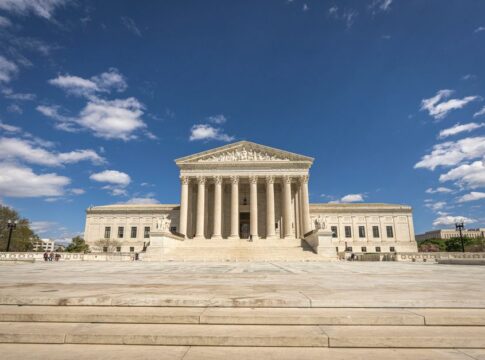
Photo: Mark Stebnicki / Pexels
By US Daily Tribune Newsroom, National Desk — Published November 18, 2026
Table of Contents
- Key Takeaways
- The Background & Context
- Why This Matters
- Reactions & Analysis
- What Happens Next
- Frequently Asked Questions
The Supreme Court has declined to hear a case that would have allowed the Trump administration to impose diversity, equity, and inclusion policies on University of California researchers. The decision, announced as part of the Court’s regular orders list, leaves in place lower court rulings and marks a significant moment in the ongoing national debate over federal authority and academic freedom.
The rejection comes at a time when DEI programs have become flashpoints in American politics. The Supreme Court rejects this particular challenge without comment, as is typical when the justices decline to take up a case. The move effectively ends this specific legal battle, though broader questions about government oversight of university research programs remain unresolved.
This case represents one of several DEI-related disputes the high court turned away in recent orders, signaling the justices’ reluctance to wade into certain aspects of the diversity debate at this juncture. The decision affects not only the University of California system but also sets a precedent for how federal authorities can interact with state-funded research institutions.
Key Takeaways
- The Supreme Court declined to hear the Trump administration’s appeal seeking to impose DEI policies on University of California researchers, ending this particular legal challenge.
- The rejection was part of a broader set of orders in which the Court turned down multiple DEI-related disputes and Second Amendment challenges.
- Lower court decisions blocking the federal government’s attempt to enforce these policies on UC researchers now stand as final.
- The case touches on fundamental questions about federal authority over state university systems and academic freedom in research institutions.
- This decision does not establish broad precedent on DEI programs generally, as the Court declined to hear the case rather than ruling on its merits.
- The outcome preserves the University of California’s current autonomy in setting its own research policies without federal DEI mandates.
The Background & Context
The dispute centers on the intersection of federal power and university autonomy. The Trump administration had sought to require University of California researchers to adhere to specific diversity, equity, and inclusion policies as a condition of receiving federal funding or engaging in federally-supported research projects. The University of California system, one of the nation’s premier public research institutions, challenged this effort in court.
DEI programs have become increasingly controversial across American institutions. Supporters argue these initiatives promote fairness and opportunity. Critics contend they can lead to discrimination or compelled speech. The debate has intensified on college campuses, where diversity statements and hiring practices have drawn scrutiny from multiple directions.
The University of California system operates ten campuses and serves more than 280,000 students. Its research enterprise brings in billions of dollars annually, much of it from federal grants through agencies like the National Institutes of Health and the National Science Foundation. Any federal mandate affecting UC researchers would have ripple effects across American science and academia.
Lower courts sided with the university, blocking the Trump administration’s attempt to impose these requirements. Those courts found problems with the federal government’s approach, though the specific legal reasoning varied. With the Supreme Court now declining to intervene, those lower court decisions become the final word in this case.
The Supreme Court’s decision to reject the case came alongside its refusal to hear other DEI-related disputes and Second Amendment challenges involving gun bans in sensitive places. This pattern suggests the justices may be strategically choosing which controversial cases to take up, possibly waiting for clearer factual records or more developed legal arguments.
Why This Matters
For American taxpayers and voters, this case raises fundamental questions about how their federal government can influence state institutions. The University of California receives substantial federal research funding, creating a complex relationship between state autonomy and federal purse strings. Can Washington dictate internal policies at state universities by leveraging that funding? This case says no, at least in this instance.
Academic freedom hangs in the balance. Researchers depend on the ability to pursue their work without political interference. When federal authorities attempt to impose specific ideological frameworks—whether progressive DEI requirements or conservative counter-mandates—scientists worry about chilling effects on inquiry and discovery.
The decision affects real people. Graduate students, postdoctoral fellows, and faculty members at UC campuses can continue their work under existing institutional policies rather than federal mandates. Research collaborations, grant applications, and hiring decisions proceed without an additional layer of federal oversight.
Beyond California, other state university systems watch closely. If the Supreme Court had taken the case and ruled for the Trump administration, similar policies could have spread nationwide. Public universities in Texas, Michigan, Florida, and elsewhere would face pressure to comply with federal DEI requirements or risk losing crucial research funding.
The broader culture war over diversity programs continues. This legal defeat for federal intervention does not resolve the underlying policy debates. State legislatures, university boards, and campus communities still grapple with how to approach diversity, equity, and inclusion in hiring, admissions, and programming.
Reactions & Analysis
The Supreme Court’s decision to turn away this case speaks volumes through silence. By declining to hear the appeal, the justices avoided wading into a politically charged dispute that divides Americans along partisan lines. Some legal observers interpret this as prudence; others see it as the Court dodging an important question about federal power and civil rights.
University officials likely view the outcome as a victory for institutional autonomy. State universities have long guarded their independence from federal micromanagement, even while accepting federal dollars. This decision reinforces the principle that accepting grants does not mean surrendering control over internal policies.
Conservative critics of DEI programs may see this as a missed opportunity. They have argued that many diversity initiatives amount to discriminatory preferences or compelled ideological conformity. They hoped the Supreme Court would use this case to establish limits on such programs, particularly at publicly funded institutions.
Progressive advocates for diversity programs, meanwhile, can claim a defensive win. The decision prevents federal authorities from imposing one-size-fits-all requirements, but it also preserves the ability of universities to maintain their own diversity initiatives without Supreme Court interference.
The inclusion of this case in a batch of rejected appeals—alongside other DEI disputes and Second Amendment challenges—suggests the Court may be waiting for a more suitable vehicle to address these contentious issues. Justices often decline cases with procedural complications or unclear factual records, preferring to wait for cleaner presentations of important legal questions.
What Happens Next
The immediate effect is clear: the University of California continues operating under its own policies. Federal authorities cannot use this particular legal theory to impose DEI requirements on UC researchers. The lower court rulings stand, and this specific case is closed.
But the larger debate continues. Other cases challenging or defending DEI programs are working their way through federal courts. The Supreme Court may eventually take up a different case that presents similar issues in a different context. The justices have shown interest in affirmative action and race-conscious policies, as evidenced by their recent ruling on college admissions.
Political dynamics matter too. Different presidential administrations take different approaches to university oversight and civil rights enforcement. Future administrations may attempt alternative legal strategies to influence university policies, or they may abandon such efforts entirely.
State legislatures are increasingly active in this space. Several states have passed laws restricting or banning DEI programs at public universities. Others have enacted protections for such initiatives. This patchwork of state-level regulation may eventually force the Supreme Court’s hand if conflicts between state and federal approaches become untenable.
Research institutions nationwide will study this outcome as they craft their own policies. Universities must balance competing pressures: federal funding requirements, state laws, accreditation standards, faculty governance, and student demands. The Supreme Court’s refusal to intervene leaves them with more flexibility but also less clarity about constitutional boundaries.
Frequently Asked Questions
What exactly did the Supreme Court decide in this case?
The Supreme Court declined to hear the case, which means it rejected the Trump administration’s appeal without ruling on the merits. This leaves the lower court decisions in place, which had blocked the federal government’s attempt to impose DEI policies on University of California researchers. The Court’s refusal to take the case effectively ends this particular legal challenge.
Does this decision affect DEI programs at other universities?
The direct legal effect is limited to the University of California system and the specific federal policies at issue in this case. However, the decision has broader implications by signaling that federal authorities cannot easily use funding leverage to dictate internal diversity policies at state universities. Other institutions may look to this outcome when resisting similar federal mandates, though each situation depends on its specific legal and factual context.
Why did the Supreme Court reject multiple DEI-related cases at once?
The Court regularly declines to hear hundreds of cases each term, often rejecting multiple cases on similar topics in a single orders list. The justices may decide that these particular cases are not the right vehicles for addressing important legal questions, perhaps due to procedural issues, unclear facts, or a preference to wait for the issues to develop further in lower courts before intervening.
Can the federal government still influence university research policies?
Yes, but within limits. Federal agencies can attach conditions to research grants, require compliance with certain regulations, and enforce civil rights laws. However, this decision suggests there are boundaries to how far federal authorities can go in dictating internal university policies, particularly at state institutions. The specific limits remain subject to ongoing legal and political debate.
The Supreme Court’s decision to stay out of this fight leaves universities, researchers, and policymakers navigating uncertain terrain. The rejection protects institutional autonomy for now, but the fundamental tensions between federal authority, state sovereignty, and academic freedom remain unresolved. As the national conversation about diversity, equity, and inclusion continues to evolve, more legal challenges seem inevitable. For today, though, the University of California and its researchers can proceed without this particular federal mandate hanging over their work.