
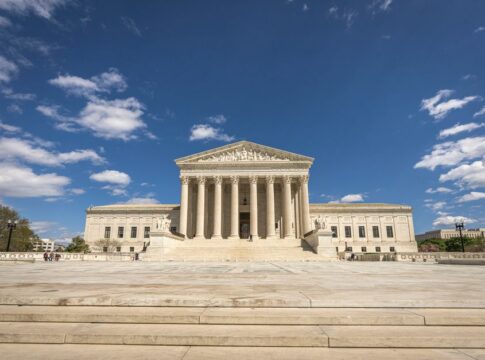
Photo: Mark Stebnicki / Pexels
By US Daily Tribune Newsroom, National Desk — Published September 19, 2026
Table of Contents
- Key Takeaways
- The Background & Context
- Why This Matters
- Reactions & Analysis
- What Happens Next
- Frequently Asked Questions
The Trump administration has escalated a contentious legal battle over federal research funding to the nation’s highest court. In a move that could reshape the relationship between the federal government and public universities, administration lawyers are asking the Supreme Court to review lower court decisions that blocked the cancellation of billions of dollars in grants to California’s university systems. The petition centers on whether the executive branch has the authority to terminate previously awarded grants based on policy disagreements—a question with profound implications for academic freedom and federal oversight.
The dispute began when the administration moved to cancel federal funding to California universities after conducting what has been described as a keyword search targeting diversity, equity, and inclusion programs. That search allegedly identified billions in grants that the administration deemed objectionable under its policy priorities. Lower courts intervened, halting the grant terminations and setting the stage for this Supreme Court showdown.
At stake is not merely the fate of California’s research institutions. The outcome could determine how future administrations wield federal funding as a policy tool and whether universities can rely on grant commitments once made.
Key Takeaways
- The Trump administration petitions the Supreme Court to overturn rulings that blocked the termination of University of California grants worth billions of dollars.
- The grant cancellations stemmed from a keyword-based review targeting diversity, equity, and inclusion initiatives at California universities.
- Lower courts ruled against the administration, finding that the grant terminations violated established legal procedures and contractual obligations.
- The case raises fundamental questions about executive power, academic freedom, and the stability of federal research funding commitments.
- A Supreme Court decision could set precedent affecting universities nationwide and the broader relationship between federal agencies and grant recipients.
- Legal observers characterize the administration’s approach as part of a broader pattern of aggressive executive action on policy priorities.
The Background & Context
Federal research grants form the backbone of American scientific advancement. Universities across the country depend on these funds to conduct everything from cancer research to climate studies. The system operates on a principle of peer review and competitive application, with grants typically awarded for multi-year periods based on scientific merit.
California’s public university systems—including the University of California, California State University, and community colleges—receive substantial federal funding annually. These institutions employ thousands of researchers and educate hundreds of thousands of students. When the federal government awards a grant, it enters into what is essentially a contract, with specific terms, deliverables, and timelines.
The current controversy erupted when the Trump administration initiated a systematic review of federal grants to identify those supporting diversity, equity, and inclusion programs. According to reporting, this review involved searching for specific keywords in grant descriptions and university programs. The administration argued that such programs violated its interpretation of federal anti-discrimination laws and executive orders.
What followed was an attempt to terminate grants already in progress—an action that legal experts say is highly unusual. Typically, federal agencies might decline to renew funding or adjust future grant competitions, but canceling active grants raises complex legal issues. Recipients have relied on these funds to hire staff, purchase equipment, and make long-term commitments.
When the administration moved forward with terminations, university officials immediately challenged the actions in federal court. They argued that the cancellations violated administrative law, breached contractual obligations, and lacked proper legal authority. Multiple judges agreed, issuing injunctions that prevented the grant terminations from taking effect.
Why This Matters
For American taxpayers and citizens, this case carries consequences that extend far beyond university campuses. Federal research funding drives innovation that touches daily life—from medical breakthroughs to technological advances. Disrupting this system creates uncertainty that could slow scientific progress.
The stability of grant commitments matters enormously. Researchers plan years-long projects based on awarded funding. Graduate students pursue degrees. Universities hire specialized staff. If the federal government can unilaterally cancel grants mid-stream based on shifting policy winds, the entire research ecosystem becomes unstable.
Academic freedom is also at issue. Universities have traditionally maintained independence in determining their educational priorities and research agendas. While they accept federal funds and must comply with certain regulations, the idea that keyword searches could trigger funding cancellations raises concerns about government overreach into academic decision-making.
The case also highlights tensions in American federalism. California has charted its own course on many policy issues, including diversity initiatives. The question becomes: can the federal government use funding as leverage to override state policy choices, particularly when those funds were awarded under different terms?
For defense and national security, the implications are significant. Many university research grants support work critical to American technological leadership. Disrupting these partnerships could benefit competitors abroad. Scientists and institutions need predictability to compete globally.
Reactions & Analysis
Legal scholars observing the case have noted the administration’s aggressive posture. Some characterize the approach as part of a broader strategy to use executive power expansively, testing the boundaries of presidential authority. The decision to appeal to the Supreme Court after losing in lower courts signals determination to establish favorable precedent.
University administrators have expressed alarm at what they see as an unprecedented threat to research independence. They argue that allowing grant cancellations based on policy disagreements would fundamentally alter the relationship between government and academia. Researchers would face pressure to avoid certain topics or approaches that might fall out of political favor.
Civil liberties advocates view the case through the lens of free speech and academic freedom. They contend that using keyword searches to target programs represents a form of ideological policing incompatible with First Amendment principles. Even if diversity programs are the current target, the precedent could be used against any subject matter.
Supporters of the administration’s position argue that the executive branch has both the authority and responsibility to ensure federal funds are spent consistent with current policy priorities. They contend that previous administrations have also adjusted grant programs to reflect their values, and that this case simply makes explicit what has always been implicit in federal funding relationships.
The judicial response so far has been skeptical of the administration’s arguments. Multiple courts have found that the grant terminations failed to follow required procedures, lacked adequate legal justification, and would cause irreparable harm to research institutions and ongoing projects.
What Happens Next
The Supreme Court now faces a decision about whether to take up the case. The justices could decline to hear it, leaving the lower court rulings in place. Or they could grant review, potentially setting the stage for a major decision on executive power and federal grants.
If the Court agrees to hear arguments, a decision would likely come months from now. In the meantime, the injunctions blocking grant terminations remain in effect. Universities continue operating under existing grant agreements, but with considerable uncertainty about the future.
The outcome could reshape how federal agencies interact with grant recipients across all sectors. A ruling favoring broad executive authority to cancel grants could affect not just universities but hospitals, research institutes, and state and local governments that receive federal funding.
Alternatively, a decision limiting executive power could reinforce protections for grant recipients and establish clearer boundaries around when and how the government can alter funding commitments. Such a ruling might require more formal processes and stronger justifications before canceling active grants.
Congress could also intervene. Lawmakers might pass legislation clarifying the terms under which federal grants can be terminated, or they could impose additional procedural requirements on agencies. However, in the current political environment, legislative action appears unlikely.
Universities are preparing for various scenarios. Some are diversifying their funding sources to reduce dependence on federal grants. Others are strengthening legal protections in grant agreements. All are watching the Supreme Court closely.
Frequently Asked Questions
What exactly is the Trump administration asking the Supreme Court to do?
The administration is petitioning the Supreme Court to review and overturn lower court rulings that blocked the termination of federal grants to University of California institutions. The administration argues it has the authority to cancel these grants based on policy objections to diversity, equity, and inclusion programs, while lower courts found such cancellations violated legal procedures and contractual obligations.
How much federal funding is at stake in this case?
Reports indicate that billions of dollars in grants to California universities were targeted for cancellation following the administration’s keyword-based review. These grants support a wide range of research activities, from basic science to applied research, and fund numerous researchers, staff positions, and ongoing projects across California’s public university systems.
Could this affect universities outside of California?
Absolutely. While this case specifically involves California institutions, a Supreme Court ruling would establish precedent affecting all universities and research institutions that receive federal grants nationwide. The decision could determine whether any administration can cancel grants based on policy disagreements, creating implications for the entire American research enterprise.
What happens to the grants while the Supreme Court considers the petition?
The lower court injunctions remain in effect, meaning the grant terminations are blocked and universities continue receiving their funding as originally awarded. If the Supreme Court declines to hear the case, those injunctions stand. If the Court agrees to review the matter, the grants would likely remain in place until a final decision is reached.
As this legal battle moves toward the nation’s highest court, researchers continue their work in laboratories and classrooms across California, uncertain whether the funding supporting their efforts will survive the political and legal turbulence. The Supreme Court’s decision—whether to hear the case and, if so, how to rule—will resonate far beyond university campuses, shaping the balance of power between federal authority and institutional independence for years to come.