
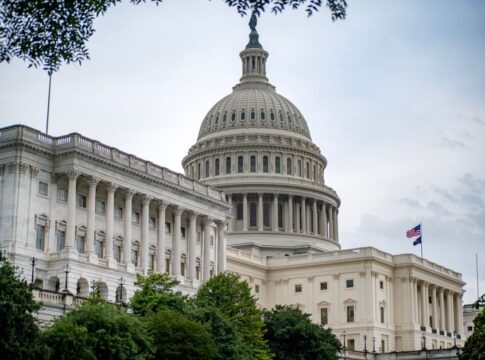
Photo: Ramaz Bluashvili / Pexels
By US Daily Tribune Newsroom, National Desk — Published October 6, 2026
Table of Contents
- Key Takeaways
- The Background & Context
- Why This Matters
- Reactions & Analysis
- What Happens Next
- Frequently Asked Questions
A sweeping effort to reshape America’s colleges and universities is underway, marking one of the most consequential federal interventions in higher education in decades. The tracking of Trump’s crackdown on higher education reveals a multi-pronged campaign that touches everything from campus speech policies to funding mechanisms, with implications that ripple through every corner of the national news landscape. For millions of American families navigating rising tuition costs and debates over academic freedom, these shifts represent more than abstract policy—they’re reshaping the institutions where their children learn and their tax dollars flow.
The crackdown encompasses regulatory changes, executive actions, and rhetorical pressure aimed at colleges and universities across the country. While supporters frame these measures as necessary corrections to perceived liberal bias and fiscal irresponsibility, critics warn of unprecedented federal government overreach into academic institutions. The tension has sparked fierce debate about the proper role of Washington in campus life, the meaning of free speech in educational settings, and whether political considerations should drive funding decisions for research and student aid.
What makes this moment particularly complex is the collision of multiple forces: a Supreme Court that has already reshaped affirmative action policies, a defense of traditional academic norms by some unlikely voices, and a broader cultural battle over what American higher education should look like in the 21st century.
Key Takeaways
- Multiple federal initiatives are targeting various aspects of higher education operations, from admissions policies to research funding and campus speech regulations.
- The crackdown represents a significant expansion of federal government involvement in traditionally autonomous academic institutions, raising constitutional and practical questions.
- Media coverage has revealed inconsistencies in how academic freedom is defended, with some corporate pundits more concerned about student protesters than government intervention.
- The policies affect not just elite universities but community colleges, public institutions, and private schools that rely on federal funding and accreditation.
- Legal challenges are mounting, with several cases potentially headed to the Supreme Court to determine the boundaries of federal authority over higher education.
- The debate has exposed deep partisan divides over the purpose and value of American higher education, with implications for future policy regardless of which party controls Washington.
The Background & Context
American higher education has long occupied a unique space in the national landscape—part public utility, part private enterprise, heavily subsidized by taxpayers yet fiercely protective of institutional autonomy. For decades, a rough consensus held that while government could attach strings to federal funding, direct intervention into academic affairs remained largely off-limits. That consensus is now fracturing.
The current crackdown builds on years of growing conservative frustration with what many perceive as ideological homogeneity on campuses. Surveys consistently show that faculty at most institutions lean left, particularly in humanities and social sciences. Republicans increasingly view universities as hostile environments for conservative students and ideas. This perception has fueled calls for action that go beyond traditional policy debates about student loans or research grants.
The Supreme Court’s recent decision striking down race-conscious admissions policies already demonstrated how quickly the legal and political landscape could shift. That ruling sent shockwaves through admissions offices nationwide, forcing institutions to rethink decades of practice. But it was only one piece of a larger puzzle. The current wave of initiatives extends far beyond admissions into areas like curriculum content, diversity programs, and even the composition of university boards.
Federal funding gives Washington substantial leverage. Colleges and universities receive billions in research grants, student aid, and other support. The threat of losing that money—or even facing increased regulatory scrutiny—gives policymakers powerful tools to influence behavior. The question is how far that influence can legally and ethically extend.
Why This Matters
For American families, these policy shifts carry immediate practical consequences. Parents wonder whether their children will face politicized admissions processes or campus environments where certain viewpoints face official sanction. Students question whether their degrees will retain value if institutions lose accreditation or federal funding. Faculty worry about academic freedom and the ability to pursue research without political interference.
The financial stakes are enormous. Higher education represents a trillion-dollar sector of the American economy. Universities employ millions, conduct crucial research, and serve as economic anchors for communities from college towns to major cities. Disruption to this system affects not just students and professors but entire regional economies dependent on institutional stability.
There’s also a broader question about the role of education in democracy. Universities have traditionally served as spaces for debate, research, and the development of critical thinking skills. When federal policy begins dictating what can be taught, who can be admitted, or how campus speech is regulated, it raises fundamental questions about intellectual freedom and the marketplace of ideas. These aren’t abstract philosophical concerns—they shape the kind of society America will be for generations to come.
The crackdown also tests constitutional boundaries. The First Amendment protects free speech, but how does that apply when government funds are involved? The Tenth Amendment reserves powers to states, but federal spending authority is broad. Courts will ultimately decide these questions, but the legal uncertainty creates chaos for institutions trying to plan for the future.
Reactions & Analysis
Response to the higher education crackdown has fallen along predictable partisan lines, but with some notable complications. Republicans generally applaud efforts to bring accountability and ideological balance to campuses they view as dominated by liberal orthodoxy. They argue that taxpayers shouldn’t subsidize institutions that discriminate against conservative viewpoints or waste money on what they consider frivolous programs.
Democrats and many education advocates warn of dangerous precedents. They argue that academic freedom requires insulation from political pressure, regardless of which party wields power. Today’s targets might be diversity offices and ethnic studies programs, they note, but tomorrow a different administration could use the same tools to punish different viewpoints. The principle of university autonomy, they insist, protects everyone in the long run.
According to analysis from media watchdogs, corporate pundits have shown selective concern about threats to academic freedom. When student protesters disrupt campus events or demand policy changes, these commentators often rush to defend open inquiry and free expression. But when government officials threaten funding cuts or regulatory action against universities, the same voices frequently fall silent or even support the intervention. This inconsistency, critics argue, reveals that the defense of academic freedom is sometimes more about partisan preferences than principled commitment to institutional autonomy.
University administrators find themselves in an impossible position. They face pressure from federal officials, state legislators, trustees, faculty, students, and alumni—often pulling in opposite directions. Many are quietly complying with new requirements while publicly maintaining commitment to their educational missions. Others are preparing legal challenges, calculating that the courts offer better odds than political negotiation.
What Happens Next
The legal battles have only begun. Multiple lawsuits challenge various aspects of the crackdown, and several appear destined for the Supreme Court. The current Court has shown willingness to reconsider long-standing precedents, particularly in areas touching on race, speech, and federalism. How the justices rule will determine not just the fate of specific policies but the broader balance of power between Washington and academic institutions.
In the meantime, universities face difficult choices. Some are proactively changing policies to avoid confrontation, eliminating programs they fear will draw scrutiny or revising admissions practices to comply with new interpretations of existing law. Others are digging in, betting that legal challenges will succeed or that political winds will shift. The divergence in strategies means American higher education may become increasingly fragmented, with different institutions operating under different rules depending on their funding sources, state locations, and risk tolerance.
The 2024 election cycle will prove crucial. If current policies continue, they’ll become entrenched, with bureaucracies built around enforcement and institutions adapted to the new reality. A change in administration could reverse course, but the precedents set—the assertion of federal authority, the willingness to use funding as a cudgel—would remain available for future use. That’s what worries many observers across the political spectrum: not just the specific policies of this moment, but the expansion of federal power that could be deployed by any future administration with different priorities.
State governments are also responding. Some are enacting their own higher education reforms that align with or go beyond federal initiatives. Others are exploring ways to protect institutional autonomy, potentially setting up conflicts over which level of government has ultimate authority. This federalism dimension adds another layer of complexity to an already tangled situation.
Frequently Asked Questions
What specific policies are included in the higher education crackdown?
The crackdown encompasses multiple initiatives targeting different aspects of university operations. These include efforts to reshape admissions policies following Supreme Court decisions, increased scrutiny of diversity and inclusion programs, regulatory changes affecting campus speech policies, and threats to federal funding for institutions deemed non-compliant with various requirements. The scope extends from elite research universities to community colleges and affects everything from curriculum decisions to administrative structures.
How much federal funding do colleges and universities actually receive?
American colleges and universities receive substantial federal support through multiple channels. This includes research grants from agencies like the National Institutes of Health and National Science Foundation, student financial aid through Pell Grants and subsidized loans, military and defense-related research contracts, and various other programs. For many institutions, particularly public universities and research-intensive schools, federal money represents a significant portion of their operating budgets, giving Washington considerable leverage over institutional policies.
Can the federal government legally dictate what universities teach or who they admit?
The constitutional boundaries are complex and contested. The federal government cannot directly violate First Amendment rights or exceed its enumerated powers, but its spending authority is broad. Courts have generally held that conditions on federal funding must be clearly stated, related to the federal interest in the program, and not so coercive as to be unconstitutional. Where exactly those lines fall in the context of higher education is being actively litigated, with different courts reaching different conclusions on various aspects of federal authority over academic institutions.
How does this compare to previous federal involvement in higher education?
Federal involvement in higher education has expanded significantly since World War II, with major milestones including the GI Bill, the creation of federal student aid programs, and civil rights enforcement. However, previous interventions generally focused on access and opportunity—ensuring students could afford college and weren’t discriminated against—rather than directly influencing academic content or institutional governance. The current crackdown represents a more expansive assertion of federal authority into areas traditionally considered the province of academic institutions themselves, marking a qualitative shift in the relationship between Washington and universities.
As legal challenges wind through the courts and institutions adapt to new realities, American higher education stands at a crossroads. The outcome will shape not just where students go to college or what they study, but fundamental questions about knowledge, freedom, and the role of government in intellectual life. For a nation that has long prided itself on world-leading universities, the stakes couldn’t be higher—and the resolution remains far from certain.