
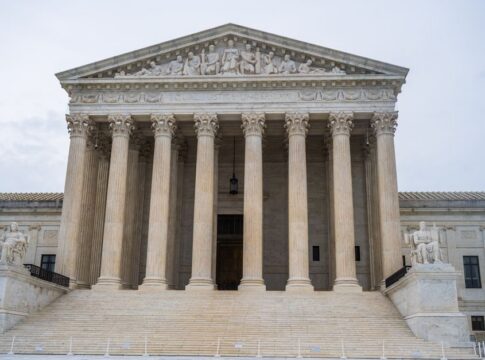
Photo: Guohua Song / Pexels
By US Daily Tribune Newsroom, National Desk — Published November 4, 2026
Table of Contents
- Key Takeaways
- The Background & Context
- Why This Matters
- Reactions & Analysis
- What Happens Next
- Frequently Asked Questions
The Supreme Court sent a clear signal this week, handing the Trump administration a stinging defeat in a case involving California ballots. The justices’ blunt dismissal marks a dramatic reversal for an administration that had enjoyed a remarkable winning streak in election-related litigation. What began as a pattern of victories has now screeched to a halt, leaving legal observers and political analysts questioning whether the nation’s highest court is drawing a line in the sand.
The California case represents more than just a single legal setback. It reveals how far the Department of Justice has fallen in credibility before the Supreme Court, according to reports analyzing the decision. The justices didn’t merely rule against the administration—they dismissed the case in a manner that legal experts describe as unusually direct and unambiguous.
For American voters watching the intersection of federal government power and election integrity, this development carries profound implications. The Supreme Court’s willingness to reject the administration’s arguments suggests the judiciary may be reasserting its independence at a critical moment in the nation’s political calendar.
Key Takeaways
- The Supreme Court delivered a significant defeat to the Trump administration in a California ballots case, breaking the administration’s previous winning streak in election litigation
- The justices dismissed the case in what observers characterize as an unusually blunt manner, signaling possible judicial pushback against aggressive election-related claims
- Legal analysts suggest the decision reflects poorly on the Department of Justice’s standing before the high court
- The timing of the defeat—described as a midterms message—may influence how lower courts handle similar election cases going forward
- The case marks a potential turning point in the judiciary’s willingness to defer to executive branch arguments about election administration
- The decision could embolden state officials defending their election procedures against federal challenges
The Background & Context
The Trump administration had built an impressive track record before the Supreme Court in cases touching on election law and voting procedures. That success emboldened the Department of Justice to pursue increasingly aggressive legal theories. The California ballots case appeared to fit that pattern—until it didn’t.
California has long been at the forefront of election administration reforms, often clashing with federal authorities over voting procedures and ballot handling. The state’s Democratic leadership has consistently defended expansive voting access, while the Trump administration has emphasized what it characterizes as election security concerns. This fundamental disagreement has spawned numerous legal battles.
The Supreme Court’s composition, featuring three justices appointed by President Trump himself, had led many to expect continued deference to administration positions. That expectation made the California defeat all the more striking. The Court’s decision suggests that even justices sympathetic to conservative legal principles have limits when it comes to election-related claims lacking solid legal foundation.
The Department of Justice’s role in election litigation has evolved dramatically in recent years. Traditionally, DOJ maintained a careful balance between protecting voting rights and ensuring election integrity. Recent reporting indicates that the department’s credibility before the Supreme Court may have suffered as it pursued more partisan-appearing cases. The California dismissal appears to confirm those concerns.
Why This Matters
American citizens have a fundamental stake in how courts handle election disputes. When the Supreme Court speaks on these matters, it sets precedents that ripple through the entire judicial system. State and local election officials across the country watch these decisions closely, knowing they will shape how future challenges unfold.
The timing matters enormously. With midterm elections approaching, the Supreme Court’s willingness to firmly reject weak election claims sends a message to litigants nationwide. Frivolous challenges may face swifter dismissals. Election administrators may feel more confident defending their procedures. Voters may gain reassurance that courts will not rubber-stamp challenges lacking merit.
Taxpayers bear the cost when government resources fund questionable litigation. The Department of Justice employs hundreds of attorneys whose salaries come from public funds. When DOJ pursues cases that the Supreme Court dismisses bluntly, it raises questions about resource allocation and strategic judgment. Citizens deserve a Justice Department that brings only well-founded claims before the courts.
The broader implications extend to the separation of powers. When the Supreme Court pushes back against executive branch overreach—even an administration that appointed several justices—it demonstrates judicial independence. That independence forms a cornerstone of American constitutional democracy. Voters across the political spectrum benefit when courts maintain their role as neutral arbiters rather than political actors.
Reactions & Analysis
Legal observers have characterized the Supreme Court’s handling of the California case as unusually direct. The justices could have issued a narrow procedural ruling or simply denied review without comment. Instead, reports indicate they dismissed the matter in terms that left little ambiguity about their view of the administration’s arguments.
The decision represents what analysts describe as a midterms message—a signal sent with electoral timing in mind. Whether intentional or not, the Court’s action arrives at a moment when election litigation strategies are being formulated for the upcoming voting season. Lower court judges now have fresh guidance about how the nation’s highest court views certain categories of election challenges.
For California officials, the victory validates their defense of state election procedures against federal interference. The state has invested heavily in expanding ballot access and modernizing voting systems. Federal challenges to those efforts had created uncertainty and consumed resources. The Supreme Court’s dismissal removes a cloud hanging over California’s election administration.
The Trump administration’s losing streak—after such a strong winning record—has not gone unnoticed in legal circles. Attorneys general in other states may recalibrate their strategies for defending against DOJ challenges. The Supreme Court’s willingness to deliver a blunt dismissal suggests that previous victories may have encouraged overreach that the justices are now correcting.
What Happens Next
The immediate impact will be felt in pending election cases across federal courts. Judges considering similar claims will take note of the Supreme Court’s firm stance. Some cases may be dismissed more quickly. Others may be decided with greater skepticism toward arguments that mirror those rejected in the California matter.
The Department of Justice faces a credibility challenge. Rebuilding trust with the Supreme Court requires careful case selection and stronger legal arguments. Career attorneys within DOJ may push back more forcefully against politically motivated litigation that lacks solid legal foundation. The California loss could strengthen the hand of those advocating for more traditional, restrained approaches to election litigation.
State election officials will likely feel emboldened to resist federal challenges they view as unfounded. The Supreme Court’s message suggests that states have significant latitude in administering their own elections, absent compelling federal interests. This could lead to greater diversity in election procedures across states, as local officials feel more confident implementing reforms without fear of successful federal intervention.
Political calculations will shift as well. Campaigns and political organizations that fund election litigation must now factor in the Supreme Court’s apparent skepticism toward certain claims. The cost-benefit analysis of pursuing aggressive legal strategies may tilt toward more measured approaches. That could mean fewer election cases overall, or at least more carefully constructed legal theories.
The midterm elections themselves will serve as a testing ground. If the Supreme Court’s California decision indeed represents a new posture toward election litigation, we should see fewer successful challenges to state voting procedures. Election results may be certified more smoothly. The entire electoral process could benefit from reduced litigation uncertainty.
Frequently Asked Questions
What exactly did the Supreme Court decide in the California case?
The Supreme Court dismissed the Trump administration’s challenge to California’s ballot procedures in what legal observers describe as an unusually blunt manner. The decision ended the administration’s winning streak in election-related cases and signals the Court’s unwillingness to accept certain categories of election challenges, even from an administration that appointed several of the justices.
Why is this decision being called a “midterms message”?
The timing of the Supreme Court’s decision—arriving as the nation prepares for midterm elections—sends a signal to lower courts and potential litigants about how the high court views election challenges. By firmly rejecting the administration’s California case at this moment, the Court may be discouraging similar litigation as the midterm season approaches, effectively setting boundaries for acceptable election-related claims.
How does this affect the Department of Justice’s credibility?
Reports analyzing the decision suggest it reflects poorly on how far the Department of Justice has fallen in terms of credibility before the Supreme Court. When the nation’s highest court bluntly dismisses a case brought by DOJ, it raises questions about the department’s judgment in selecting which cases to pursue and the strength of its legal arguments. This could make the Court more skeptical of future DOJ election claims.
What does this mean for future election cases?
The California decision likely signals that the Supreme Court will take a more skeptical view of election challenges that lack solid legal foundation. Lower courts often follow the high court’s lead, so judges handling similar cases may dismiss them more readily. State officials defending their election procedures against federal challenges may feel more confident, knowing the Supreme Court has demonstrated willingness to firmly reject weak claims regardless of which administration brings them.
The Supreme Court’s California decision marks a pivotal moment in election law. Whether it represents a temporary course correction or a lasting shift in judicial approach remains to be seen. What’s certain is that election administrators, litigants, and voters nationwide will be watching closely as the implications unfold in courtrooms and at ballot boxes across America.