
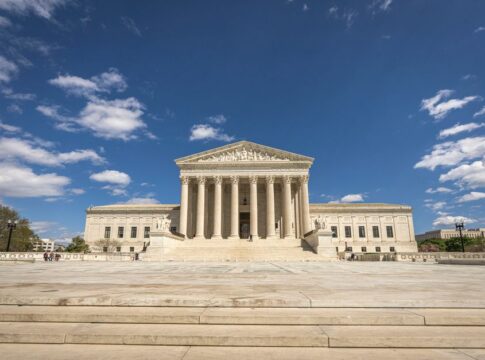
Photo: Mark Stebnicki / Pexels
By US Daily Tribune Newsroom, National Desk — Published November 3, 2026
Table of Contents
- Key Takeaways
- The Background & Context
- Why This Matters
- Reactions & Analysis
- What Happens Next
- Frequently Asked Questions
The nation’s highest court has declined to wade into a contentious dispute between the Trump administration and California over mail-in ballot procedures. In a decision that carries significant implications for federal-state relations and election administration, the Supreme Court rejects the administration’s emergency request to force California to set aside certain mail ballots. The ruling marks another chapter in ongoing tensions between the federal government and the nation’s most populous state over election procedures and voting rights.
The case centered on California’s handling of mail-in ballots during a time when voting procedures have become increasingly politicized. While details of the specific ballot procedures in question remain limited in public reporting, the dispute represents a broader clash over state authority to manage elections versus federal oversight. The Supreme Court’s decision to stay out of the matter effectively allows California’s ballot-handling practices to continue without federal interference.
This development comes at a critical juncture for American democracy, as debates over election integrity, voting access, and the proper balance of state and federal power continue to dominate the national conversation. The court’s refusal to intervene sends a clear signal about the limits of federal authority in state election administration.
Key Takeaways
- The Supreme Court rejected an emergency request from the Trump administration seeking intervention in California’s mail ballot procedures
- The dispute centered on whether California should be forced to set aside certain mail-in ballots, though specific procedural details were not fully disclosed in public reports
- The ruling allows California to continue its ballot-handling practices without federal court-ordered changes
- The decision reflects ongoing tensions between the federal government and California over election administration and state sovereignty
- The case highlights broader national debates about mail-in voting, election security, and the appropriate role of federal courts in state election matters
- The Supreme Court’s refusal to intervene effectively upholds California’s authority to manage its own election procedures
The Background & Context
California has long been at the forefront of expanding mail-in voting access, a practice that has accelerated in recent years as states seek to make voting more convenient and accessible. The state’s approach to mail ballots has included various procedures designed to ensure that legitimately cast votes are counted, even when technical issues might otherwise disqualify them.
The Trump administration’s request to the Supreme Court represented an attempt to assert federal authority over state election procedures. Such emergency applications to the nation’s highest court are reserved for matters of significant urgency and importance. The administration apparently believed that California’s ballot-handling practices warranted immediate judicial intervention.
This case fits into a broader pattern of disputes between the Trump administration and California on numerous policy fronts. The Golden State has frequently found itself at odds with federal directives, asserting its rights under the Constitution’s federalist system. Election administration, traditionally a domain of state control, has become an increasingly contested arena where these tensions play out.
Mail-in voting has become particularly controversial in recent years, despite its long history in American elections. Some officials have raised concerns about fraud and security, while others emphasize accessibility and voter participation. States like California have generally sided with expanding mail ballot access, while federal officials have sometimes questioned these expansions.
Why This Matters
For ordinary Americans, this Supreme Court decision carries profound implications. Elections form the bedrock of democratic governance. How ballots are handled, counted, and validated directly affects whether citizens’ voices are heard in government.
The court’s refusal to intervene preserves state authority over election administration. This matters because states have historically managed elections, understanding local conditions and voter needs better than distant federal bureaucrats. When federal courts decline to override state election procedures, they reinforce the principle that states serve as laboratories of democracy, free to innovate and adapt their systems.
California voters specifically benefit from this ruling. Whatever ballot-handling procedures the state implemented will continue without disruption. Voters who cast ballots in good faith can have greater confidence their votes will be counted according to established state rules, not suddenly altered by federal court intervention.
The decision also speaks to the Supreme Court’s institutional role. By rejecting the emergency request, the justices signal they will not be drawn into every election dispute that arises. This restraint helps preserve the court’s legitimacy and prevents it from becoming embroiled in partisan political battles over every aspect of election administration.
Taxpayers across the nation have a stake in these disputes as well. Protracted legal battles over election procedures consume public resources and create uncertainty. When courts decline to intervene in state election matters absent compelling reasons, they help ensure that states can administer elections efficiently without constant federal litigation.
Reactions & Analysis
The ruling, while procedural in nature, carries symbolic weight. California officials likely view the decision as vindication of their authority to manage state elections without federal micromanagement. For state election administrators, the Supreme Court’s refusal to intervene provides breathing room to implement policies they believe best serve their voters.
Federal officials who sought intervention face a setback. The Trump administration’s inability to secure Supreme Court backing for its California ballot challenge limits its ability to influence state election procedures through the courts. This constraint may affect how the federal government approaches similar disputes with other states.
Legal experts observing the case note that emergency applications to the Supreme Court face a high bar. The court grants such requests sparingly, only when applicants demonstrate irreparable harm and a likelihood of success on the merits. The rejection suggests the justices found the administration’s arguments insufficient to meet this demanding standard.
Election law specialists see the decision as part of the Supreme Court’s general reluctance to intervene in state election matters, particularly through emergency orders. The court has historically given states wide latitude in managing their elections, intervening only when constitutional violations are clear and serious.
What Happens Next
California will continue administering elections according to its established procedures. The state’s mail ballot practices, whatever they specifically entail, remain in effect without court-ordered modifications. This stability allows election officials to plan and execute their duties with greater certainty.
The Trump administration faces a choice: accept the Supreme Court’s decision or pursue other avenues. Emergency applications can sometimes be refiled with additional evidence or arguments, though success remains uncertain. Alternatively, federal officials might seek legislative solutions or work through other regulatory channels.
Other states watching this case may feel emboldened to resist federal attempts to override their election procedures. The Supreme Court’s refusal to back the Trump administration’s intervention request could encourage states to assert their authority more forcefully when federal officials challenge state election policies.
The broader debate over mail-in voting and election security will certainly continue. This single case, while significant, represents just one battle in a larger war over how Americans vote and how those votes are counted. Expect similar disputes to arise in other jurisdictions as states and the federal government navigate competing visions of election administration.
Future elections will test whether the principles established here hold. As voting methods evolve and new technologies emerge, courts will face fresh questions about the proper balance between state autonomy and federal oversight. The Supreme Court’s approach in this California case offers clues about how justices might handle future election disputes.
Frequently Asked Questions
What specific ballot procedures were at issue in this case?
Public reporting on the case has not provided detailed information about the specific mail ballot procedures that prompted the Trump administration’s intervention request. The dispute centered on California’s handling of mail-in ballots, with the administration seeking to force the state to set aside certain ballots, but the precise technical or procedural issues remain unclear from available information.
Does this ruling set a precedent for other election cases?
While the Supreme Court’s decision to reject the Trump administration’s emergency request is significant, such procedural rulings typically do not create binding precedent in the same way that full merits decisions do. However, the decision does signal the court’s reluctance to intervene in state election administration through emergency orders, which may influence how future cases are approached.
Can the Trump administration appeal this decision?
The Supreme Court is the highest court in the United States, so there is no higher authority to which the administration can appeal. However, the administration could potentially refile an emergency application with additional evidence or arguments, or pursue the matter through other legal channels. The practical effectiveness of such efforts remains questionable given the court’s initial rejection.
How does this affect voters in California?
California voters benefit from continuity in election procedures. The Supreme Court’s rejection of the federal intervention request means that whatever ballot-handling practices California has implemented will continue without disruption. Voters who cast mail ballots according to state rules can have confidence their votes will be processed and counted according to established California procedures rather than suddenly altered federal requirements.
The Supreme Court’s decision in this California ballot case reminds us that American federalism remains alive and contested. States retain substantial authority over their own elections, and federal courts will not lightly override that authority. As the nation continues grappling with questions of voting access, election security, and democratic participation, this ruling stands as a marker of where power resides and where courts will—and will not—intervene.