
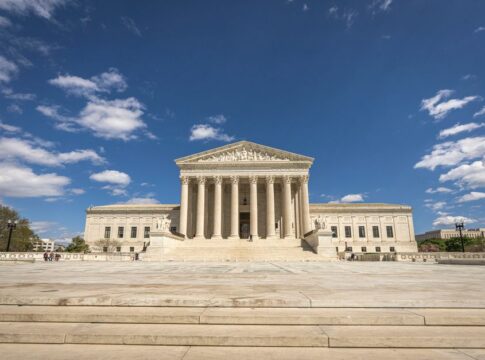
Photo: Mark Stebnicki / Pexels
By US Daily Tribune Newsroom, National Desk — Published November 15, 2026
Table of Contents
- Key Takeaways
- The Background & Context: When Supreme Court Takes Up Transparency Fights
- Why This Matters: Stakes for Citizens and Democracy
- Reactions & Analysis: A Fight Over Fundamental Principles
- What Happens Next: The Road Ahead
- Frequently Asked Questions
The nation’s highest court has agreed to wade into a brewing transparency fight that could determine whether the public can access internal records from one of the federal government’s newest and most controversial entities. The Supreme Court takes up a dispute that pits government accountability advocates against claims of executive privilege, centering on the Department of Government Efficiency—better known by its acronym DOGE.
At stake is a fundamental question about the public’s right to know how their government operates. A watchdog organization has been fighting to obtain documents from DOGE, the entity tasked with streamlining federal operations and reducing bureaucratic waste. The case arrives at the Supreme Court amid broader national debates about transparency, executive power, and the balance between efficient governance and public oversight.
The dispute represents more than just another legal skirmish over paperwork. It goes to the heart of democratic accountability in an era when new governmental structures are being created with sweeping mandates but unclear oversight mechanisms. For American taxpayers funding these operations, the outcome will determine whether they can scrutinize how decisions affecting their lives and wallets are made behind closed doors.
Key Takeaways
- The Supreme Court has agreed to hear a case involving public access to records from the Department of Government Efficiency (DOGE)
- A watchdog group is seeking to obtain internal documents and communications from the federal entity through open records requests
- The case raises fundamental questions about government transparency and the public’s right to access information about federal operations
- The dispute comes as DOGE has taken on a prominent role in efforts to restructure and streamline government functions
- The Court’s decision could set important precedents for how transparency laws apply to newer governmental entities and initiatives
- The outcome will affect citizens’ ability to monitor and hold accountable those making decisions about federal spending and operations
The Background & Context: When Supreme Court Takes Up Transparency Fights
Open records laws have long served as a cornerstone of American democracy. They rest on a simple premise: in a republic, the people have the right to know what their government is doing. The Freedom of Information Act and similar statutes were designed to pull back the curtain on federal operations, allowing journalists, researchers, and ordinary citizens to examine how decisions are made and tax dollars are spent.
DOGE emerged as part of efforts to tackle government inefficiency and reduce wasteful spending. The entity quickly became a focal point for those seeking to reform federal bureaucracy. But its rapid rise and broad mandate also raised questions. How exactly does it operate? What criteria guide its decisions? Which programs might face cuts or restructuring?
Watchdog organizations exist precisely to ask such questions. These groups serve as intermediaries between government and citizens, using legal tools to extract information that might otherwise remain hidden. When one such organization sought records from DOGE, it triggered a legal confrontation that has now reached the Supreme Court’s docket.
The federal government maintains various exemptions to disclosure requirements. National security concerns, attorney-client privilege, and deliberative process protections can all shield certain documents from public view. The tension arises when determining which exemptions legitimately apply and which are invoked too broadly to avoid scrutiny. This case will test those boundaries in the context of an entity whose very purpose involves making consequential decisions about government operations.
Why This Matters: Stakes for Citizens and Democracy
Every American has skin in this game. Government efficiency sounds abstract until it touches your life directly. Will the agency you rely on face cuts? Will regulations protecting your community be eliminated? These decisions carry real consequences for real people.
Transparency serves as democracy’s immune system. It helps identify problems before they metastasize. When citizens can examine government records, they can spot waste, fraud, or simple mistakes. They can participate meaningfully in debates about policy. They can hold officials accountable at the ballot box.
Without access to records, oversight becomes impossible. Imagine trying to evaluate a company’s performance without seeing its books. That’s essentially what happens when government entities operate behind closed doors. Voters are asked to trust without the ability to verify. Journalists cannot investigate. Researchers cannot analyze. The public conversation proceeds in darkness.
The case also touches on separation of powers and constitutional design. The executive branch naturally prefers flexibility and confidentiality in its deliberations. Congress and the courts serve as checks on executive power. But increasingly, governmental functions are housed in entities that don’t fit neatly into traditional categories. DOGE represents this trend—a body with significant influence but ambiguous status within the constitutional framework.
For taxpayers specifically, the implications are direct. Government efficiency initiatives promise to save money and improve services. But history shows that such efforts can also serve as cover for ideologically motivated cuts or favoritism toward certain interests. Only through transparency can the public distinguish genuine reform from political maneuvering.
Reactions & Analysis: A Fight Over Fundamental Principles
The Supreme Court’s decision to take the case signals that the justices recognize its significance. The Court receives thousands of petitions annually but accepts only a small fraction. Cases that make the cut typically involve important legal questions, conflicts among lower courts, or issues of broad public importance. This dispute apparently meets that threshold.
Government accountability advocates view the case as critical to preserving transparency in modern governance. As governmental structures evolve and new entities emerge, they argue, the principles underlying open records laws must adapt to ensure continued public access. If DOGE can shield its records from scrutiny, what’s to stop other agencies or initiatives from claiming similar exemptions?
From the government’s perspective, some degree of confidentiality is necessary for effective policymaking. Officials need space to deliberate, test ideas, and receive candid advice without every preliminary discussion becoming public fodder. Prematurely disclosing internal deliberations, the argument goes, could chill frank conversation and produce worse outcomes.
Legal experts note that the case could establish important precedents. How the Court defines DOGE’s status—as an executive agency, an advisory body, or something else entirely—will affect what disclosure requirements apply. The decision may also clarify how traditional transparency laws apply to twenty-first-century governmental innovations that don’t fit established categories.
The timing adds another layer of significance. Public trust in government institutions has eroded in recent decades. Transparency advocates argue that openness can help rebuild that trust by demonstrating that government has nothing to hide. Skeptics counter that excessive disclosure can actually fuel cynicism by exposing the messy, imperfect nature of policymaking.
What Happens Next: The Road Ahead
The Supreme Court will hear oral arguments in the coming months, with a decision likely by the end of the current term. Both sides will marshal their strongest legal arguments, supported by friend-of-the-court briefs from interested parties. Expect media organizations, transparency groups, former government officials, and constitutional scholars to weigh in.
The Court’s ruling could take several forms. A broad decision might establish sweeping principles about transparency and executive privilege that apply across government. A narrow ruling might resolve this specific dispute while leaving larger questions unanswered. The justices might also send the case back to lower courts with instructions to reconsider certain issues.
Whatever the outcome, it will reverberate beyond this single case. Government agencies will adjust their disclosure practices based on the Court’s guidance. Watchdog groups will calibrate their strategies for obtaining information. Congress might even step in with new legislation to clarify ambiguities the Court identifies.
For DOGE itself, the decision will determine how it operates going forward. Increased transparency could constrain its flexibility but enhance its legitimacy. Stronger confidentiality protections might enable bolder action but fuel suspicions about its true agenda. The entity will need to navigate whatever framework the Court establishes.
Citizens should pay attention. The case will help define the contours of government accountability for years to come. It will affect what you can learn about federal operations, how journalists can investigate government actions, and whether taxpayers can verify that efficiency initiatives actually deliver promised benefits.
Frequently Asked Questions
What is DOGE and why is it controversial?
The Department of Government Efficiency, known as DOGE, is a federal entity created to streamline government operations and reduce wasteful spending. It has become controversial because of its broad mandate to restructure federal programs and its role in making consequential decisions about government functions, all while questions persist about transparency and public oversight of its operations.
What does the watchdog group want to see in DOGE’s records?
The watchdog organization has filed requests to access internal documents and communications from DOGE under open records laws. These groups typically seek such records to understand how decisions are made, identify potential conflicts of interest, verify that promised reforms are actually occurring, and ensure that taxpayer money is being spent appropriately and efficiently.
How might this Supreme Court case affect ordinary Americans?
The Court’s decision will determine how much transparency Americans can expect from government entities tasked with making decisions that affect their lives. It will influence whether citizens can access information about potential cuts to programs they rely on, verify claims about government efficiency, and hold officials accountable for their decisions about federal operations and spending.
When will the Supreme Court decide this case?
The Supreme Court typically hears cases during its term that runs from October through June, issuing decisions throughout the term with many major rulings announced in late spring. The exact timing will depend on when oral arguments are scheduled and how long the justices need to deliberate, draft opinions, and resolve any internal disagreements about the proper outcome.
As this case moves through the Supreme Court, it will test fundamental principles about how democracy functions in practice. The justices will balance competing values: efficiency versus transparency, confidentiality versus accountability, executive flexibility versus public oversight. Their decision will echo far beyond the immediate parties, shaping how Americans interact with their government for years to come. The stakes are high, and the nation will be watching.