
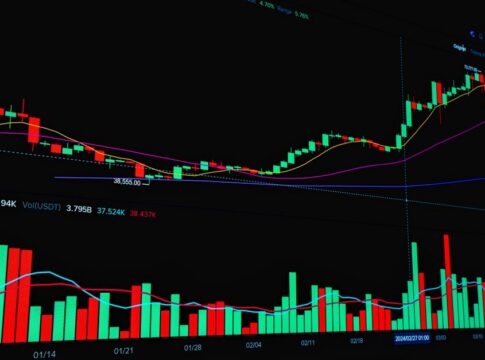
Photo: Rafael Minguet Delgado / Pexels
By US Daily Tribune Newsroom, Economy Desk — Published October 19, 2026
Table of Contents
- Key Takeaways
- Stock Futures Rise: The Background & Context
- Why This Matters
- Reactions & Analysis
- What Happens Next
- Frequently Asked Questions
Wall Street is waking up to green screens Monday morning. Stock futures rise across major indices as investors shake off last week’s chip sector turbulence and brace for a critical earnings season that could reshape market sentiment for the remainder of the year. The Nasdaq, S&P 500, and Dow futures all posted gains in early trading, signaling cautious optimism despite lingering concerns about the health of America’s technology sector and the broader economy.
According to reports, the rebound comes after a punishing rout in semiconductor stocks rattled confidence and sent tech-heavy indices tumbling. Now, with dozens of major corporations set to report quarterly results this week, traders are positioning themselves for what could be a make-or-break moment for 2024’s market narrative. Big Tech earnings loom large on the calendar, offering investors fresh data on corporate health, consumer spending patterns, and the trajectory of inflation and interest rates.
Yet beneath the surface optimism, retail investors remain cautious. The memory of recent volatility is fresh, and questions about economic resilience persist as Americans grapple with stubborn inflation, uncertain jobs data, and the Federal Reserve‘s next moves on interest rates.
Key Takeaways
- Stock futures rise Monday morning across the Nasdaq, S&P 500, and Dow Jones Industrial Average following last week’s chip sector selloff
- Markets are rebounding from a significant rout in semiconductor stocks that shook investor confidence in the technology sector
- A busy earnings week lies ahead with major corporations set to report quarterly results that could determine market direction
- Big Tech companies are scheduled to release earnings reports that investors will scrutinize for signals about economic health and corporate profitability
- Retail investors are maintaining a cautious stance despite the morning’s gains, wary of recent market volatility
- The week’s corporate reports will provide crucial insight into inflation trends, consumer spending, and the overall state of the US economy
Stock Futures Rise: The Background & Context
The current market bounce follows a turbulent period that tested investor nerves. Last week’s chip sector rout sent shockwaves through Wall Street, reminding traders that the technology sector—which has powered much of the market’s gains in recent years—remains vulnerable to sudden sentiment shifts and sector-specific headwinds.
Semiconductor stocks have been particularly volatile as investors weigh competing narratives. On one hand, artificial intelligence applications promise unprecedented demand for advanced chips. On the other, concerns about oversupply, export restrictions to China, and slowing consumer electronics sales have created crosscurrents that make the sector difficult to navigate.
The broader market has been caught in a tug-of-war between optimism and anxiety. Strong corporate earnings and resilient economic data have supported equity prices, but persistent inflation and elevated interest rates continue to cast shadows over the outlook. The Federal Reserve’s monetary policy stance remains a critical variable, with every jobs report and inflation reading scrutinized for clues about the central bank’s next move.
This earnings season arrives at a pivotal moment. Corporate America will provide real-time updates on profit margins, cost pressures, and consumer demand—all vital indicators of economic health. For months, analysts have debated whether the US economy can achieve a “soft landing,” where inflation cools without triggering a recession. The answer may emerge from boardroom conference calls this week.
Wall Street has experienced a remarkable run over the past year, with major indices notching significant gains despite repeated predictions of an imminent downturn. But that resilience has bred both confidence and complacency, leaving markets vulnerable to disappointments. A single weak earnings report from a major tech company can trigger outsized reactions, as investors reassess valuations that have stretched to historically elevated levels.
Why This Matters
For ordinary Americans, the stock market isn’t just an abstraction or a plaything for wealthy traders. It’s deeply intertwined with retirement accounts, pension funds, and the financial security of millions of families. When markets stumble, 401(k) balances shrink. When they surge, retirement dreams inch closer to reality.
The current earnings season matters because it will reveal whether corporate America can maintain profitability in a challenging environment. Companies face pressure from multiple directions: wage costs remain elevated as the jobs market stays tight, input prices fluctuate with commodity markets, and consumers show signs of pulling back on discretionary spending.
Big Tech earnings carry particular weight. These companies—household names that dominate daily life through smartphones, search engines, social media, and cloud computing—have become bellwethers for the entire economy. Their performance reflects not just their own business models but broader trends in advertising, enterprise spending, and technological innovation.
The retail investor caution noted in reports is telling. Main Street investors, burned by previous market corrections, aren’t rushing to chase rallies. They’re watching carefully, aware that economic uncertainty remains high. Inflation may have cooled from its peak, but grocery bills and housing costs still strain household budgets. Interest rates, while potentially nearing their peak, remain at levels that make borrowing expensive for homes, cars, and business expansion.
Moreover, the health of the stock market influences business confidence and investment decisions. When equity markets thrive, companies find it easier to raise capital, fund expansion, and create jobs. When markets falter, corporate executives grow cautious, hiring freezes spread, and economic growth slows. This feedback loop means that Wall Street’s performance doesn’t stay on Wall Street—it ripples through every community in America.
Reactions & Analysis
The morning’s gains reflect a market attempting to regain its footing after the chip sector’s recent troubles. Investors appear willing to give technology stocks another chance, betting that last week’s selloff was overdone and that fundamentals remain sound.
The rebound from the chip rout suggests that traders are differentiating between sector-specific challenges and broader market health. While semiconductor stocks faced particular headwinds, the wider economy continues to show resilience. Employment remains relatively strong, consumer spending hasn’t collapsed, and corporate balance sheets are generally healthy.
However, the cautious retail stance reveals a more nuanced picture. Individual investors—who flooded into markets during the pandemic era—have learned painful lessons about volatility. They’re not abandoning equities, but they’re approaching rallies with skepticism, waiting for confirmation that gains are sustainable rather than fleeting bounces in an ongoing correction.
Analysts will be parsing earnings reports for specific signals. Profit margins will indicate whether companies can pass costs to customers or are being squeezed. Revenue growth will show whether demand remains robust. Forward guidance will reveal how executives view the months ahead. And commentary about employment, capital spending, and inventory levels will provide ground-level economic intelligence that no government statistic can match.
The absence of a “Black Monday” scenario—a reference to catastrophic market crashes—offers some comfort. Markets aren’t in panic mode. Instead, they’re in wait-and-see mode, gathering information before committing to a clear direction.
What Happens Next
This week will unfold as a high-stakes information gathering exercise. Each earnings report will add data points to the mosaic, gradually revealing whether corporate America is thriving, surviving, or struggling.
Big Tech results will command the most attention. These companies have enjoyed enormous market capitalizations built on expectations of continued growth and innovation. Any sign that artificial intelligence investments aren’t paying off, that advertising markets are weakening, or that cloud computing growth is slowing could trigger sharp reactions.
Beyond individual company results, investors will watch for patterns. Are companies across sectors reporting similar pressures? Is consumer spending holding up in discretionary categories? Are businesses investing in expansion or hunkering down? The aggregate picture matters more than any single data point.
The Federal Reserve looms in the background. Central bankers are watching the same economic indicators as investors, calibrating monetary policy to cool inflation without crushing growth. Strong corporate earnings and resilient consumer spending could keep interest rates higher for longer. Weak results might accelerate rate cuts. The interplay between corporate performance and monetary policy will shape market trajectories for months to come.
For retail investors maintaining their cautious stance, patience may prove wise. Markets can remain volatile even as the economy muddles through. The path forward likely involves continued uncertainty, periodic selloffs, and rallies that require verification before inspiring confidence.
The broader economy faces crosscurrents that won’t resolve quickly. Inflation remains above the Federal Reserve’s target. The jobs market shows signs of cooling but hasn’t cracked. Geopolitical tensions create unpredictable risks. Presidential election dynamics add another layer of uncertainty. In this environment, corporate earnings provide tangible evidence of how businesses are actually performing amid the noise.
Frequently Asked Questions
Why are stock futures rising after last week’s chip sector selloff?
Stock futures are rising as investors appear to view last week’s semiconductor sector rout as overdone, focusing instead on the upcoming earnings season that could provide fresh evidence of corporate health and economic resilience. Traders are positioning themselves ahead of major company reports, betting that fundamentals remain stronger than recent volatility suggests.
What makes this earnings week particularly important for markets?
This earnings week is critical because it features reports from major corporations, especially Big Tech companies, that will reveal how businesses are handling inflation pressures, consumer demand trends, and cost challenges. The results will help investors determine whether current stock valuations are justified and provide insight into the broader economy’s trajectory as the Federal Reserve considers future interest rate decisions.
Why are retail investors remaining cautious despite the market rebound?
Retail investors are maintaining caution because recent market volatility has reminded them of risks inherent in equity investing. Despite morning gains, individual investors remember previous selloffs and are waiting for sustained evidence that rallies are durable rather than temporary bounces. Concerns about inflation, interest rates, and economic uncertainty keep Main Street investors from rushing into positions.
How do Big Tech earnings affect the overall stock market?
Big Tech earnings carry outsized influence because these companies represent massive portions of major stock indices and serve as economic bellwethers. Their performance reflects broader trends in advertising spending, enterprise technology investment, consumer behavior, and innovation adoption. Strong results can lift the entire market, while disappointing reports can trigger widespread selling as investors reassess valuations and economic assumptions.
As trading begins this week, investors face a familiar challenge: separating signal from noise, distinguishing temporary turbulence from meaningful trends, and positioning portfolios for an uncertain future. The earnings reports ahead will provide crucial evidence, but the ultimate verdict on America’s economic health will take time to render. For now, markets are rising, caution persists, and the next chapter in 2024’s market story is about to be written.