
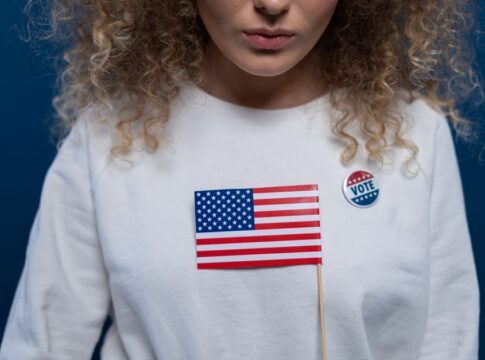
Photo: cottonbro studio / Pexels
By US Daily Tribune Newsroom, National Desk — Published October 7, 2026
Table of Contents
- Key Takeaways
- The Background & Context
- Why This Matters
- Reactions & Analysis
- What Happens Next
- Frequently Asked Questions
The Justice Department will deploy election monitors to polling locations across the United States, a move that has ignited fierce debate about federal oversight versus voter intimidation. The decision comes as the nation prepares for critical elections, with the federal government asserting its authority to ensure compliance with federal voting rights laws. Critics, however, warn that the presence of federal monitors could intimidate voters and election workers, raising questions about the appropriate balance between safeguarding democratic processes and avoiding undue federal interference.
This deployment represents a continuation of longstanding Justice Department practices dating back decades, yet the current political climate has amplified tensions surrounding federal election oversight. With partisan divisions at historic highs and ongoing disputes about election integrity, the announcement has become another flashpoint in America’s broader struggle over voting rights, state sovereignty, and the federal government’s role in administering elections.
The monitors will be stationed at various locations nationwide, though specific jurisdictions and the scale of deployment remain subjects of intense scrutiny and speculation among election officials, civil rights advocates, and political observers across the ideological spectrum.
Key Takeaways
- The Justice Department plans to deploy election monitors to polling locations across the country, continuing a practice used in previous election cycles to enforce federal voting rights laws.
- Critics have raised concerns that the presence of federal monitors could intimidate voters and election workers, potentially suppressing turnout or creating confusion at polling places.
- The deployment occurs against a backdrop of heightened political polarization and ongoing debates about election security, voter access, and the appropriate role of federal oversight in state-administered elections.
- The move has generated controversy among state and local election officials, some of whom view federal monitoring as necessary protection for voters while others see it as unwanted intrusion into state affairs.
- Legal and constitutional questions about the scope of federal authority in election administration continue to divide policymakers, with implications that could reach the Supreme Court.
- The deployment reflects broader national tensions about voting rights, election integrity, and the balance of power between federal and state governments in safeguarding democratic processes.
The Background & Context
Federal election monitoring is not new. The practice dates back to the Voting Rights Act of 1965, landmark civil rights legislation that empowered the Justice Department to send federal observers to jurisdictions with histories of voting discrimination. For decades, these monitors played a crucial role in ensuring that African American voters and other minorities could exercise their constitutional rights without facing intimidation, literacy tests, or other discriminatory barriers that had been used to suppress their participation.
The legal framework underwent significant changes in 2013 when the Supreme Court struck down key provisions of the Voting Rights Act in Shelby County v. Holder. That decision eliminated the requirement that certain jurisdictions with histories of discrimination obtain federal approval before changing their voting laws. The ruling fundamentally altered the landscape of federal election oversight, limiting the circumstances under which the Justice Department could deploy monitors and shifting the burden of proof in voting rights cases.
Despite these limitations, the Justice Department has continued to send monitors to selected jurisdictions in subsequent elections, citing its authority under remaining provisions of federal law. The department has argued that monitoring serves essential functions: deterring discrimination, documenting potential violations, and providing reassurance to voters that their rights will be protected. However, the scope and effectiveness of this monitoring have been subjects of ongoing debate, particularly as political divisions over election administration have deepened.
The current deployment comes at a moment when election administration has become intensely politicized. Disputes over mail-in voting, voter identification requirements, early voting access, and ballot drop boxes have proliferated. State legislatures have passed dozens of laws either expanding or restricting voting access, depending on which party controls the statehouse. This patchwork of state laws has created confusion and controversy, with both parties accusing the other of either enabling fraud or suppressing votes.
Why This Matters
For American voters, the deployment of federal monitors carries profound implications. Elections are the foundation of democratic governance, and public confidence in their fairness and accuracy is essential to political stability. When significant portions of the electorate question whether elections are conducted properly, the legitimacy of government itself comes under threat. The presence of federal monitors can either bolster or undermine that confidence, depending on one’s perspective.
Supporters of federal monitoring argue that it provides necessary protection for vulnerable voters. In communities where discrimination has occurred historically or where language barriers exist, federal presence can reassure voters that their rights will be respected. Monitors can document irregularities, provide accountability, and serve as a deterrent against intimidation or illegal practices. For civil rights advocates, federal oversight represents an essential check on state and local officials who might otherwise restrict access to the ballot box.
Critics, however, see federal monitors as potential sources of voter intimidation themselves. They argue that the presence of federal officials at polling places could discourage voters from participating, particularly in communities where distrust of federal authority runs deep. Some election officials worry that monitors will interfere with established procedures, create confusion, or second-guess decisions made by trained poll workers. In an era when election workers already face unprecedented harassment and threats, the addition of federal oversight may complicate an already challenging environment.
The debate also touches on fundamental questions of federalism and state sovereignty. The Constitution assigns states primary responsibility for administering elections, even for federal offices. This arrangement reflects the founders’ vision of a federal system where states retain significant autonomy. Federal intervention in election administration, even when authorized by law, tests the boundaries of this arrangement and raises questions about how much authority Washington should exercise over processes traditionally controlled by state and local governments.
For taxpayers, the deployment represents an expenditure of federal resources at a time when government spending faces intense scrutiny. For election officials, it means navigating additional layers of oversight and potential conflict. For voters, it may shape their experience at the polls and their confidence in the outcome. These stakes extend beyond any single election cycle, potentially influencing how Americans think about democracy, federal power, and the integrity of their electoral system for years to come.
Reactions & Analysis
The announcement has generated sharply divided reactions, reflecting the broader polarization that characterizes contemporary American politics. The responses break down largely along partisan and ideological lines, though some observers have attempted to stake out more nuanced positions.
Civil rights organizations have generally welcomed federal monitoring, viewing it as a necessary safeguard against voter suppression. These groups point to recent state laws that they argue make voting more difficult, particularly for minority communities, elderly voters, and those with disabilities. From this perspective, federal monitors serve as a counterweight to state-level efforts to restrict ballot access, ensuring that federal voting rights protections are enforced even when state officials may be reluctant to do so.
Conservative critics, by contrast, have characterized the deployment as federal overreach and potential voter intimidation. They argue that state and local election officials are fully capable of administering fair elections without federal supervision, and that the presence of Justice Department monitors implies distrust of these officials without evidence of wrongdoing. Some have suggested that the timing and targeting of monitoring efforts may be politically motivated, designed to advantage one party over another by creating the impression that certain jurisdictions are suspect.
State and local election officials find themselves in a difficult position. Many work long hours under challenging conditions to ensure smooth elections, and they may view federal monitoring as either helpful support or unwelcome intrusion, depending on their relationship with federal authorities and their assessment of local needs. Some have expressed frustration that federal officials, who may be unfamiliar with local procedures and conditions, could inadvertently cause problems or confusion at polling places where operations are already complex.
Legal scholars have debated the constitutional and statutory authority for the deployments, particularly in light of the Supreme Court’s 2013 decision limiting the Voting Rights Act. Some argue that the Justice Department retains sufficient authority under remaining provisions of federal law to send monitors wherever potential violations of federal voting rights might occur. Others contend that the department is stretching its legal authority beyond what Congress intended or the Constitution permits, potentially setting up future court challenges that could further reshape federal election oversight.
What Happens Next
The immediate future will see monitors deployed to selected jurisdictions, where their presence will be closely watched by election officials, political operatives, media, and voters themselves. The success or failure of the deployment will be measured not just in legal terms but in public perception. If monitors operate smoothly without incident and voters report feeling protected rather than intimidated, the program may be viewed as a success. If conflicts arise, confusion results, or voters feel their rights are being infringed rather than protected, criticism will intensify.
Legal challenges appear likely. State officials in jurisdictions selected for monitoring may contest the Justice Department’s authority, potentially leading to court battles that could reach the Supreme Court. Such litigation would force the courts to clarify the scope of federal power in election administration following the 2013 Shelby County decision, potentially reshaping the landscape of voting rights enforcement for decades to come.
The political ramifications extend beyond the immediate election cycle. How this deployment is perceived may influence future debates about voting rights legislation, federal oversight, and election reform. If one party gains a perceived advantage from federal monitoring, the other will likely seek to limit or eliminate the practice. If both parties come to view monitoring as problematic, bipartisan efforts to restrict federal involvement in election administration could emerge.
For American democracy, the episode highlights ongoing challenges in balancing competing values: ensuring equal access to the ballot, preventing fraud and irregularities, respecting state sovereignty, and maintaining public confidence in election outcomes. These tensions are unlikely to be resolved soon, and the deployment of election monitors will serve as another test case in the nation’s continuing struggle to perfect its democratic processes.
Frequently Asked Questions
What legal authority does the Justice Department have to deploy election monitors?
The Justice Department derives its authority from federal voting rights laws, including remaining provisions of the Voting Rights Act and other statutes that prohibit discrimination and protect voting rights. While the Supreme Court’s 2013 Shelby County decision limited some monitoring authorities, the department retains power to enforce federal voting laws and can send personnel to observe compliance, though the scope of this authority continues to be debated and may face legal challenges.
How do election monitors differ from poll watchers?
Election monitors are federal officials sent by the Justice Department to ensure compliance with federal voting rights laws. They observe election processes but do not have authority to interfere directly with voting or challenge voters. Poll watchers, by contrast, are typically partisan volunteers appointed by political parties or campaigns to observe voting under state law. The two serve different functions and operate under different legal frameworks, though both can be present at polling locations simultaneously.
Could the presence of federal monitors actually intimidate voters?
This is a central point of controversy. Critics argue that federal presence at polling places could intimidate voters, particularly in communities with distrust of federal authority or where voters fear government surveillance. Supporters counter that monitors are trained to be unobtrusive and that their presence actually protects voters by deterring intimidation from other sources. The actual effect likely varies by community and depends on how monitors conduct themselves and how their presence is perceived locally.
Has federal election monitoring been effective in preventing voting rights violations?
Effectiveness is difficult to measure and remains contested. Supporters point to historical examples where federal monitors documented discrimination and helped ensure minority voters could participate safely. Critics argue that in the modern era, with widespread awareness of voting rights and multiple layers of oversight, federal monitoring adds little value while creating potential problems. The reduced scope of monitoring since the 2013 Supreme Court decision has made comprehensive assessment more challenging, and partisan divisions color most evaluations of the program’s effectiveness.
As Americans head to the polls, the deployment of federal election monitors will add another layer of complexity to an already contentious electoral landscape. Whether these monitors ultimately protect democracy or complicate it may depend less on their legal authority than on how voters, officials, and the broader public perceive their presence. In a nation deeply divided over questions of election integrity and voting rights, even well-intentioned oversight can become another source of conflict in the ongoing struggle to perfect American democracy.