
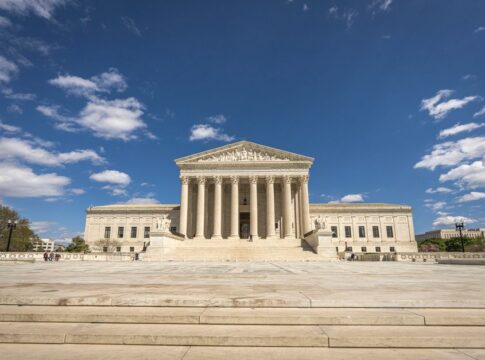
Photo: Mark Stebnicki / Pexels
By US Daily Tribune Newsroom, National Desk — Published November 15, 2026
Table of Contents
- Key Takeaways
- The Background & Context
- Why This Matters
- Reactions & Analysis
- What Happens Next
- Frequently Asked Questions
The nation’s highest court is preparing to weigh in on one of the most contentious immigration policy battles in recent memory. The Supreme Court will consider the legality of a Trump-era executive order that effectively suspended asylum access at the southern border, a move that has reignited fierce debates about presidential authority, humanitarian obligations, and border security. This case arrives at a moment when immigration policy remains a flashpoint in American politics, with millions of migrants seeking refuge and protection at U.S. borders annually.
The decision to hear arguments on this executive action signals that the justices recognize the profound constitutional and practical questions at stake. At issue is whether a president can unilaterally curtail asylum rights that Congress has written into federal law, and what that means for the separation of powers. For communities along the border, immigrant advocacy groups, and the federal government itself, the outcome could reshape how America responds to one of its most pressing challenges.
The timing of this Supreme Court consideration comes as border policy continues to dominate national news cycles and political discourse. Both major political parties have staked out positions on immigration enforcement, with fundamental disagreements about how to balance security concerns with America’s historic role as a haven for those fleeing persecution and violence.
Key Takeaways
- The Supreme Court has agreed to review a Trump executive order that suspended asylum access at the southern border, marking a significant test of presidential power over immigration policy.
- The case will examine whether executive actions can override asylum protections established by Congress in federal immigration law.
- The decision could have far-reaching implications for how future administrations manage border policy and humanitarian protections.
- Border communities, immigration advocates, and federal agencies are closely watching this case as it may fundamentally alter the asylum process.
- The Court’s ruling will provide clarity on the constitutional boundaries between executive authority and legislative intent in immigration matters.
- This case represents one of several high-profile immigration disputes that have reached the Supreme Court in recent years, reflecting ongoing national divisions on the issue.
The Background & Context
Asylum law in the United States has deep roots in both international treaty obligations and domestic legislation. Following World War II and the Holocaust, nations worldwide committed to protecting refugees fleeing persecution. The United States codified these protections in the Refugee Act of 1980, which established the right of individuals to seek asylum regardless of their manner of entry into the country.
For decades, this framework remained relatively stable. Migrants arriving at the border could request asylum and receive a hearing before an immigration judge to determine whether they faced persecution based on race, religion, nationality, political opinion, or membership in a particular social group. The system, while often backlogged, represented America’s commitment to international humanitarian standards.
However, surges in migration from Central America, driven by gang violence, economic instability, and political turmoil, strained this system. By the late 2010s, border facilities were overwhelmed. Families with children began arriving in unprecedented numbers, and the immigration court backlog grew to over a million cases. This crisis environment set the stage for more aggressive executive actions.
The Trump administration responded with a series of policies designed to restrict asylum access. These included the “Remain in Mexico” program, which required asylum seekers to wait in Mexico while their cases were processed, and various proclamations limiting who could apply for asylum based on how they entered the country. The executive order now before the Supreme Court represents one of the most sweeping attempts to suspend asylum access entirely at the southern border.
Legal challenges followed almost immediately. Immigration advocacy organizations, civil rights groups, and several states filed lawsuits arguing that the executive order violated both federal statutory law and international treaty obligations. Lower courts issued conflicting rulings, creating the legal uncertainty that often prompts Supreme Court intervention.
Why This Matters
For American citizens, this case touches on fundamental questions about how our government functions and what values we uphold as a nation. The separation of powers doctrine holds that Congress makes laws, the executive branch enforces them, and the judiciary interprets them. When a president issues an executive order that appears to contradict statutory law passed by Congress, it raises alarms about constitutional balance.
Border communities face direct consequences from these policy shifts. Towns and cities along the southern border have experienced both the humanitarian challenges of large-scale migration and the economic impacts of border enforcement measures. Local governments often bear costs for emergency services, temporary shelters, and public safety without adequate federal support. How the Supreme Court rules could determine whether these communities face continued unpredictability or gain some measure of stability in planning for migration flows.
For asylum seekers themselves, the stakes could not be higher. Many flee credible threats of violence, persecution, or death. A ruling that upholds broad presidential authority to suspend asylum access could leave vulnerable populations with nowhere to turn. Conversely, a decision limiting executive power might restore pathways to protection but could also complicate border management efforts.
The case also matters for future presidential administrations of both parties. A broad ruling in favor of executive authority could empower future presidents to make sweeping changes to immigration policy without congressional approval. A narrow ruling might force presidents to work with Congress to achieve immigration reforms, potentially leading to more durable and democratically legitimate policies.
National security considerations factor prominently into public debate. Supporters of restrictive asylum policies argue that the federal government must have flexibility to secure borders and screen potential threats. Critics counter that abandoning asylum protections undermines American credibility and moral authority while doing little to address genuine security concerns.
Reactions & Analysis
The announcement that the Supreme Court will hear this case has generated intense reactions across the political spectrum. Immigration restrictionist groups have welcomed the opportunity for the Court to affirm presidential authority over border policy, viewing executive control as essential to national sovereignty and security. They argue that the existing asylum system has been exploited by economic migrants who do not face genuine persecution.
Immigrant advocacy organizations have expressed both concern and cautious optimism. While worried about the current Court’s conservative majority, they believe that the statutory language protecting asylum rights is clear and that international treaty obligations should constrain executive overreach. These groups have mobilized legal resources and public campaigns to emphasize the human consequences of suspending asylum access.
Legal scholars have noted that this case presents a classic conflict between presidential claims of broad authority over immigration and foreign affairs versus congressional power to set the terms of who may enter and remain in the United States. The Court’s resolution of this tension will likely reference historical precedents while also addressing contemporary challenges that earlier courts never anticipated.
State governments have split along predictable lines. Border states with Republican leadership have generally supported expansive executive authority to control immigration, while Democratic-led states have joined lawsuits challenging such actions. This partisan divide reflects broader national polarization on immigration issues.
International human rights organizations have monitored the case closely, concerned that American retreat from asylum protections could set a troubling global precedent. The United Nations High Commissioner for Refugees and other bodies have emphasized that asylum is a fundamental human right that should not be subject to unilateral suspension.
What Happens Next
The Supreme Court will schedule oral arguments in the coming months, likely hearing the case during its current term or the next. Lawyers on both sides will prepare extensive briefs, and numerous amicus curiae submissions from interested parties will flood the Court. These friend-of-the-court briefs often provide valuable perspectives on complex policy implications.
During oral arguments, the justices will probe the limits of presidential power, the meaning of statutory asylum provisions, and the practical consequences of their ruling. Questions may focus on whether national security concerns justify overriding statutory protections, whether Congress intended to give presidents emergency authority over asylum, and how international treaty obligations factor into the analysis.
A decision is expected by summer, though the Court could issue its ruling earlier depending on its schedule. The opinion’s breadth will matter enormously. A narrow ruling might resolve only the specific executive order in question, while a sweeping decision could establish principles governing presidential immigration authority for generations.
Regardless of the outcome, the losing side may seek congressional action to clarify or change the law. Immigration reform has proven notoriously difficult to achieve in recent decades, but a Supreme Court ruling often catalyzes legislative efforts. Both parties may see political advantage in responding to the decision with proposed legislation.
The practical impact on border operations will depend heavily on how lower courts and executive agencies interpret and implement the Supreme Court’s guidance. Immigration law operates through a complex web of statutes, regulations, and court decisions. A single ruling rarely resolves all questions, and subsequent litigation over implementation details is almost certain.
Frequently Asked Questions
What exactly does the executive order in question do?
The executive order effectively suspends the ability of migrants to apply for asylum at the southern border, overriding the statutory framework that generally allows anyone physically present in the United States to seek asylum protection regardless of how they entered the country. The order represents an attempt to use presidential authority to address what the administration characterized as a border security crisis.
How does this case differ from previous Supreme Court immigration decisions?
While the Supreme Court has heard numerous immigration cases over the years, this case directly confronts whether a president can suspend statutory asylum protections through executive order. Previous cases often dealt with narrower questions about specific enforcement priorities or procedural requirements. This case asks fundamental questions about the balance of power between Congress and the president in setting immigration policy.
Could the Supreme Court’s decision affect other immigration policies?
Yes, the Court’s reasoning could have significant spillover effects. If the justices rule that presidents have broad inherent authority over immigration matters, future administrations might claim expanded power to reshape various aspects of immigration policy without congressional approval. Conversely, a ruling that emphasizes congressional primacy could constrain executive flexibility across multiple policy areas.
What happens to asylum seekers while this case is pending?
The status of asylum processing at the border depends on whether lower court injunctions remain in effect and what interim measures the Supreme Court allows. Typically, when the Court agrees to hear a case, existing lower court orders may remain in place until a final decision is issued, though the Court can modify these arrangements. Individual asylum seekers face uncertainty about whether they can access the legal process for protection.
As the Supreme Court prepares to tackle this consequential case, Americans across the political spectrum will be watching closely. The justices hold in their hands not just the fate of a single executive order, but potentially the future framework for how our nation balances security, humanitarian obligations, and constitutional governance. Their decision will echo through border communities, immigration courts, and presidential administrations for years to come.