
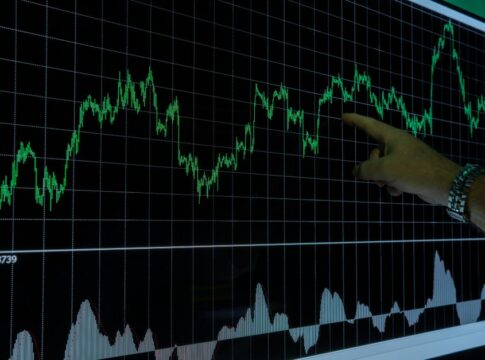
Photo: Rafael Minguet Delgado / Pexels
By US Daily Tribune Newsroom, Economy Desk — Published November 9, 2026
Table of Contents
- Key Takeaways
- The Background & Context
- Why This Matters
- Reactions & Analysis
- What Happens Next
- Frequently Asked Questions
Wall Street’s worry machine is shifting gears. For months, traders obsessed over stubborn inflation and the Federal Reserve‘s relentless campaign to cool prices. Now, as technology stocks tumble and economic data flash warning signs, trader angst pivots from inflation concerns to fears about economic growth itself. The change in sentiment marks a crucial inflection point for markets and the broader U.S. economy, one that could reshape investment strategies and test the Federal Reserve’s delicate balancing act.
The shift comes as tech-heavy indices suffer steep losses, dragging down portfolios from Main Street retirement accounts to institutional funds. Yet even as market turbulence intensifies, Federal Reserve officials signal they’re not ready to pause their inflation fight. San Francisco Fed President Mary Daly recently indicated that another interest rate hike remains likely, despite what she characterized as a “painful” dive in technology stocks.
This disconnect between market distress and central bank policy reveals the high-wire act facing policymakers. Raise rates too much, and the economy tips into recession. Ease too soon, and inflation roars back. For American workers, savers, and businesses, the stakes couldn’t be higher.
Key Takeaways
- Market focus has shifted dramatically from inflation worries to concerns about slowing economic growth as technology stocks experience significant declines.
- Federal Reserve officials, including San Francisco Fed President Mary Daly, continue to signal that additional interest rate increases are probable despite market volatility.
- The technology sector rout has been described as “painful” by central bank officials, yet monetary policy tightening remains on the table.
- The pivot in trader sentiment reflects growing uncertainty about whether the U.S. economy can achieve a soft landing or will slide into recession.
- The disconnect between deteriorating market conditions and hawkish Fed rhetoric highlights the challenging trade-offs facing monetary policymakers.
- Ordinary Americans face consequences ranging from retirement account losses to potential job market softening as the economic picture grows cloudier.
The Background & Context
To understand this moment, rewind to 2021. Inflation surged to forty-year highs as pandemic-era supply chain snarls collided with unprecedented fiscal stimulus and pent-up consumer demand. The Federal Reserve, initially dismissing price pressures as “transitory,” reversed course in early 2022 and launched the most aggressive interest rate hiking cycle in decades.
Throughout 2022 and into 2023, market participants fixated on inflation data releases. Each Consumer Price Index report moved billions in assets. Traders parsed Federal Reserve statements for hints about the pace and ultimate peak of rate increases. The dominant fear was that inflation would become entrenched, forcing the central bank into even more draconian tightening.
But markets are forward-looking machines. As inflation gradually cooled from its peak above nine percent to more moderate levels, attention began shifting. Technology stocks, which had already suffered in 2022 as rising rates made future earnings less valuable, started showing fresh cracks. The sector that had led the market higher for years suddenly looked vulnerable.
The change in trader psychology reflects basic economic logic. Higher interest rates work by slowing economic activity—making borrowing more expensive for businesses and consumers, cooling the job market, and reducing demand. Eventually, this medicine works. The question is whether the patient survives the cure.
Recent economic indicators have given traders reason to worry. While the labor market remains relatively strong, cracks are appearing. Job openings have declined from their peaks. Consumer spending, while resilient, shows signs of moderating. Manufacturing activity has contracted. Credit conditions have tightened significantly, particularly after regional bank stress earlier this year spooked lenders.
Why This Matters
For most Americans, abstract discussions about trader sentiment and monetary policy feel distant from daily life. But this shift carries real consequences for households across the country.
Start with retirement savings. Millions of Americans hold 401(k) accounts and IRAs heavily weighted toward stocks, particularly technology shares through index funds. When tech stocks tumble, nest eggs shrink. A prolonged downturn could delay retirement plans or force difficult decisions about spending and savings.
The job market represents another critical channel. If growth concerns prove justified and the economy tips into recession, unemployment will rise. Companies already conducting layoffs—particularly in the tech sector—could accelerate cuts. For workers, this means increased job insecurity, weaker wage growth, and reduced bargaining power.
Interest rates affect borrowing costs across the economy. Mortgages, auto loans, credit cards, and business financing all become more expensive as the Fed raises rates. Homebuyers face affordability challenges. Small businesses struggle to invest and expand. Consumers carrying credit card balances pay more in interest charges.
The pivot from inflation to growth fears also reflects uncertainty about the Federal Reserve’s ability to engineer a soft landing—slowing the economy just enough to tame inflation without triggering recession. History suggests this is extraordinarily difficult. Past tightening cycles have frequently ended in economic contractions.
If recession arrives, the consequences ripple through communities. Tax revenues decline, straining state and local budgets. Social safety net programs face increased demand. Economic hardship can fuel political volatility and social stress.
Reactions & Analysis
Federal Reserve officials find themselves in an unenviable position. Despite market turmoil and growing recession fears, they remain focused on their dual mandate: maximum employment and stable prices. With inflation still above the central bank’s two percent target, policymakers argue their work isn’t finished.
San Francisco Fed President Mary Daly’s recent comments capture this tension. Acknowledging the pain in technology stocks, she nevertheless indicated that another rate hike appears likely. This hawkish stance reflects the Fed’s determination to avoid the mistakes of the 1970s, when premature policy easing allowed inflation to become embedded in the economy.
Market participants have responded with volatility and repositioning. Technology stocks, which benefit from low interest rates and trade on expectations of future growth, have borne the brunt of selling pressure. Investors are rotating toward defensive sectors and shorter-duration assets. Options markets show elevated demand for downside protection.
Economists remain divided about the outlook. Some argue the Fed has already done enough, and that lagged effects of past rate hikes will continue slowing the economy. They warn that additional tightening risks overshooting, pushing unemployment unnecessarily high. Others contend that inflation remains too elevated and that the central bank must stay the course, even if that means accepting some economic pain.
Business leaders express growing caution. Capital expenditure plans are being scrutinized more carefully. Hiring has become more selective. Companies are building cash reserves and extending payment terms to preserve liquidity. This defensive posture itself becomes self-fulfilling, as reduced business confidence contributes to slower growth.
What Happens Next
The coming months will test whether the U.S. economy can navigate this treacherous passage. Several scenarios are possible, each with different implications for markets and Main Street.
In the optimistic case, inflation continues declining toward the Fed’s target while growth slows but remains positive. The central bank achieves its elusive soft landing, allowing it to eventually cut rates without having triggered a severe recession. Markets stabilize and gradually recover. This scenario is possible but historically rare.
A less benign outcome involves recession. If growth fears prove justified, unemployment rises and corporate earnings decline. The Fed eventually pivots to rate cuts, but only after significant economic damage. Markets could face extended losses before bottoming. For workers and businesses, this means a painful adjustment period.
A third possibility is that inflation proves stickier than expected, forcing the Fed to keep rates higher for longer. This “higher for longer” scenario grinds away at economic activity, increasing recession risk while delaying any policy relief. It represents perhaps the most challenging environment for both markets and the economy.
Near-term catalysts will shape which path unfolds. Upcoming inflation reports, employment data, and Federal Reserve communications will move markets significantly. Any signs of labor market deterioration could accelerate the shift in trader sentiment. Conversely, resilient economic data might calm growth fears, at least temporarily.
The technology sector’s performance deserves particular attention. As a bellwether for growth expectations and a major component of market indices, tech stocks influence broader sentiment. Continued weakness could signal deeper economic concerns. Stabilization might suggest the worst fears are overdone.
Frequently Asked Questions
Why are traders now worried about growth instead of inflation?
As inflation has gradually declined from its peaks and the Federal Reserve has already raised interest rates substantially, market participants are increasingly focused on whether this monetary tightening will push the economy into recession. The cumulative effect of higher rates is slowing economic activity, making growth concerns more immediate than inflation fears for many traders.
What does the technology stock decline mean for ordinary investors?
Technology stocks represent a significant portion of many Americans’ retirement accounts through index funds and 401(k) plans. When tech shares fall, these portfolios lose value. For investors nearing retirement, this creates particular challenges. However, younger investors with longer time horizons may view market weakness as a buying opportunity, depending on their risk tolerance and financial situation.
Why would the Federal Reserve raise rates if markets are struggling?
The Federal Reserve’s primary mandate is controlling inflation and maintaining maximum employment, not supporting stock prices. Central bank officials worry that easing policy prematurely could allow inflation to resurge, requiring even more painful tightening later. They view some economic and market pain as an acceptable cost of returning inflation to their two percent target, even though this creates short-term hardship.
How can Americans protect themselves during this uncertain period?
Financial advisors generally recommend maintaining diversified portfolios appropriate to individual time horizons and risk tolerance. For those still working, continuing regular retirement contributions allows buying assets at lower prices. Building emergency savings provides a buffer against potential job market weakness. Avoiding panic selling during market volatility helps prevent locking in losses. Consulting with financial professionals about specific circumstances is advisable, as individual situations vary widely.
As Wall Street’s focus shifts from inflation to growth, Americans face an economy at a crossroads. The Federal Reserve’s balancing act will determine whether the nation achieves a rare soft landing or endures the recession many now fear. For traders and citizens alike, the coming months will reveal whether policymakers can thread this needle—or whether the cure for inflation proves as painful as the disease.