
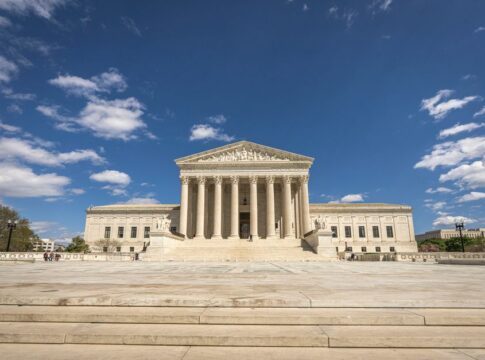
Supreme Court Nomination Process: How Justices Get Confirmed
Supreme Court Nomination Process: How Justices Get Confirmed
By Newsroom, National Desk — Published August 24, 2026
Table of Contents
- The Constitutional Framework Behind Supreme Court Nomination
- From Vacancy to Nomination: The Selection Phase
- Senate Confirmation: Where Nominations Live or Die
- Presidential Administration Actions and Political Realities
- Why the Process Matters Beyond Washington
- Frequently Asked Questions
When a seat opens on the nation’s highest court, the supreme court nomination process sets off one of Washington’s most consequential political dramas. Unlike the quick turnover in Congress or the four-year presidential cycle, a Supreme Court appointment can shape American law for decades. Understanding how justices reach the bench reveals much about the balance of power between the executive and legislative branches, and why these confirmations ignite such fierce battles on Capitol Hill.
The process might seem straightforward on paper—president nominates, Senate confirms—but the reality involves intense vetting, political calculation, and public scrutiny that can stretch for months. Every step carries weight, from the initial vacancy to the final congressional vote results that determine whether a nominee becomes the next justice to issue SCOTUS rulings affecting millions of Americans.
The Constitutional Framework Behind Supreme Court Nomination
The Constitution dedicates surprisingly few words to Supreme Court appointments. Article II grants the president power to nominate justices “by and with the Advice and Consent of the Senate.” That’s essentially it. The framers left the details deliberately vague, creating a system that has evolved dramatically over two centuries.
No formal qualifications exist for the job. A justice need not be a lawyer, hold a law degree, or have judicial experience. The Constitution sets no age requirement, no citizenship duration, not even a residency rule. In practice, of course, modern nominees come from elite legal backgrounds—usually appellate judges, though solicitors general and legal scholars have also made the cut.
The president holds complete discretion over whom to nominate, making this one of the most powerful expressions of presidential policy. A chief executive can reshape constitutional interpretation for a generation through these picks. Conversely, the Senate’s advice and consent role gives it absolute veto power. A nominee needs a simple majority to win confirmation, but getting there requires navigating a gauntlet that tests legal acumen, ideological acceptability, and political viability.
From Vacancy to Nomination: The Selection Phase
When a justice dies, retires, or announces plans to step down, the White House legal team springs into action. Modern presidents typically maintain a running list of potential nominees, vetted and ready. This preparedness reflects how high the stakes run—waiting to start the search wastes precious political capital and time.
The selection process unfolds largely behind closed doors. White House counsel leads the effort, often consulting with senators from both parties, legal scholars, and advocacy groups across the ideological spectrum. For a president, the calculation involves several competing factors. Legal philosophy matters enormously. Does the nominee embrace originalism, interpreting the Constitution as written? Or a living constitutionalist approach that adapts to modern circumstances?
Political considerations loom large too. A president facing a Senate controlled by the opposing party must weigh whether to nominate an ideological champion likely to face defeat, or a more moderate figure who might actually win confirmation. Demographic representation has become increasingly important—presidents often face pressure to diversify a court that, for most of its history, consisted exclusively of white men.
The vetting itself resembles a forensic investigation. Teams pore over every published opinion, law review article, and public statement. They examine financial records, interview colleagues, and search for anything that might derail confirmation. One problematic hiring decision from decades past, one ill-considered speech, one unpaid tax bill—any of these can torpedo a nomination before it begins.
What Presidents Look For
- Judicial philosophy aligned with the administration’s constitutional vision
- A paper trail that demonstrates consistent legal reasoning without major vulnerabilities
- Age—younger nominees can serve longer, extending a president’s legacy
- Confirmation viability given the current Senate composition
- Diversity considerations including gender, race, professional background, and geographic origin
- Intellectual firepower to influence fellow justices and write persuasive opinions
Senate Confirmation: Where Nominations Live or Die
Once the president announces a nominee, the action shifts to Capitol Hill. The Senate Judiciary Committee takes the lead, conducting the most visible and consequential phase of the process. The committee schedules hearings, typically several weeks after the nomination, giving senators time to review the nominee’s record and prepare questions.
Confirmation hearings have become televised spectacles, though they weren’t always so public. For much of American history, the Senate didn’t even hold hearings for Supreme Court nominees. That changed in the twentieth century as federal legislation expanded the court’s reach into everyday American life, making these appointments too important to rubber-stamp.
The hearings follow a familiar pattern. The nominee sits before the committee for days of questioning. Senators probe judicial philosophy, ask about specific cases, and search for clues about how the nominee might rule on hot-button issues. Nominees, for their part, have perfected the art of saying very little. They’ll discuss general legal principles but refuse to preview how they’d rule on cases that might come before them. This dance frustrates senators but reflects a legitimate concern—judges shouldn’t commit to outcomes before hearing arguments.
Outside groups flood the zone with advertising, lobbying, and public pressure campaigns. Conservative and liberal organizations pour millions into swaying public opinion and pressuring wavering senators. Constituent calls jam Senate phone lines. The nominee’s supporters and detractors both seek airtime to make their case.
After hearings conclude, the Judiciary Committee votes on whether to report the nomination favorably to the full Senate. A negative committee vote doesn’t kill a nomination—the full Senate can still proceed—but it signals serious trouble. Once the nomination reaches the Senate floor, debate begins. Senators can speak for or against, though modern rules limit how long this continues.
The final congressional vote results determine the outcome. Since 2017, only a simple majority is needed, after the Senate eliminated the filibuster for Supreme Court nominees. Before that rule change, sixty votes were required to overcome procedural obstacles, giving the minority party significant leverage. The current system makes confirmation easier for presidents whose party controls the Senate, harder when government is divided.
Presidential Administration Actions and Political Realities
The timeline for confirmations has contracted dramatically in recent decades. Where the process once took months of careful deliberation, political pressure now demands speed. A president wants a nominee confirmed before the next election cycle shifts the political landscape. Senate leaders want to lock in a win while they have the votes.
This acceleration has intensified partisan warfare over nominations. When control of the Senate hangs in the balance, every confirmation becomes a battle over the court’s ideological direction for the next generation. Presidents time their executive orders and policy initiatives with one eye on how judicial appointments might affect their legal standing.
The intersection with electoral politics has grown increasingly fraught. The 2016 episode in which Senate leadership refused to consider a nomination during a presidential election year, then confirmed a nominee during the 2020 election, laid bare how raw political calculation now drives the process. Whatever norms once governed Washington DC politics around judicial appointments have largely dissolved.
State legislature decisions and gubernatorial races rarely affect Supreme Court nominations directly, but they shape the political environment. A president weakened by losses in state-level electoral politics may lack the political capital to push through a controversial nominee. Senators facing tough reelection campaigns in swing states calculate whether supporting or opposing a nominee helps or hurts their prospects.
Why the Process Matters Beyond Washington
Supreme Court confirmations might unfold in hearing rooms on Capitol Hill, but their effects ripple across the country. The justices who emerge from this process will rule on everything from federal agency regulations and enforcement to interstate commerce and infrastructure disputes. Their decisions on national security and domestic affairs, on the limits of presidential policy and the scope of federal legislation, shape American life in concrete ways.
A newly confirmed justice might serve thirty years or more, participating in thousands of SCOTUS rulings that affect civil rights, criminal justice, environmental protection, reproductive freedom, voting rights, and countless other issues. The confirmation process represents one of the few moments when citizens can weigh in—through their senators—on who wields this extraordinary power.
The court’s role as final arbiter of constitutional meaning makes these appointments fundamentally different from other government positions. Unlike cabinet secretaries who serve at the president’s pleasure, or members of Congress who face regular elections, justices enjoy life tenure. They answer to no one but the law as they understand it. Getting the confirmation process right matters because there’s no do-over once a justice takes the oath.
Frequently Asked Questions
How long does the Supreme Court confirmation process typically take?
The timeline varies considerably based on political circumstances. In recent decades, the process from nomination to final Senate vote has ranged from about two to four months. Some confirmations move faster when the nominee faces little opposition and the Senate acts quickly. Others drag on when controversy erupts or when Senate leadership deliberately slows the process for strategic reasons. Historical confirmations sometimes took much longer, though the modern trend favors speed.
Can the Senate reject a Supreme Court nominee?
Absolutely. The Senate has rejected roughly one in five Supreme Court nominees throughout American history, though outright rejections have become less common in recent decades. More often, controversial nominees withdraw before a confirmation vote when it becomes clear they lack sufficient support. The Senate’s constitutional role isn’t merely ceremonial—it provides a genuine check on presidential appointment power, though partisan control of the chamber heavily influences outcomes.
What happens if a Supreme Court seat remains vacant for a long time?
The court continues functioning with eight justices instead of nine. Cases proceed, oral arguments happen, and decisions are issued. The main consequence is the possibility of tie votes, which affirm lower court rulings without setting national precedent. A prolonged vacancy can affect which cases the court agrees to hear, since the justices may avoid taking controversial cases when an even split seems likely. The court has operated with fewer than nine justices numerous times throughout history, sometimes for more than a year.
Do Supreme Court nominees ever fail to answer senators’ questions during hearings?
Nominees routinely decline to answer questions about how they would rule on specific issues or cases that might come before the court. This practice, sometimes called the “Ginsburg rule” after a justice who articulated the principle during her confirmation, reflects judicial ethics—judges shouldn’t prejudge cases they haven’t heard. Nominees will discuss their judicial philosophy, legal methodology, and past rulings, but they avoid commitments about future decisions. This frustrates senators seeking concrete answers but has become standard practice across ideological lines.
The supreme court nomination process remains one of Washington’s most consequential rituals precisely because it operates at the intersection of law and politics, principle and power. Understanding how it works helps citizens grasp what’s at stake when the next vacancy opens and the familiar cycle begins again.