
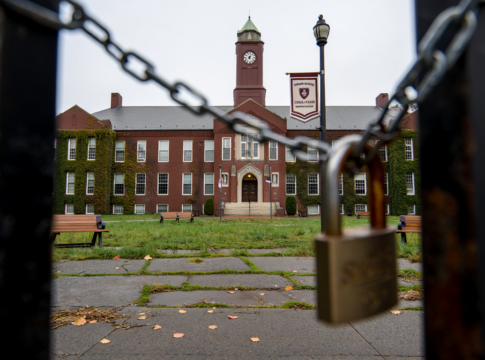
More than a quarter of America’s private nonprofit colleges could close or merge within ten years, threatening educational access for 670,000 students and raising questions about institutional sustainability and rural community stability.
Massive Financial Crisis Threatens Higher Education
Huron Consulting Group projects 442 of the nation’s 1,700 private nonprofit four-year colleges face closure or merger by 2036. The business strategy firm analyzed enrollment trends, tuition revenue, assets, debt levels, and cash reserves to identify institutions at risk. Over 120 colleges fall into the highest danger category, with many sharing characteristics of small size and rural locations. Sterling College in Craftsbury Common, Vermont, exemplifies this crisis. The agriculture-focused institution will close in May 2026 after its final semester, leaving students scrambling for alternatives.
Students Lose Educational Options
LillyAnne Keeley, a Sterling College senior, expressed concern about diminishing choices for students seeking specialized programs. Sterling operates a 130-acre working farm in northeastern Vermont, where students recently celebrated successful lamb births while facing their institution’s demise. The college’s remote location lacks cell service and sees minimal traffic, providing unique educational experiences unavailable at larger universities. As institutions close, students face displacement mid-degree, forcing transfers that may not accept all credits or offer equivalent programs. The closures disproportionately affect rural communities where these colleges serve as cultural and economic anchors.
Warning Signs Point to Financial Stress
The Huron analysis examined multiple financial health indicators to determine closure risk. Small private colleges struggle with declining enrollment, insufficient endowments, and rising operational costs that tuition revenue cannot cover. Many institutions lack the cash reserves necessary to weather economic downturns or demographic shifts. The projected wave of closures exceeds previous estimates, signaling accelerating pressure on higher education’s traditional model. Private nonprofit colleges serve distinct student populations, often providing personalized attention and specialized programs larger state universities cannot match.
What This Means For American Education
The closure projection represents fundamental restructuring in American higher education. Students seeking alternatives to large state universities face fewer options, particularly in rural areas where private colleges often provide the only local four-year degree programs. Families investing in private education must now assess institutional stability alongside academic quality. The consolidation may force students toward larger, less personalized educational environments or require relocation to distant campuses, increasing costs and family separation. Communities hosting these colleges face economic losses as institutions representing major local employers and cultural centers disappear from their regions.