
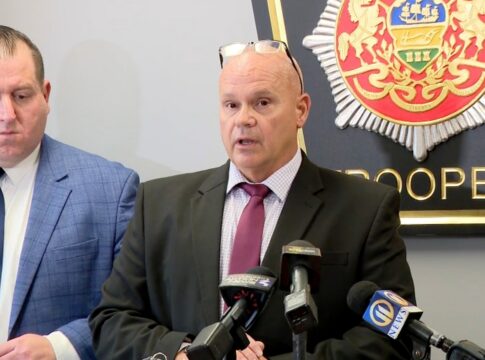
Pennsylvania State Police announced that advanced DNA testing has connected a deceased Washington County man to two brutal murders from the 1970s, officially confirming that a serial killer operated in southwestern Pennsylvania during that era.
Decades-Old Cases Solved Through Modern Technology
Authorities identified James Richard Clark Sr., who died in 2023 at age 66, as the killer of Susan Rush and Brenda Ritter. Clark was just 19 and 20 years old when he committed these crimes in Washington County, where he lived at the time. The breakthrough came after DNA testing conducted in May 2025 definitively linked the same perpetrator to both homicides, according to Cpl. James Petrosky, who oversees criminal investigation assessments for Troop B of the Pennsylvania State Police.
Brenda Ritter, 18, was murdered in 1977. Her body was discovered on a hillside, and investigators determined she had been sexually assaulted and strangled before her death. The details of Susan Rush’s murder were not disclosed at the Wednesday press conference, but authorities confirmed that DNA evidence conclusively tied both cases to Clark.


Possibility of Additional Victims
When asked whether Clark might be responsible for other unsolved homicides, Petrosky did not rule out the possibility. He told reporters that serial killers typically continue their patterns of violence. The investigator stated his belief that additional victims could potentially exist, though no specific cases were mentioned during the announcement. State police continue reviewing cold cases from the era to determine if any other crimes might be connected to Clark’s DNA profile.
Families Notified, Investigation Continues
Both victims’ families have been informed of the breakthrough in these decades-old cases. Authorities said the families requested privacy as they process this long-awaited resolution. The announcement provides closure to loved ones who waited nearly five decades for answers about the violent deaths of Rush and Ritter. While Clark’s death in 2023 prevents criminal prosecution, the DNA confirmation resolves lingering questions about who killed these young women and removes uncertainty from two families forever marked by tragedy.
The case demonstrates how modern forensic technology continues solving crimes that remained mysteries for generations, bringing justice through scientific advancement even when traditional prosecution becomes impossible.