
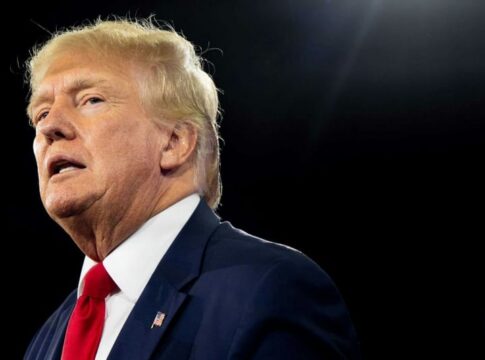
President Donald Trump reversed his Defense Secretary’s decision to publicly broadcast the execution of Fort Hood mass murderer Nidal Hasan, announcing Thursday that the firing squad death will proceed without cameras despite its potential as a deterrent against terrorism.
Contradicting His Own Defense Chief
Trump directly overruled Defense Secretary Pete Hegseth’s recent announcement about streaming the December 3 execution. The President acknowledged on Truth Social that broadcasting Hasan’s death “might have been a strong deterrent for the World to witness how America deals with Terrorists and SCUM like Hasan.” However, Trump said he decided against the public spectacle after considering that “many very good and well meaning people would rather not watch him die.”
The reversal marks a rare instance of Trump publicly contradicting a Cabinet member’s policy announcement. Hegseth had positioned the livestream as a message to would-be terrorists about American justice. Trump’s decision suggests internal pushback from advisors or public reaction influenced the change. The President confirmed the execution remains scheduled for December 3 by firing squad as planned, with only the broadcasting element eliminated.


Victims’ Families Get Private Viewing
While the general public will not witness the execution through streaming or other visual devices, Trump announced that families of Fort Hood shooting victims will receive the option to view Hasan’s death in person. This accommodation recognizes the 13 families who lost loved ones and the 32 individuals injured in the November 2009 terrorist attack. The distinction between public broadcasting and private family viewing reflects a balance between transparency for those directly affected and avoiding a national spectacle.
The Fort Hood Massacre Background
Hasan carried out one of the deadliest attacks on American military personnel at home when he opened fire at Fort Hood, Texas, killing 13 service members and civilians while wounding 32 others. A military court sentenced him to death in 2013 following his conviction. The attack, which Hasan carried out while serving as an Army psychiatrist, shocked the nation and raised questions about security protocols on military installations. His execution has been delayed for over a decade through various legal proceedings, making the confirmed December date significant for victims’ families who have waited years for justice.
Constitutional And Precedent Questions
The decision whether to broadcast executions raises First Amendment questions about public access to government actions and Eighth Amendment concerns about cruel and unusual punishment. No federal execution has been livestreamed in American history, making Hegseth’s original proposal unprecedented. Trump’s reversal maintains traditional privacy surrounding capital punishment while still proceeding with the rarely used firing squad method, which itself represents a departure from standard lethal injection protocols.