
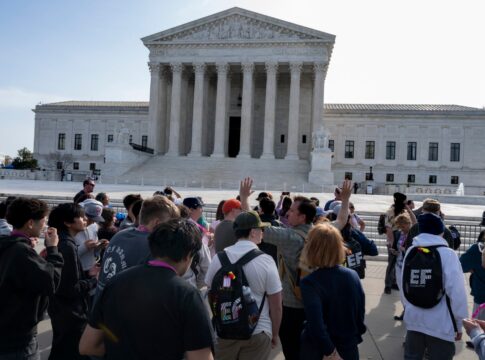
The Supreme Court convened on Wednesday to hear arguments on President Trump’s executive order attempting to end birthright citizenship, a constitutional guarantee established in 1868 that has stood for over 150 years.
Constitutional Authority Under Question
Trump signed the executive order within hours of taking office on January 20, 2025, targeting children born in the United States to parents without documentation or on temporary visas. The order argues the 14th Amendment’s phrase “subject to the jurisdiction thereof” excludes these children from automatic citizenship. Lower courts across the country have unanimously blocked enforcement, with judges appointed by both parties ruling against the administration’s interpretation.
Aarti Kohli, executive director of the Asian Law Caucus, stated the case represents a fundamental question about presidential power to rewrite constitutional provisions. The challenge, Trump v Barbara, was brought by advocacy groups including the ACLU and Legal Defence Fund on behalf of affected families. The named plaintiff, a Honduran asylum seeker in New Hampshire, is expecting her fourth child. Co-plaintiffs include a Taiwanese student and a Brazilian national whose children were born on American soil.
Constitutional Stakes and Precedent
The 14th Amendment was ratified in 1868 to overturn the 1857 Dred Scott decision that denied citizenship to enslaved people born in America. Its citizenship clause established that all persons born in the United States are citizens, regardless of parentage. Trump’s order would create a two-tiered system, denying citizenship documents to children born after February 19, 2025, if their parents lack permanent legal status.
Conservative Court Faces Historic Decision
The case arrives before a Supreme Court with a 6-to-3 conservative majority that has delivered mixed rulings for Trump. While the court has generally supported his immigration agenda, it has also handed him significant defeats on other matters. Advocates argue the text of the 14th Amendment provides clear guidance that birthright citizenship applies universally. A ruling in Trump’s favor would fundamentally alter American citizenship law and potentially create what opponents call a permanent underclass of people born on American soil but denied equal rights and protections under law.