
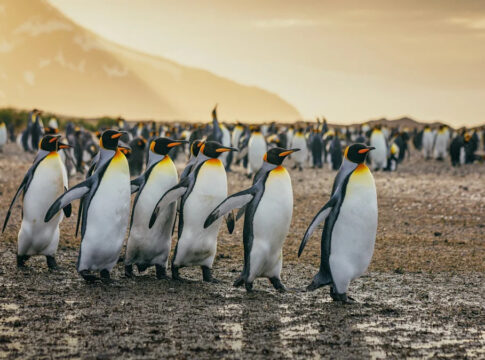
The world’s largest penguin colony has collapsed by two-thirds since 2011, with half a million breeding penguins vanishing from a remote Antarctic island in what scientists are calling an ecosystem crisis that threatens the entire food chain.
Massive Die-Off Raises Extinction Fears
Zavodovski Island, the northernmost of the South Sandwich Islands in Antarctica, once hosted 600,000 chinstrap penguins and 90,000 macaroni penguins in 2011. By 2025, the population had plummeted so dramatically that the island lost its title as the world’s biggest penguin colony to Cape Adare in the Ross Sea. Norman Ratcliffe, a penguin ecologist at the British Antarctic Survey who led the research, described the scale as staggering.


The chinstrap penguin, named for the distinctive black line running below its beak from cheek to cheek, may now require classification as endangered. The decline is accelerating so rapidly that scientists warn the species faces survival threats across multiple Antarctic regions. A 2020 report documented similar population crashes in the South Shetland Islands, prompting researchers to conclude that something fundamental has broken in the Antarctic ecosystem.
Climate Disruption Identified As Primary Culprit
Scientists identified climate change as the most probable cause after ruling out other factors. Human activity has pushed winter temperatures on and around the Antarctic peninsula to 9 degrees Fahrenheit above preindustrial levels, representing one of the fastest warming rates anywhere on Earth. In June, Argentina’s Esperanza base recorded a record winter high of 59.7 degrees Fahrenheit, roughly 36 degrees above normal for that time of year.
Chinstrap penguins have specialized diets and specific ocean temperature preferences that make adaptation difficult. Tracking data reveals they prefer cooler waters northwest of the island where Antarctic krill, their primary food source, traditionally congregated. As waters warm, the krill have migrated south into the Weddell Sea, forcing penguins to travel farther or starve.
Wider Ecosystem Collapse Threatens
Researchers dismissed competition between penguin species and ruled out the island’s 2016 volcanic eruption, which initially prompted a theory of sudden catastrophic die-off. Data showed a steady linear decline rather than a sudden drop, and observations confirmed chinstrap penguins avoided the main ash and lava deposit areas. With humans living thousands of miles away, climate disruption stands as the only remaining explanation.
Ratcliffe warned the loss carries implications beyond penguins. Each component removed from an ecosystem increases the risk of total collapse, similar to pulling blocks from a tower. The Antarctic food web depends on interconnected species, and removing half a million breeding penguins threatens predators, prey, and the entire marine environment these animals support.