
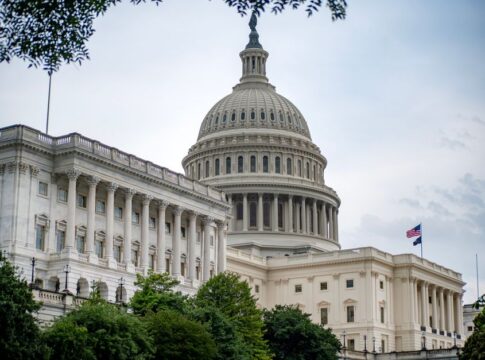
Photo: Ramaz Bluashvili / Pexels
By US Daily Tribune Newsroom, Politics Desk — Published November 22, 2026
Table of Contents
- Key Takeaways
- The Background & Context: Backing Trump Senate Republicans on War Powers
- Why This Matters to American Citizens
- Reactions & Analysis: The Political Divide
- What Happens Next: Democratic Plans and Future Confrontations
- Frequently Asked Questions
In a striking display of partisan unity, Senate Republicans have moved to block a Democratic-led resolution aimed at constraining presidential authority over military engagement with Iran. The legislative maneuver, backing Trump’s position on executive war powers, underscores the deep divisions in Congress over who holds the reins when American forces face potential conflict in the Middle East. This latest clash over Iran war authorization arrives as Democrats prepare to leverage their incoming congressional majority to challenge the administration’s military posture.
The resolution’s defeat marks another chapter in the ongoing constitutional tug-of-war between the executive and legislative branches over war-making authority. With backing Trump, Senate Republicans have effectively shielded the White House from congressional constraints on Iran operations, even as questions mount about the scope and legality of unilateral military action. The vote exposes fault lines that will define the next phase of American foreign policy debates.
For American voters and taxpayers, the stakes extend far beyond Capitol Hill procedurals. This fight determines whether elected representatives retain meaningful checks on decisions that could send U.S. troops into harm’s way, drain national resources, and reshape Middle East stability for decades.
Key Takeaways
- Senate Republicans successfully blocked a Democratic resolution that would have limited presidential authority to conduct military operations against Iran without explicit congressional approval.
- The legislative battle reflects fundamental disagreements over constitutional war powers and the balance between executive flexibility and congressional oversight in military matters.
- Democrats are positioning to use their future congressional majority to impose restrictions on Iran-related military action when they assume control.
- The resolution’s failure preserves the administration’s current latitude to respond militarily to Iranian provocations without seeking prior legislative authorization.
- Constitutional questions about the War Powers Resolution and its enforcement continue to divide lawmakers along partisan and philosophical lines.
- The debate carries significant implications for U.S. military posture in the Middle East and the potential for escalation with Tehran.
The Background & Context: Backing Trump Senate Republicans on War Powers
The constitutional authority to declare war belongs to Congress. Yet modern presidents have repeatedly deployed American military forces without formal declarations, citing inherent executive powers and decades-old authorizations. The tension has grown particularly acute regarding Iran, where sporadic clashes, proxy conflicts, and escalating rhetoric have brought the nations to the brink multiple times.
War Powers Resolutions emerged from the Vietnam era as Congress sought to reclaim its constitutional role after years of executive-led military expansion. The 1973 War Powers Act requires presidents to notify Congress within 48 hours of committing armed forces and limits such deployments to 60 days without congressional authorization. Yet enforcement has proven elusive, with presidents of both parties asserting broad interpretive authority.
The current Iran dispute builds on years of deteriorating relations. Tensions escalated following the U.S. withdrawal from the multinational nuclear agreement, reimposition of sanctions, and a series of military incidents involving Iranian forces, proxies, and American personnel across the Middle East. Each confrontation raised questions about whether existing congressional authorizations—some dating to the 2001 and 2002 wars in Afghanistan and Iraq—could legally justify operations against Iran.
Democrats have argued that the administration stretched those older authorizations beyond recognition, applying them to conflicts and adversaries never contemplated by the original votes. Republicans counter that presidential flexibility remains essential in a volatile region where threats evolve rapidly and congressional debate could telegraph American intentions to adversaries.
Why This Matters to American Citizens
War powers debates might seem like arcane constitutional squabbles, but they carry profound consequences for ordinary Americans. Military engagements cost lives—both of service members and civilians caught in conflict zones. They drain treasury resources that could fund domestic priorities. And they shape America’s global standing and security for generations.
When Congress cedes war-making authority to the executive branch, it effectively removes a critical democratic check on decisions of existential importance. Voters elect representatives to weigh in on matters of war and peace. If those representatives abdicate that responsibility, citizens lose their most direct voice in decisions that may send their neighbors, children, or spouses into combat.
The Iran question carries particular urgency. A full-scale conflict with Tehran would dwarf recent Middle East engagements in scope and cost. Iran possesses sophisticated military capabilities, extensive regional proxy networks, and the ability to disrupt global energy markets. War could draw in regional powers, threaten vital shipping lanes, and destabilize an already fractured region. American taxpayers would bear enormous financial burdens while military families face extended deployments and casualties.
Beyond immediate military concerns, the precedent matters. If presidents can unilaterally initiate major conflicts by stretching old authorizations or claiming inherent powers, the constitutional framework that balances executive action with legislative deliberation erodes. Future administrations of any party could cite these precedents to bypass congressional input on military decisions.
For voters concerned about government accountability, the resolution fight represents a test case. Will elected representatives assert their constitutional role, or will they defer to executive authority along partisan lines? The answer shapes not just Iran policy but the broader architecture of American democracy.
Reactions & Analysis: The Political Divide
The Senate vote broke along predictable partisan lines, with Republicans rallying behind the administration’s position that existing authorities and presidential powers provide sufficient legal basis for Iran operations. Democrats countered that the Constitution demands explicit congressional authorization for new military engagements, particularly ones that could escalate into full-scale war.
Republican senators emphasized the need for presidential flexibility in responding to Iranian aggression. They argued that telegraphing limitations on American responses would embolden Tehran and constrain the administration’s ability to protect U.S. forces and interests. Some pointed to Iranian attacks on commercial shipping, drone strikes on Saudi oil facilities, and rocket attacks on bases housing American troops as evidence that Iran poses an active, ongoing threat requiring nimble executive responses.
Democratic critics maintained that none of those incidents justified bypassing Congress for major military action. They distinguished between defensive measures to protect troops under imminent threat—which presidents clearly possess authority to order—and offensive operations or broader military campaigns that require legislative approval. The resolution aimed to draw that line clearly, preventing escalation without congressional debate.
Constitutional scholars have long divided on these questions. Some argue that modern warfare’s speed and complexity demand executive flexibility that 18th-century constitutional framers could not have anticipated. Others insist that the framers deliberately placed war powers in congressional hands precisely to prevent hasty or unilateral military adventures, and that technological change does not alter constitutional requirements.
The political calculation extends beyond constitutional theory. Both parties have flip-flopped on war powers depending on which party controls the White House. Democrats who once defended presidential flexibility under their own administration now champion congressional authority. Republicans who once demanded congressional votes now defend executive prerogative. This partisan inconsistency undermines principled debate and suggests political expediency often trumps constitutional fidelity.
What Happens Next: Democratic Plans and Future Confrontations
With Democrats poised to control Congress, the Iran war powers fight is far from over. Democratic leaders have signaled their intention to force votes on restricting military action against Iran once they assume the majority. Such resolutions could take several forms: explicit prohibitions on funding for Iran operations without congressional approval, requirements for regular reporting and reauthorization, or outright repeals of older authorizations that administrations have stretched to justify Iran-related actions.
The challenge for Democrats will be crafting language that commands sufficient support to overcome presidential vetoes. That requires either overwhelming bipartisan majorities or compromise language that satisfies moderates concerned about both constitutional principles and national security flexibility. Hardline positions that appear to handcuff the president during genuine emergencies could alienate swing votes.
Republicans, meanwhile, face their own dilemmas. Defending executive war powers when their party controls the White House may complicate future efforts to constrain Democratic presidents. Some Republicans have expressed discomfort with unchecked executive authority in principle, even as they support the current administration’s Iran posture. These tensions could create openings for bipartisan coalitions on narrower war powers reforms.
The administration, for its part, has shown little inclination to seek explicit congressional authorization for Iran operations. Officials argue that multiple legal authorities—including Article II constitutional powers, the 2001 Authorization for Use of Military Force against terrorists, and inherent self-defense rights—provide ample justification. This position sets up potential constitutional confrontations if Congress passes restrictive legislation and the administration defies it.
International dynamics will also shape the debate’s trajectory. If tensions with Iran ease through diplomacy or deterrence, congressional pressure for restrictions may wane. Conversely, any major incident—attacks on American forces, escalation with Iranian proxies, or threats to regional stability—could either galvanize support for presidential flexibility or intensify demands for congressional involvement, depending on circumstances and public reaction.
Frequently Asked Questions
What is a war powers resolution and why does it matter?
A war powers resolution is congressional legislation aimed at defining, limiting, or clarifying the president’s authority to deploy military forces without explicit legislative approval. These resolutions matter because they address fundamental constitutional questions about which branch of government controls decisions to go to war. While the Constitution grants Congress the power to declare war, presidents have often initiated military action based on executive authority, creating ongoing tension between the branches.
Can Congress actually stop a president from military action against Iran?
Congress possesses several tools to constrain presidential military action, though enforcement has proven difficult historically. Lawmakers can pass legislation prohibiting funding for specific operations, repeal old authorizations that presidents cite as legal justification, or invoke the War Powers Resolution to demand troop withdrawals. However, presidents can veto such legislation, requiring a two-thirds congressional majority to override. Additionally, presidents have historically claimed constitutional authority to act regardless of congressional restrictions in certain circumstances, leading to potential constitutional crises.
Why do Democrats want to restrict Iran military operations now?
Democrats argue that the administration has brought the United States dangerously close to war with Iran without proper congressional authorization or public debate. They contend that the Constitution requires legislative approval for major military engagements and that existing authorizations from 2001 and 2002 do not legally apply to Iran. Democrats also worry that unchecked executive authority could lead to a costly, destabilizing Middle East war that Americans do not support and that Congress never explicitly approved.
How does this affect everyday Americans?
War powers debates directly impact Americans because they determine who decides whether the nation goes to war—decisions that affect military families, national budgets, and long-term security. If presidents can initiate major conflicts without congressional approval, citizens lose their most direct democratic input on matters of life and death. A war with Iran would likely require significant troop deployments, cost hundreds of billions of dollars, potentially reinstate a military draft, and reshape Middle East dynamics for decades, affecting everything from gas prices to terrorism threats.
As this constitutional standoff continues, Americans face fundamental questions about democracy, accountability, and the balance of powers that define their system of government. The Iran war resolution may have failed this round, but the underlying tensions—between executive flexibility and legislative oversight, between security imperatives and democratic process—will persist regardless of which party holds power. How the nation resolves these questions will shape not just Middle East policy but the very structure of American governance for years to come.