
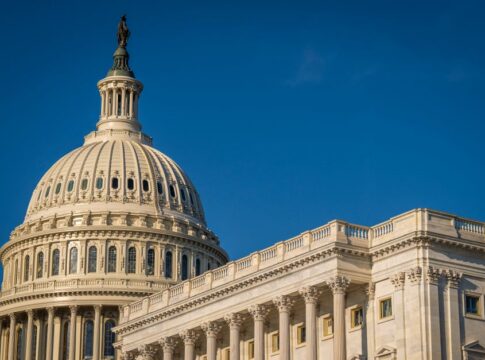
Photo: Mark Stebnicki / Pexels
By US Daily Tribune Newsroom, Politics Desk — Published October 1, 2026
Table of Contents
- Key Takeaways
- The Background & Context
- Why This Matters
- Reactions & Analysis
- What Happens Next
- Frequently Asked Questions
America once built the Hoover Dam in five years and the Empire State Building in just over a year. Today, constructing major infrastructure can take a decade or more just to clear regulatory hurdles. Now, a bipartisan Senate agreement seeks to tackle this frustrating reality by streamlining the permitting process for energy projects and other large-scale construction. The deal represents a rare moment of cross-party cooperation in Congress, addressing complaints that have dogged developers, environmentalists, and politicians alike for years.
The agreement comes as lawmakers from both parties acknowledge that building hard senate negotiations have finally yielded potential legislation to address America’s infrastructure bottleneck. With energy demands rising and the nation’s aging infrastructure requiring urgent attention, the politics of permitting reform have shifted from partisan talking points to practical problem-solving. The proposed changes would speed approvals for everything from power plants to transmission lines, though details of the compromise remain subject to final legislative language.
This legislative push reflects growing exasperation across the political spectrum with a system that can delay critical projects for years, driving up costs and hampering economic competitiveness. Whether building renewable energy facilities or traditional infrastructure, developers face a maze of federal, state, and local reviews that often duplicate efforts and create uncertainty.
Key Takeaways
- The Senate has reached a bipartisan deal aimed at speeding up the permitting process for energy projects and major infrastructure construction across the United States.
- The agreement addresses widespread frustration with delays in building essential infrastructure, from power generation facilities to transmission networks.
- Congressional action on permitting reform represents a rare area of bipartisan cooperation in an otherwise polarized political environment.
- The legislation would streamline approval processes that currently can take a decade or longer, creating significant economic and practical challenges.
- Both energy development advocates and some environmental groups have called for permitting changes, though for different reasons and with different priorities.
- The deal’s success depends on navigating competing interests between development speed and environmental protection standards.
The Background & Context
America’s permitting crisis has been decades in the making. What began as necessary environmental safeguards in the 1970s gradually evolved into a labyrinthine system of overlapping reviews, multiple agency approvals, and seemingly endless opportunities for litigation. A single energy project might require dozens of permits from various federal agencies, each with its own timeline and requirements. State and local approvals add another layer of complexity.
The consequences have been severe. Transmission lines needed to carry renewable energy from remote wind and solar farms to population centers languish in regulatory limbo for years. Natural gas pipelines face similar delays. Even projects with broad support can take five to ten years to receive necessary approvals, by which time costs have often doubled or tripled.
This isn’t just an energy sector problem. Transportation infrastructure, water systems, and telecommunications networks all face similar obstacles. The contrast with other developed nations is stark. Countries like Canada, Australia, and those in the European Union typically complete comparable projects in half the time or less.
Political pressure for reform has been building from multiple directions. Republicans have long argued that excessive regulation stifles economic growth and energy independence. Democrats, particularly those focused on climate change, have increasingly recognized that building the clean energy infrastructure needed to meet emissions goals requires faster permitting. Environmental groups remain divided, with some supporting streamlined reviews that maintain protections while others worry any changes will weaken safeguards.
Previous attempts at permitting reform have foundered on these competing interests. Campaign promises from multiple administrations to fix the system have produced limited results. The current Senate deal represents perhaps the most serious legislative effort in years, driven by urgent energy needs and infrastructure demands that can no longer be ignored.
Why This Matters
For ordinary Americans, permitting delays translate into real costs and consequences. Higher electricity bills result when needed power generation and transmission can’t be built. Economic opportunities vanish when businesses choose to locate facilities abroad rather than face years of regulatory uncertainty. Climate goals slip further out of reach when clean energy projects remain on drawing boards instead of generating power.
The economic stakes are enormous. Infrastructure investment creates jobs, but only if projects actually get built. Communities waiting for new bridges, upgraded water systems, or broadband connections find themselves stuck in bureaucratic purgatory. Taxpayer dollars allocated for infrastructure improvements sit unspent while projects await approval.
National security considerations also loom large. America’s electrical grid needs modernization to handle both growing demand and emerging threats. Domestic energy production requires infrastructure that current permitting timelines make difficult to build. Strategic materials processing and manufacturing face similar obstacles.
The political implications extend beyond any single election cycle. Voters across the spectrum express frustration with government inefficiency. Demonstrating that Congress can actually solve practical problems could help restore some faith in democratic institutions. Conversely, continued gridlock on obvious issues like permitting reform feeds cynicism about Washington’s ability to function.
For businesses and investors, regulatory uncertainty represents a major risk factor. Companies hesitate to commit billions to projects that might never receive approval or could face years of delay. This uncertainty depresses investment and innovation, particularly in sectors like energy where long-term planning is essential.
Reactions & Analysis
The Senate’s bipartisan approach to permitting reform has generated cautious optimism from industry groups and some environmental advocates, though details remain crucial. Energy sector representatives have long complained that current processes make even routine projects prohibitively expensive and time-consuming. They view streamlined approvals as essential for meeting growing electricity demand and transitioning to cleaner energy sources.
Environmental organizations present a more mixed picture. Some groups focused on climate change recognize that building renewable energy infrastructure requires faster permitting. They argue that endless delays serve no one’s interests when the alternative is continued reliance on fossil fuels. Other environmental advocates worry that speeding approvals could weaken important protections for endangered species, water quality, and public lands.
State and local officials have their own concerns. Governors and mayors want infrastructure improvements but also insist on maintaining their authority over projects affecting their jurisdictions. The federal-state balance in permitting has always been delicate, and any legislation must address these concerns to succeed.
Congressional dynamics add another layer of complexity. While the Senate deal represents bipartisan agreement in principle, turning that agreement into actual legislation requires navigating committee processes, floor votes, and eventual House consideration. Midterm elections and campaign pressures can derail even well-intentioned compromises.
Policy experts note that successful reform must balance competing values. Faster approvals shouldn’t mean rubber-stamping bad projects. Environmental reviews serve important purposes. The challenge is eliminating redundancy and delay without sacrificing necessary scrutiny. Some suggest setting firm timelines for decisions, consolidating overlapping reviews, and limiting repetitive litigation.
What Happens Next
The Senate deal now faces the legislative gauntlet. Committee hearings will examine specific provisions and allow stakeholders to weigh in. Amendments will be proposed, some helpful and others potentially poisonous. Building a coalition that can pass both chambers requires careful negotiation and political skill.
Timing matters significantly. Congress faces numerous competing priorities, from budget battles to appropriations deadlines. Permitting reform must compete for floor time and political capital. Proponents hope momentum from the bipartisan agreement will carry the legislation through, but Washington has seen many such hopes dashed.
Implementation presents its own challenges. Even if legislation passes, federal agencies must write new regulations and procedures. State governments need to adapt their processes. Industry and environmental groups will scrutinize every detail, likely leading to legal challenges over interpretation and application.
The broader implications extend beyond any single bill. Success could demonstrate that bipartisan cooperation remains possible on substantive issues, potentially opening doors for other reforms. Failure might reinforce the perception that Congress cannot address even widely acknowledged problems, feeding political dysfunction.
International competitiveness hangs in the balance as well. Other nations are not waiting for America to fix its permitting problems. China builds infrastructure at a pace that makes U.S. timelines look glacial. European countries are streamlining their own processes to accelerate clean energy deployment. If the United States cannot build efficiently, it will fall further behind economically and technologically.
Frequently Asked Questions
What exactly does permitting reform mean?
Permitting reform refers to changes in the regulatory approval process required before construction can begin on major infrastructure projects. Current law requires multiple federal, state, and local agencies to review and approve projects, often taking years and involving duplicative assessments. Reform efforts aim to streamline these processes, set clearer timelines, and reduce unnecessary delays while maintaining environmental and safety protections.
Will faster permitting weaken environmental protections?
This remains the central tension in the debate. Proponents argue that streamlining reviews can eliminate redundancy and delay without compromising environmental standards. Critics worry that pressure to speed approvals will lead to shortcuts and inadequate assessment of environmental impacts. The success of any reform depends on maintaining rigorous standards while improving efficiency—a difficult but not impossible balance to strike.
Why has permitting become such a problem in recent decades?
Multiple factors have contributed to increasingly lengthy permitting processes. Environmental laws passed in the 1970s created important protections but also added review requirements. Over time, additional regulations layered onto existing ones without coordination. Court decisions expanded opportunities for litigation. Agency budgets failed to keep pace with workload. The cumulative effect transformed what were meant to be thorough reviews into years-long odysseys that serve no one well.
How does U.S. permitting compare to other countries?
The United States has among the slowest infrastructure permitting processes in the developed world. Projects that take eight to ten years to approve in America often receive clearance in two to four years in Canada, Australia, or European nations. These countries maintain strong environmental standards while achieving faster timelines through better coordination, clearer procedures, and more efficient review processes. The comparison has become increasingly embarrassing for a nation that once led the world in building infrastructure quickly.
Whether this Senate deal ultimately succeeds remains to be seen. The path from bipartisan agreement to enacted legislation is never straightforward, particularly in today’s polarized political environment. But the fact that senators from both parties recognize the urgency of fixing America’s broken permitting system offers a glimmer of hope. The nation that once built transformative infrastructure at remarkable speed may finally be ready to reclaim that capability. For communities waiting for essential projects, businesses seeking regulatory certainty, and citizens frustrated with government dysfunction, that would be welcome news indeed.