
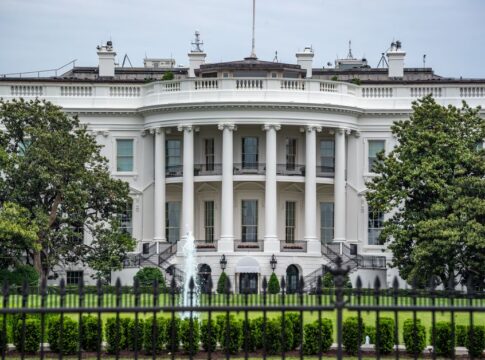
Photo: Dominik Gryzbon / Pexels
By US Daily Tribune Newsroom, Politics Desk — Published September 26, 2026
Table of Contents
- Key Takeaways
- The Background & Context of the Court Fight
- Why This Matters to American Citizens
- Reactions & Analysis From Multiple Fronts
- What Happens Next in the Legal Battle
- Frequently Asked Questions
The recent return of CNN, MSNBC, and Politico to White House briefings marks a temporary truce in a constitutional clash over press freedom—but the underlying court fight over media access remains far from resolved. While the news organizations have regained their credentials after being barred from administration events, legal experts warn that the fundamental questions about executive power and First Amendment protections are still working their way through the judiciary.
This isn’t just a Beltway skirmish. The outcome will shape how future administrations interact with journalists, what recourse news organizations have when shut out, and ultimately how much transparency Americans can expect from their government. The stakes extend beyond any single presidency or news cycle.
According to reports, the media organizations were initially excluded from White House press events, sparking immediate legal action and a broader debate about the limits of presidential authority over press credentials. The restoration of access came after intense negotiations and mounting pressure, but the constitutional questions raised in court filings haven’t been withdrawn or settled.
Key Takeaways
- CNN, MSNBC, and Politico have returned to White House press events after being banned from administration briefings and access.
- The court fight over the legality and constitutionality of the media ban continues despite the restoration of credentials.
- Legal challenges center on First Amendment protections and the executive branch’s authority to restrict press access.
- The dispute intersects with broader concerns about transparency, accountability, and the relationship between government and the press.
- Future administrations could face similar legal constraints or expanded powers depending on how courts rule on pending cases.
- The controversy has drawn attention from Congress, campaign organizations, and advocacy groups monitoring government transparency.
The Background & Context of the Court Fight
Press credentials and White House access have long occupied a gray area in American law. No statute explicitly guarantees journalists entry to the White House complex or presidential briefings. Yet decades of practice and several court precedents have established that the executive branch cannot arbitrarily exclude reporters based on viewpoint or punish critical coverage.
The current dispute erupted when the administration moved to revoke or deny credentials to reporters from CNN, MSNBC, and Politico. The news organizations responded swiftly with legal action, arguing that the exclusions violated their First Amendment rights and lacked due process. Initial court proceedings suggested judges were skeptical of blanket bans without clear, content-neutral justification.
What makes this case particularly significant is its timing. It arrives amid heightened polarization around media coverage, with politicians across the spectrum increasingly willing to challenge traditional norms around press access. Campaign rhetoric often includes attacks on specific outlets. Legislation has been proposed—though not enacted—that would formalize credential procedures or expand press protections.
The White House press corps itself has evolved. Digital outlets, independent journalists, and international media now compete for limited space alongside legacy networks and newspapers. Who gets in, and who decides, matters more than ever. The administration argued it retained broad discretion over security and logistical matters. The media organizations countered that such arguments provided cover for viewpoint discrimination.
Why This Matters to American Citizens
Taxpayers fund the White House complex, the press office staff, and the events where policy is announced and explained. When journalists are barred, the public loses a critical mechanism for accountability. Press briefings serve as a proxy for citizen oversight—reporters ask the questions voters would ask if they had access.
Consider what happens when a major news organization is shut out. Millions of Americans who rely on that outlet for information suddenly have no direct pipeline to administration explanations, no ability to hear their preferred journalists challenge official narratives. The marketplace of ideas shrinks. Alternative viewpoints get suppressed, not through argument, but through exclusion.
This isn’t abstract. Real policy decisions—on healthcare, immigration, foreign conflicts, economic regulation—get announced and defended in these settings. If the executive branch can pick and choose which journalists cover those announcements, it gains enormous power to shape public understanding. Future elections hinge on voters having access to diverse, robust reporting. Congress relies on press coverage to conduct oversight. Civic life depends on information flow.
The legal principles at stake also extend beyond Washington. State governors, mayors, and local officials watch how these cases unfold. If federal courts bless broad executive discretion to ban reporters, similar tactics could proliferate at every level of government. Town halls could become invitation-only. School board meetings could exclude unfriendly bloggers. The precedent matters everywhere.
Reactions & Analysis From Multiple Fronts
The restoration of credentials drew mixed reactions. Some viewed it as a victory for press freedom, proof that legal pressure and public scrutiny can force administrations to back down. Others saw it as a strategic retreat—a temporary concession that leaves the underlying legal questions unresolved and the threat of future bans intact.
Press freedom organizations have been unequivocal. They argue that any credential revocation must follow transparent procedures, offer due process, and rest on content-neutral grounds like security threats or space limitations. Viewpoint-based exclusions, they insist, violate core constitutional principles regardless of whether a particular outlet eventually regains access.
Political responses have largely split along partisan lines, though not entirely. Some members of Congress from both parties have expressed concern about executive overreach and the need for clearer statutory protections. Campaign organizations, meanwhile, have seized on the controversy as evidence of either media bias or authoritarian tendencies, depending on their perspective.
Legal scholars note that the courts have been cautious. Judges have issued temporary orders and expressed skepticism, but few have delivered sweeping rulings. That suggests the judiciary is aware of the complexity—balancing executive prerogatives, security concerns, and First Amendment protections requires nuance. Rushed decisions could create unintended consequences.
What’s clear is that the fight has energized debates about media’s role in democracy. Trust in journalism remains low across much of the public, yet appetite for government transparency remains high. That paradox complicates the politics. Voters may distrust specific outlets yet recoil at overt censorship. The administration faces a delicate balancing act.
What Happens Next in the Legal Battle
Even with credentials restored, the lawsuits haven’t been dismissed. Legal teams continue to pursue declaratory judgments and injunctions that would prevent future bans. They want court rulings establishing clear standards, not just temporary access granted under pressure. That means months, possibly years, of litigation ahead.
Appeals are likely regardless of initial outcomes. The issues are novel enough, and important enough, that higher courts—potentially the Supreme Court—may eventually weigh in. A definitive ruling could reshape executive-press relations for generations. Or the cases could settle quietly, leaving ambiguity intact.
Meanwhile, the political landscape keeps shifting. Elections bring new administrations with different attitudes toward the press. Congressional composition changes, affecting appetite for legislation on media access. Public opinion evolves. What seems urgent today may fade, or it may intensify into a defining constitutional clash.
Advocacy groups are already preparing for multiple scenarios. If courts rule broadly in favor of press access, they’ll push to codify those protections in statute. If courts defer to executive discretion, they’ll mobilize legislative campaigns and public pressure. The fight, in other words, will continue through multiple arenas.
For journalists, the uncertainty is corrosive. Reporters need to know the rules. Can they challenge officials without risking credentials? Can they report aggressively on sensitive topics? The chilling effect of arbitrary bans extends beyond those directly targeted. Every journalist covering the White House now operates with heightened awareness that access is fragile, potentially revocable.
Frequently Asked Questions
Why were CNN, MSNBC, and Politico banned from the White House in the first place?
The specific reasons cited by the administration have not been fully detailed in public reports, but the news organizations argued that the bans were retaliatory and based on content or viewpoint rather than legitimate security or logistical concerns. The lack of clear, transparent justification became a central point in the legal challenges.
Does the First Amendment guarantee journalists access to the White House?
The First Amendment protects freedom of the press, but it doesn’t explicitly guarantee physical access to any government facility. However, courts have ruled that once the government creates a press credentialing system and opens briefings to some journalists, it cannot exclude others arbitrarily or based on viewpoint. The government must provide due process and content-neutral reasons for any restrictions.
Could this happen again with different news organizations?
Yes, unless courts issue definitive rulings or Congress passes legislation establishing clear standards. The restoration of credentials in this case doesn’t prevent future administrations—or even the current one—from attempting similar exclusions. That’s precisely why the legal fight continues even after access was restored.
How does this affect everyday Americans who aren’t journalists?
When journalists lose access, the public loses information. Press briefings are where officials explain policies, answer tough questions, and face accountability. If administrations can silence critical outlets, citizens get a narrower, more controlled view of government actions. This affects voters’ ability to make informed decisions and hold leaders accountable through elections and civic engagement.
The White House press room will continue to fill with reporters asking questions, cameras rolling, transcripts posted online. But beneath that familiar routine, a constitutional battle is unfolding. The courts will eventually decide how much power presidents have to control their own narrative by controlling who gets to cover it. Until then, every credential, every briefing, every question carries extra weight. The fight isn’t over—it’s just moved to a different venue.