
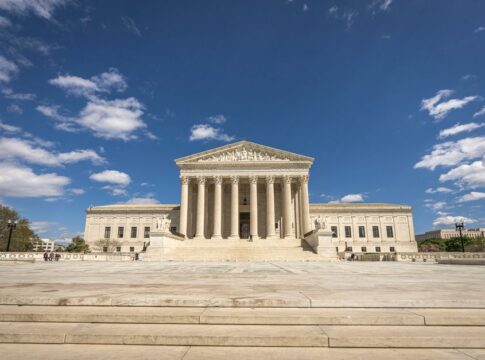
Photo: Mark Stebnicki / Pexels
By US Daily Tribune Newsroom, National Desk — Published September 14, 2026
Table of Contents
- Key Takeaways on Shadow Docket Rulings
- The Background & Context
- Why This Matters
- Reactions & Analysis
- What Happens Next
- Frequently Asked Questions
The Supreme Court‘s shadow docket has emerged as one of the most consequential—and controversial—mechanisms shaping American law and policy during the second Trump administration. These emergency orders, issued without oral arguments or full written opinions, are on the rise and carrying significant weight. Unlike the Court’s traditional docket, where cases receive months of deliberation and detailed majority opinions, shadow docket rulings arrive swiftly, often with minimal explanation, yet their impact reverberates across the nation.
As spectrum local news has reported, shadow docket cases are increasing in both frequency and importance, directly affecting the Trump administration and the broader American public. Harvard Law School observers have characterized the current Supreme Court as “a conservative Court that has also checked the Trump administration,” suggesting a more complex dynamic than simple ideological alignment. The interplay between executive power and judicial oversight is playing out in real time through these expedited rulings.
These emergency decisions touch everything from immigration enforcement to regulatory authority, national security measures to environmental policy. For ordinary Americans, the stakes are immediate and personal—shadow docket rulings can determine whether federal policies take effect immediately or remain blocked while litigation proceeds through the courts.
Key Takeaways on Shadow Docket Rulings
- Shadow docket cases at the Supreme Court are increasing during the second Trump administration, handling urgent requests that bypass the traditional deliberative process.
- Harvard Law School analysis indicates the conservative-majority Court has not simply rubber-stamped administration policies, instead exercising meaningful oversight over executive actions.
- These emergency rulings lack the full briefing, oral arguments, and detailed written opinions that characterize the Court’s regular docket, raising transparency concerns.
- The shadow docket’s growing prominence affects millions of Americans through decisions on immigration, federal regulations, and executive authority.
- Legal scholars and civil society groups continue debating whether the shadow docket’s expansion represents necessary judicial efficiency or an erosion of deliberative justice.
- The Court’s willingness to check certain Trump administration actions suggests judicial independence remains intact despite the conservative supermajority.
The Background & Context
The term “shadow docket” entered popular legal discourse only in recent years, though the Supreme Court has always handled emergency applications alongside its regular caseload. Traditionally, these emergency matters were rare and relatively uncontroversial—requests to stay an execution, extend a filing deadline, or temporarily preserve the status quo while litigation proceeded.
That changed dramatically over the past decade. The shadow docket expanded significantly during the first Trump administration, continued through the Biden years, and has now become a defining feature of the Court’s work during Trump’s return to office. What was once a procedural backwater now commands front-page attention.
The mechanics are straightforward but consequential. When a party faces imminent harm from a lower court ruling or government action, it can file an emergency application directly with the Supreme Court. A single justice—typically the one assigned to that geographic circuit—can grant temporary relief, or the matter can go to the full Court. The justices then vote, often quickly, sometimes overnight. The resulting order might be a single sentence or a few paragraphs. Dissents may or may not be noted. Reasoning may or may not be provided.
This procedural speed appeals to any administration seeking to implement its agenda quickly. Executive orders, regulatory changes, and enforcement priorities can hang in the balance. Lower courts might block these initiatives, prompting emergency appeals. The Supreme Court then decides whether to let the policy proceed or keep it frozen while appeals work through the system—a process that could take years.
During the second Trump administration, this dynamic has intensified. Reports indicate shadow docket activity continues at elevated levels, with the administration seeking emergency relief on various policy fronts while opponents challenge executive actions through emergency applications of their own. The Court sits at the center of this legal whirlwind, making consequential decisions with limited public deliberation.
Why This Matters
For American citizens, shadow docket rulings carry immediate, tangible consequences that traditional Supreme Court decisions—announced months or years after oral arguments—simply cannot match. These emergency orders determine which laws and policies govern daily life right now, not in some distant future term.
Consider immigration enforcement. A shadow docket ruling on detention policies or deportation procedures affects thousands of families immediately. Environmental regulations blocked or allowed through emergency orders impact air quality, water safety, and public health without delay. National security measures, labor protections, healthcare access—all can turn on a brief, unexplained Supreme Court order issued late on a Friday evening.
The lack of transparency compounds these stakes. When the Court issues a full opinion after oral arguments, Americans can read the majority’s reasoning, understand the dissent’s objections, and evaluate the legal logic for themselves. Shadow docket orders often provide none of this. The public learns the outcome—policy blocked or allowed—but not necessarily why. This opacity makes democratic accountability difficult. Citizens cannot easily assess whether the Court is applying consistent legal principles or making ad hoc political judgments.
According to Harvard Law School’s evaluation of the Court’s recent term, the conservative majority has demonstrated a willingness to check the Trump administration on certain issues, not simply defer to executive preferences. This judicial independence matters enormously. It suggests the Court views its role as enforcing constitutional and statutory limits on all branches, not serving as a rubber stamp for any administration’s agenda.
Yet questions persist. Does the shadow docket’s expansion represent a Court efficiently managing its emergency workload, or does it reflect a troubling shift toward less deliberative, more result-oriented jurisprudence? Legal scholars remain divided. Some argue emergency relief is sometimes necessary to prevent irreparable harm. Others contend the shadow docket has become a way to make major policy decisions without the accountability that full briefing and oral arguments provide.
Reactions & Analysis
The Supreme Court’s shadow docket activity during the second Trump administration has generated sharp reactions across the political and legal spectrum. As Harvard Law School observers have noted, characterizing the current Court as one that has “checked the Trump administration” alongside its conservative rulings suggests a more nuanced judicial posture than critics sometimes acknowledge.
Legal scholars have intensified their scrutiny of shadow docket procedures. Some constitutional law experts argue that the Court’s willingness to issue consequential rulings without full briefing undermines the adversarial process that produces sound legal reasoning. Others counter that emergency applications have always been part of the Court’s work and that denying relief in genuinely urgent situations would itself cause harm.
Civil liberties organizations have raised particular concerns about transparency and precedent. Unlike traditional opinions that establish clear legal rules for future cases, shadow docket orders often leave the law murky. Lower courts struggle to interpret what a brief, unexplained order means for similar cases. This uncertainty can chill legitimate conduct or embolden questionable government actions, depending on how various actors read the tea leaves.
The Trump administration, like its predecessors, has defended its use of emergency applications as necessary to prevent lower courts from imposing nationwide injunctions that block policies across the country based on a single judge’s ruling. Administration officials argue that the shadow docket provides a necessary corrective when district or circuit courts overstep their authority.
Meanwhile, state attorneys general, advocacy groups, and affected parties on all sides of policy debates have increasingly turned to shadow docket applications as a strategic tool. If the Supreme Court will decide matters quickly through emergency orders, litigants have strong incentives to seek that forum rather than waiting for the traditional appellate process to unfold.
What Happens Next
The shadow docket shows no signs of receding from prominence. As long as major policy disputes reach the courts quickly and parties face urgent deadlines, emergency applications will continue flowing to the Supreme Court. The question is whether the Court will reform its procedures to address transparency and accountability concerns.
Some justices have signaled openness to providing more explanation for shadow docket rulings, even when time is short. Brief reasoning, they argue, helps lower courts, litigants, and the public understand the decision without requiring a full opinion. Other justices appear content with the current approach, viewing these matters as distinct from the Court’s merits docket and not requiring the same level of explanation.
Congress could potentially intervene by limiting certain types of emergency relief or requiring more detailed explanations, though such legislation would face constitutional questions about separation of powers. More likely, pressure for reform will come from within the legal community and public opinion as shadow docket decisions continue shaping American law and policy.
The second Trump administration’s legal agenda will undoubtedly generate more emergency applications in the months and years ahead. How the Court handles these requests—and whether it continues demonstrating the independence that Harvard Law School observers have noted—will significantly impact executive power, federalism, and individual rights. The shadow docket, once an obscure procedural corner of Supreme Court practice, now stands at the center of American constitutional governance.
Frequently Asked Questions
What exactly is the Supreme Court’s shadow docket?
The shadow docket refers to the Supreme Court’s handling of emergency applications and other matters that do not receive full briefing, oral arguments, and detailed written opinions. These cases are decided quickly, often with minimal public explanation, yet can have major policy consequences. The term distinguishes these emergency orders from the Court’s regular “merits docket,” where cases receive extensive deliberation and produce precedential opinions.
Why are shadow docket rulings controversial?
Critics argue that shadow docket rulings lack transparency and accountability. Because these orders often provide little or no reasoning, the public and lower courts struggle to understand the legal principles being applied. Major policy decisions affecting millions of Americans are made without the deliberative process—full briefing, oral arguments, detailed opinions—that traditionally characterizes Supreme Court work. This raises concerns about whether decisions are being made on sound legal grounds or reflect results-oriented judging.
Has the Supreme Court actually checked the Trump administration’s policies?
According to analysis from Harvard Law School, the conservative-majority Court has demonstrated a willingness to check the Trump administration on certain issues, not simply defer to executive preferences. This suggests the Court is exercising meaningful oversight rather than automatically approving administration policies. However, the specific rulings and their reasoning often remain opaque due to the shadow docket’s limited transparency, making comprehensive assessment difficult.
How do shadow docket rulings affect ordinary Americans?
Shadow docket decisions have immediate, real-world impacts on daily life. These rulings determine whether federal policies on immigration, environmental protection, healthcare, labor rights, and other issues take effect right away or remain blocked during litigation. Unlike traditional Supreme Court opinions that may take effect months or years after cases are argued, shadow docket orders change the law instantly, affecting jobs, families, public health, and civil liberties without delay.
The Supreme Court’s shadow docket has transformed from procedural footnote to central feature of American governance. As the second Trump administration unfolds, these emergency rulings will continue shaping the balance of power between branches, the scope of federal authority, and the rights of citizens. Whether the Court can maintain both efficiency and legitimacy in this accelerated process remains one of the most important questions facing American constitutional law.