
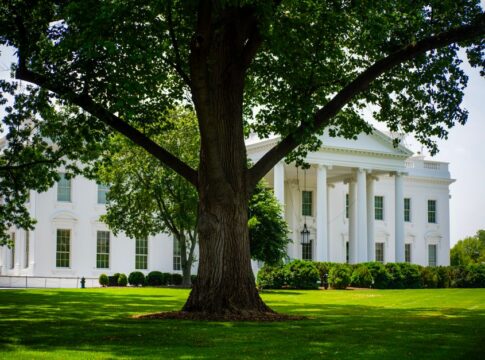
Photo: Ramaz Bluashvili / Pexels
By US Daily Tribune Newsroom, Politics Desk — Published August 29, 2026
Table of Contents
- White House construction and aviation safety: Key Takeaways
- The Background & Context
- Why This Matters
- Reactions & Analysis
- What Happens Next
- Frequently Asked Questions
A close call involving former President Donald Trump’s helicopter and a military aircraft has drawn new scrutiny after safety officials revealed that ongoing White House construction contributed to the dangerous midair encounter. The incident, which occurred as Trump traveled aboard Marine One, has raised serious questions about aviation safety protocols in the nation’s capital and the unforeseen complications arising from renovation work at the executive mansion.
According to multiple reports, communication breakdowns between air traffic controllers and pilots preceded the moment when a military jet flew dangerously close to the presidential helicopter. The revelation that construction activity at the White House played a role in the near-miss has added another layer of complexity to an already concerning aviation safety incident.
The episode has prompted immediate attention from Congress and renewed debate over safety procedures governing flights in restricted airspace around the capital. For American voters and taxpayers, the incident raises fundamental questions about how construction projects at critical government facilities are coordinated with national security operations.
White House construction and aviation safety: Key Takeaways
- Safety officials confirmed that White House construction activities contributed to a dangerous close encounter between Trump’s Marine One helicopter and a military jet
- Communication failures between air traffic personnel and pilots occurred before the aircraft came too close to one another
- The incident has triggered investigations into how construction projects at the executive mansion affect flight operations in restricted Washington airspace
- Multiple federal agencies are now reviewing protocols for coordinating renovation work with aviation safety measures
- The near-miss has drawn attention from lawmakers concerned about potential vulnerabilities in presidential security during routine travel
- Questions remain about whether adequate warnings were issued to pilots operating near the construction zone
The Background & Context
Marine One, the call sign for any Marine Corps helicopter carrying the president or former president, operates under some of the most stringent security and safety protocols in American aviation. These flights typically involve multiple layers of coordination between the Secret Service, military aviation units, and civilian air traffic control. The airspace around Washington, D.C., remains among the most restricted in the nation, with complex rules governing who can fly where and when.
The White House has undergone various construction and renovation projects throughout its history. Modern presidents have balanced the need to maintain and update the historic building with the operational demands of running the executive branch. Such projects can involve everything from infrastructure upgrades to security enhancements, often requiring coordination across multiple federal agencies.
When construction occurs at the White House, it can affect everything from ground-level security perimeters to airspace management. Cranes, scaffolding, and other temporary structures may alter the usual flight paths or create new obstacles that pilots and air traffic controllers must account for. The complexity multiplies when presidential or former presidential movements are involved, as these require additional security measures and communication protocols.
Aviation safety near the capital has been a persistent concern since the September 11 attacks. The Federal Aviation Administration, in coordination with military and security agencies, maintains strict no-fly zones and requires special authorization for any aircraft operating in the region. Even routine flights demand meticulous planning and constant communication among all parties involved.
Why This Matters
For American citizens, this incident touches on several critical concerns. First and foremost is the safety of current and former presidents. Regardless of political affiliation, the security of these individuals represents a national priority. Any breakdown in safety protocols demands immediate attention and correction.
Taxpayers fund both the construction projects at government facilities and the extensive security apparatus protecting national leaders. When these two expensive operations fail to coordinate effectively, it represents not just a safety risk but a failure of government efficiency. Citizens have every right to expect that agencies can manage simultaneous operations without creating dangerous situations.
The incident also highlights vulnerabilities that could be exploited. If routine construction can contribute to communication failures and near-misses, what other gaps might exist in security and safety protocols? These questions extend beyond any single administration or political figure to the fundamental functioning of government operations.
From a political perspective, the timing matters. As campaign season intensifies and former President Trump remains active in politics, any incident involving his safety becomes part of the broader national conversation. Voters weighing decisions about leadership and governance want assurance that basic safety measures function properly regardless of who holds office.
Congress has oversight responsibilities for both Secret Service operations and federal construction projects. Lawmakers from both parties are likely to demand answers about how this incident occurred and what steps are being taken to prevent similar close calls. The legislative branch’s role in ensuring executive branch accountability comes into sharp focus when safety incidents occur.
Reactions & Analysis
Safety officials who investigated the incident emphasized the role that White House construction played in creating conditions that contributed to the dangerous encounter. Their findings point to systemic issues rather than individual errors, suggesting that protocols need updating to account for how construction activities affect aviation operations.
The revelation of communication problems before the close call adds another dimension to the investigation. In aviation safety, communication failures often represent the most critical breakdowns. When multiple aircraft operate in restricted airspace, every pilot and controller must maintain constant awareness of all traffic. Any gap in information flow can quickly escalate into a life-threatening situation.
Aviation safety experts not directly involved in the incident have noted that construction near high-security facilities always presents challenges. Temporary structures can interfere with radar, alter visual references for pilots, and create new obstacles that must be communicated to everyone operating in the area. The key lies in ensuring that all parties receive timely updates about changing conditions.
Political figures have begun weighing in as news of the incident spreads. While specific statements vary, there appears to be bipartisan concern about ensuring that such close calls do not recur. The incident transcends typical partisan divisions, as both Democrats and Republicans recognize the importance of aviation safety for all government officials.
What Happens Next
Federal agencies are expected to conduct thorough reviews of their coordination procedures. The National Transportation Safety Board, which investigates aviation incidents, will likely examine every aspect of the encounter to determine what changes are necessary. These investigations typically produce detailed recommendations that agencies must either implement or formally explain why they are declining to do so.
Construction projects at the White House and other sensitive facilities will probably face enhanced scrutiny going forward. Project managers may need to provide more detailed information about how their work could affect aviation operations. New protocols might require earlier notification to aviation authorities when construction plans could impact flight operations.
Communication systems between air traffic control, military aviation units, and security services may undergo upgrades. Technology exists to improve real-time information sharing, but implementing it across multiple agencies with different systems and priorities requires sustained effort and funding. Congress may need to appropriate additional resources if significant upgrades are deemed necessary.
The incident will almost certainly feature in congressional hearings. Lawmakers will want detailed explanations from the Secret Service, the FAA, the military, and any other agencies involved. These hearings serve multiple purposes: establishing facts, holding officials accountable, and identifying legislative solutions if current laws prove inadequate.
For former President Trump and future presidential movements, security planners may adjust procedures. Additional precautions, alternative flight paths, or enhanced communication protocols could become standard practice when construction activities are underway near departure or arrival points.
Frequently Asked Questions
What exactly happened during the helicopter incident?
According to safety officials, a military jet came dangerously close to Marine One, the helicopter carrying former President Trump. Investigators determined that communication issues between air traffic personnel and pilots occurred before the close encounter, and that ongoing White House construction played a contributing role in creating the hazardous situation.
How does White House construction affect helicopter flights?
Construction at the White House can introduce temporary structures like cranes and scaffolding that alter normal flight paths and create new obstacles in restricted airspace. These changes require updated coordination between construction managers, aviation authorities, and security services to ensure all pilots are aware of modified conditions. When this coordination fails, safety risks increase.
Who is responsible for preventing such aviation incidents?
Multiple agencies share responsibility for aviation safety around the White House. The Secret Service manages presidential security, the FAA oversees civilian airspace, military units control their own aircraft, and various other agencies coordinate on restricted airspace management. Effective prevention requires seamless communication and coordination among all these entities.
Will this incident affect future presidential travel?
The incident will likely prompt reviews and possible changes to security and aviation protocols for presidential and former presidential movements. While specific adjustments have not been announced, safety officials and security planners typically implement enhanced procedures following close calls to prevent recurrence. Any changes would apply to all current and former presidents regardless of political party.
As investigations continue and agencies review their procedures, this incident serves as a stark reminder that even routine government operations require constant vigilance. The intersection of construction, aviation, and security demands coordination that leaves no room for error. American citizens deserve confidence that their leaders can travel safely and that government agencies can manage multiple complex operations simultaneously without creating dangerous situations.