
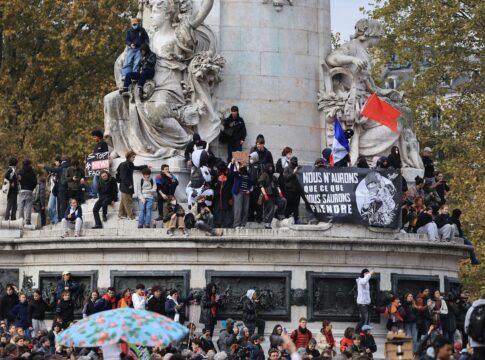
French authorities are preparing for over 220 protests across the nation as demonstrators unite against rising living costs and government spending cuts, deploying 70,000 police officers in anticipation of widespread unrest that previously spiraled into violence and looting.
Unrest Escalates as Multiple Groups Unite
Interior Minister Laurent Nunez announced Wednesday that more than 700,000 protesters are expected to march outside Paris on Thursday, with additional demonstrations planned throughout the capital. The protests unite student activists, labor unions, and the Yellow Vest movement that paralyzed France from 2018 to 2020. This coalition represents a significant escalation from previous demonstrations that began in September as student-led education reform demands.
The CGT union, France’s second-largest labor organization, called for workers to expand strike actions nationwide. General Secretary Sophie Binet stated protesters seek wage increases across all sectors and a complete revision of the government’s proposed budget, which she described as catastrophic for the country. The strikes have already forced closures of schools, rail services, and the Eiffel Tower.

See what travelers need to know as protests continue:
Violence and Government Response
October’s demonstrations turned destructive when authorities admitted police lost control on October 17, leading to vandalism, looting, and attacks on businesses and government buildings. Authorities responded by imposing localized curfews across multiple cities. On Thursday morning, a high school in suburban Toulouse was set ablaze, an incident Education Minister Edouard Geffray condemned as absolutely scandalous. Paris authorities denied protesters permission to march through the city center, instead restricting their route to eastern Paris.
The French government attempted to address student grievances by canceling 836 planned teaching position cuts and creating 500 new high school teaching jobs. Education officials also announced class size caps of 28 students in disadvantaged schools starting in 2027, expanding nationwide by 2028. Prime Minister Sebastien Lecornu allocated approximately 4.4 billion dollars for local authorities to fund school renovations.
Macron Caught Between Austerity and Anger
President Emmanuel Macron faces mounting pressure over years of public spending cuts implemented under his administration. During a late October visit to Marseille, which experienced significant looting, Macron acknowledged concerns about living costs and student futures as legitimate but condemned violence against institutions. His government’s fiscal policies continue fueling popular discontent, with protesters demanding immediate action on economic hardships affecting ordinary French citizens. The demonstrations reveal deep frustration with Macron’s economic agenda as France struggles to balance budget constraints against citizen demands for government support and services.