
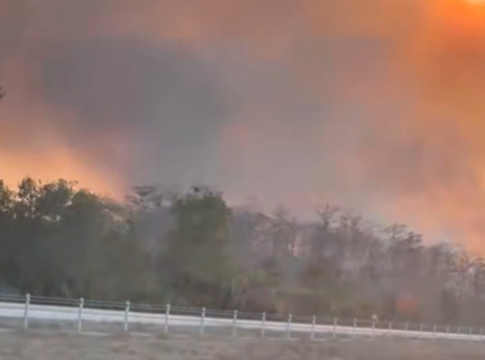
A rapidly expanding wildfire in South Florida forced authorities to temporarily shut down a critical stretch of Interstate 75 as thick smoke created hazardous driving conditions across Alligator Alley, the vital cross-state corridor through the Everglades.
Record Drought Fuels Wildfire Crisis
The National Fire has consumed more than 25,780 acres in Big Cypress National Forest near Naples, prompting Florida’s Department of Transportation to close an 80-mile section of I-75 between Exits 80 and 23. The highway reopened around 6:30 a.m. local time after smoke conditions improved. Video footage from Ochopee captured massive plumes of smoke blanketing the region as flames spread rapidly through the parched landscape.
Florida faces its most severe drought conditions since 2001, with 98 percent of the state experiencing some level of drought and 67 percent classified as severe drought, according to the U.S. Drought Monitor. The Florida Forest Service reports more than 650 wildfires have burned across the state since January 2026. The crisis stems from an unusually dry pattern that began during the 2025 Atlantic hurricane season, which saw zero hurricanes make landfall in the United States for the first time in recent memory.
Rain Relief Expected, But Drought to Persist
Forecasters predict much-needed rainfall will begin and continue as a cold front moves south from Tennessee and North Carolina. The system is expected to deliver one to two inches of rain across a corridor stretching from East Tennessee through Georgia and Central Florida, including Atlanta, Jacksonville, and Orlando. West Palm Beach, which has not recorded a single day with more than one-fifteenth of an inch of rain this year, could potentially double its annual rainfall total with this weather system alone.
Regional Impact and Long-Term Outlook
The drought extends beyond Florida, with 100 percent of Georgia now experiencing drought conditions. Naples sits 1.5 inches below average rainfall for this point in the year, while West Palm Beach trails by five inches. Despite the incoming precipitation, meteorologists warn that drought conditions will likely persist through Florida’s dry season, which lasts until May. The absence of tropical systems in 2025, which typically bring substantial rainfall despite their destructive power, has left the entire Southeast region vulnerable to continued water shortages and elevated wildfire risk throughout the spring months.